


Mounting technique
Secure plants to hardwood slabs or cork bark with plastic-coated wire or soft ties, arranging roots flat and slightly spread so new root tips can quickly attach and stabilize the plant.

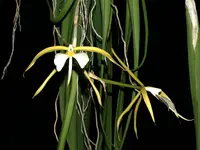
Epidendrum parkinsonianum is an epiphytic orchid, meaning it grows attached to trees rather than in soil. It forms long, hanging canes with narrow, strap-like leaves. Night-fragrant, star-shaped flowers with long, twisting petals appear along the canes, often in shades of greenish-yellow and white. The blooms have a distinctive, elegant look that suits hanging displays. This species is native to cloud forests of Central America, where it receives bright light, moving air, and frequent moisture but dries slightly between rains. In cultivation it is considered moderately challenging, mainly due to its need for steady humidity, good air flow, and bright, filtered light. Understanding how to care for Epidendrum parkinsonianum helps keep the roots healthy and the canes flowering regularly.

Care Difficulty
Moderate Care

Light Preference
Partial Shade

Water Requirements
Moderate Water

Temperature Preference
Tropical / Frost Sensitive

Hardiness Zone
11–13

Soil Texture
Peaty, Organic-rich, Rocky

Soil pH
Acidic (5.5–6.5)

Soil Drainage
Well-drained

Fertilization
Light (every 4–6 weeks)
Scan your plant to receive care tips personalized for your specific plant
Available on iOS and Android
This epiphytic orchid prefers bright, gentle light that mimics high, filtered forest canopies.
Watering should balance frequent moisture with rapid drainage to protect the roots.
Stable intermediate to warm temperatures support healthy growth and flowering.
This epiphytic orchid prefers moderately high, stable humidity for best growth.
This species performs best in a loose, airy, fast-draining medium rather than compact soil.
This orchid is well suited to container culture, especially in baskets or slatted pots that mimic its epiphytic habit.
Feeding supports steady growth and flowering for Epidendrum parkinsonianum grown in pots or mounted culture.
Pruning needs are light and mostly focused on cleanliness and flowering performance for Epidendrum parkinsonianum.
This epiphytic orchid prefers stable conditions, so repotting Epidendrum parkinsonianum is infrequent and should be gentle.
Propagation of Epidendrum parkinsonianum is usually done vegetatively rather than from seed in home settings.
Winter care for Epidendrum parkinsonianum focuses on temperature control and light management in cooler climates.

Plant Health Check
Not sure what's wrong with your plant? Check your plant's health inside the app.
This species releases a stronger fragrance at night, an adaptation to attract nocturnal moth pollinators in its native Central American cloud forests.
Its long, strap-like leaves and flower spikes hang downwards, which is unusual among many orchids and reflects its adaptation to life on tree trunks and branches where the plant naturally grows upside-down or sideways.
It is native to mid- to high-elevation cloud forests in Mexico and Central America, where it experiences cool to mild temperatures, constant air movement, and frequent mist rather than heavy, prolonged rainfall.

The species was named to honor the 19th-century English botanist and orchid collector John Parkinson, reflecting its early recognition and value among European horticulturists during the historical orchid-collecting period.
Lack of flowering usually comes from insufficient light, too-warm nights, or no distinct dry, cooler rest period. Mature plants need strong but filtered light and a slight seasonal drop in temperature plus drier conditions to initiate spikes.
Keep your plants happy and healthy with plant identification, disease detection, and easy care guidance.

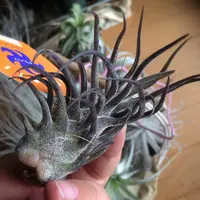
fuzzywuzzy airplant
Tillandsia pruinosa
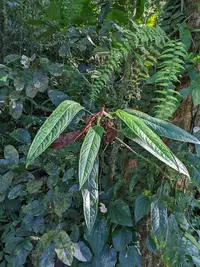
Anthurium microspadix
Anthurium microspadix
 POPULAR
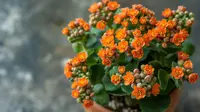
Flaming Katy
Kalanchoe blossfeldiana
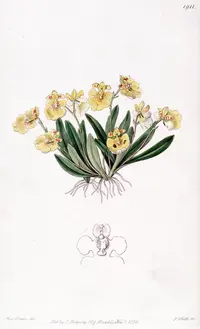
Erycina crista-galli
Erycina crista-galli
 POPULAR
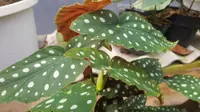
Polka Dot Begonia
Begonia maculata
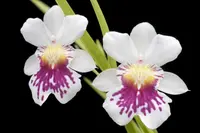
Miltoniopsis phalaenopsis
Miltoniopsis phalaenopsis

Poinsettia
Euphorbia pulcherrima
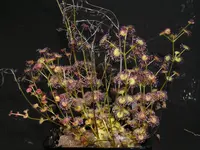
leafy sundew
Drosera stolonifera