Spring crown division
Every 3–4 years in early spring, lift and divide crowded clumps with a sharp knife or spade, replanting vigorous outer sections at the same depth to maintain flowering performance and prevent die-out in the center.

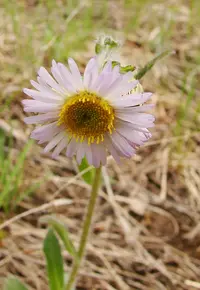
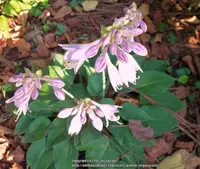
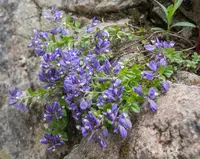
Robin's plantain (Erigeron pulchellus) is a low-growing, clump-forming perennial wildflower in the aster family. It is often used as a soft groundcover or front-of-border plant. The plant forms basal rosettes of fuzzy, spoon-shaped leaves and sends up slender stems topped with pale lavender to pink, daisy-like flowers in late spring. Native to woodlands and open meadows in eastern North America, it is adapted to partial shade and naturally moist but well-drained soils. It tends to be long-lived and slowly spreads, which makes it relatively easy to maintain once established. Gardeners who care for robin's plantain usually appreciate its toughness, modest growth rate, and ability to handle average garden conditions.

Care Difficulty
Easy Care

Light Preference
Partial Shade

Water Requirements
Moderate Water

Temperature Preference
Cold Hardy

Hardiness Zone
3–8

Soil Texture
Sandy, Loamy, Rocky

Soil pH
Acidic (5.5–6.5), Slightly acidic (6.5–7.0)

Soil Drainage
Well-drained

Fertilization
Minimal (feed rarely)
Scan your plant to receive care tips personalized for your specific plant
Available on iOS and Android
This North American perennial prefers bright conditions that avoid harsh, drying exposure.
This species prefers evenly moist but not saturated soil once established.
This hardy perennial tolerates a wide temperature range but performs best in moderate conditions.
This species tolerates a wide humidity range and usually does not need special humidity management outdoors.
Erigeron pulchellus prefers moderately fertile, loose, well-drained soil that does not stay waterlogged.
This species is suitable for container growing when the potting setup prevents waterlogging and root crowding.
This native perennial needs only modest feeding, as robin's plantain adapts well to average garden soils.
Erigeron pulchellus benefits from light, timely pruning to keep clumps tidy and flowering well.
This species is most often grown in the ground, with transplanting of clumps more relevant than frequent repotting.
Erigeron pulchellus is commonly propagated by division, with seed also useful for establishing larger drifts.
This hardy perennial usually needs minimal winter care in most temperate climates.

Plant Health Check
Not sure what's wrong with your plant? Check your plant's health inside the app.
This species is native to eastern North American woodlands and naturally grows in open deciduous forests, forest edges, and rocky slopes where light levels rise in early spring before trees fully leaf out.
It often spreads slowly by short stolons and rhizomes, forming low colonies of leaf rosettes that help stabilize shallow soils on slopes and rocky outcrops.
The basal leaves stay semi-evergreen in many climates, allowing the plant to photosynthesize in cool seasons when forest competition for light is lower.
This species spreads slowly by short stolons and self-seeding. It usually forms contained clumps or small patches, not large monocultures. In typical garden conditions it is considered a well-behaved groundcover, not aggressively spreading or invasive.
Keep your plants happy and healthy with plant identification, disease detection, and easy care guidance.