Salt-tolerant siting
Place plants where occasional salt spray or slightly brackish runoff can reach them, as this coastal species maintains better vigor and disease resistance with modest salt exposure than in completely fresh conditions.

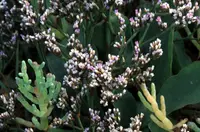
Western marsh rosemary, Limonium californicum, is a salt-tolerant perennial native to coastal marshes and tidal flats of California and Baja California. It forms low clumps or mats of narrow, often leathery leaves that tolerate wind, salt spray, and periodic flooding.
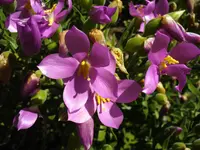
Slender flowering stems rise above the foliage, carrying airy sprays of small, papery blooms in soft lavender to white tones. The dried flower heads hold their color well and are often used in arrangements.
This species suits gardens with poor, sandy, or saline soils where many plants struggle. Those conditions shape how to care for Western Marsh Rosemary, since it prefers full sun, good drainage, and moderate to low moisture once established.

Care Difficulty
Moderate Care

Light Preference
Full Sun

Water Requirements
Moderate Water

Temperature Preference
Warm Climate

Hardiness Zone
8–10

Soil Texture
Sandy, Loamy

Soil pH
Slightly acidic (6.5–7.0), Neutral (7.0)

Soil Drainage
Moist but well-drained

Fertilization
Minimal (feed rarely)
Scan your plant to receive care tips personalized for your specific plant
Available on iOS and Android
Limonium californicum thrives in strong coastal light conditions with plenty of direct sun.
This coastal species prefers on the dry side, with infrequent but thorough watering once established.
This species is adapted to mild, maritime climates with cool to warm temperatures and low frost pressure.
This coastal species tolerates a wide humidity range and rarely needs special humidity management indoors.
This species prefers lean, very free-draining, sandy soil that mimics coastal habitats.
This species can grow in containers if drainage and root conditions mimic a dry, coastal site.
Limonium californicum grows well in lean, sandy soils and usually needs only light feeding in cultivation.
Pruning Limonium californicum is mainly about hygiene and keeping the flowering clumps tidy.
This coastal perennial dislikes disturbance, so repotting or transplanting should be done only when clearly needed.
Limonium californicum is most reliably propagated from seed, as mature plants resent division due to their taproot.
In mild coastal climates, Limonium californicum is generally cold hardy and needs little winter care.

Plant Health Check
Not sure what's wrong with your plant? Check your plant's health inside the app.
This coastal species excretes excess salt through specialized glands on its leaves, allowing it to survive in saline marsh and lagoon margins that are too harsh for most other flowering plants.
It is native to tidal marshes and coastal wetlands from central California into Baja California, where it helps stabilize muddy substrates and contributes to the structure of salt marsh plant communities.
The small lavender to purple flowers keep their color well when dried, so local populations have sometimes been collected for informal dried arrangements, although wild harvesting is discouraged due to its role in fragile marsh ecosystems.

Genetic and morphological studies place this species within a group of North American salt-tolerant Limonium that evolved from Old World ancestors, illustrating a relatively recent colonization and radiation of the genus along the Pacific coast salt marshes.
This coastal species produces many small, nectar-rich flowers that attract native bees, hoverflies, and some butterflies. It is valuable in shoreline and salt-tolerant pollinator plantings, especially when combined with other late-summer flowering coastal plants.
Keep your plants happy and healthy with plant identification, disease detection, and easy care guidance.