Support Heavy Canes
Install sturdy rose hoops or horizontal wires early in the season so long, flower-laden canes are tied and supported before wind or rain can snap them.

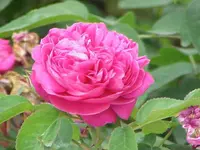
Damask rose, Rosa × damascena, is a fragrant, deciduous shrub rose valued for its strongly scented double flowers. It typically forms a bushy, arching plant with thorny stems and soft, gray-green leaves.
This rose group likely originated in the Middle East and is now widely cultivated in gardens and fields, especially for rose oil and dried petals. Its repeated flowering and strong fragrance make it popular in both ornamental beds and traditional rose gardens.
The plant prefers full sun, moderate moisture, and well-drained, fertile soil. With good air circulation and regular pruning, it is moderate in difficulty, and learning how to care for damask rose helps reduce disease problems.

Care Difficulty
Moderate Care

Light Preference
Full Sun

Water Requirements
Regular Water

Temperature Preference
Cool Climate

Hardiness Zone
5–9

Soil Texture
Loamy, Sandy, Organic-rich

Soil pH
Acidic (5.5–6.5), Slightly acidic (6.5–7.0)

Soil Drainage
Moist but well-drained

Fertilization
Light (every 4–6 weeks)
Scan your plant to receive care tips personalized for your specific plant
Available on iOS and Android
This shrub rose needs abundant sun for strong flowering and healthy growth.
Rosa × damascena prefers consistently moist but not saturated soil.
This rose is hardy and tolerates a wide temperature range but flowers best in moderate conditions.
This rose tolerates a wide humidity range but benefits from moderately moist air outdoors.
Rosa × damascena performs best in deep, well-drained, fertile loam with stable structure.
This species can be grown in containers if the pot is large and stable enough for its woody root system.
Rosa × damascena responds well to moderate, consistent nutrition during the main growing season.
Pruning maintains Rosa × damascena health, improves air flow, and supports strong flowering.
Damask rose is usually grown in the ground, so focus on careful transplanting and only occasional container repotting.
Rosa × damascena is commonly propagated vegetatively to maintain desired flower and fragrance traits.
Rosa × damascena is moderately cold hardy but benefits from simple winter protection in colder regions.

Plant Health Check
Not sure what's wrong with your plant? Check your plant's health inside the app.
The epithet damascena refers to Damascus in present-day Syria, reflecting the long-held belief that this rose was brought to Europe from the Eastern Mediterranean via ancient trade and crusader routes.
This rose is a tetraploid with 28 chromosomes and is thought to be a complex natural hybrid involving at least three wild species, which helps explain its strong fragrance and variable flower form.
The flowers contain a very small proportion of essential oil, so many thousands of hand-picked blooms are needed to produce a single kilogram of rose oil, which is why Rosa × damascena care instructions often emphasize timely harvesting at early morning.

This species has been documented for centuries as a parent in the breeding of many modern garden roses, so a significant portion of contemporary rose fragrance and flower form traces back genetically to damask roses.
Lack of flowers often comes from insufficient light, heavy or incorrect pruning, low potassium, or stress from drought, waterlogging, or pests. Older, exhausted wood and very young plants also flower less until growth stabilizes.
Keep your plants happy and healthy with plant identification, disease detection, and easy care guidance.