Control Suckering Spread
Install a 20–30 cm deep root barrier or edge trench around beds if you want to limit suckering, and remove unwanted shoots yearly with sharp pruners at soil level before they lignify (become woody).

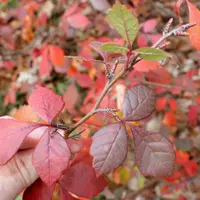
Fragrant sumac (Rhus aromatica) is a low, spreading deciduous shrub often used as a groundcover or for naturalistic slopes and banks. It forms dense thickets with small trifoliate leaves that turn bright orange to red in fall.
This species is native to North America, where it grows in dry, rocky, or sandy sites, often in open woods and along edges. It is valued for its scented foliage when crushed and for small red fruit clusters that attract wildlife.
Rhus aromatica is generally resilient, drought tolerant once established, and suitable for poor soils, which makes it relatively easy to care for fragrant sumac in home landscapes.

Care Difficulty
Easy Care

Light Preference
Full Sun

Water Requirements
Low Water

Temperature Preference
Cold Hardy

Hardiness Zone
3–9

Soil Texture
Sandy, Loamy, Rocky

Soil pH
Acidic (5.5–6.5), Slightly acidic (6.5–7.0)

Soil Drainage
Well-drained

Fertilization
Minimal (feed rarely)
Scan your plant to receive care tips personalized for your specific plant
Available on iOS and Android
Rhus aromatica grows best in open, sunny sites but tolerates some shade.
This shrub is drought-tolerant once established and prefers infrequent, deeper watering.
This species handles a wide climate range, from cold winters to hot summers.
Rhus aromatica handles a wide humidity range and usually does not need special humidity control outdoors.
Rhus aromatica prefers lean, well-drained soil and tolerates poor sites if drainage is strong.
This species can be grown in containers, mainly for patios or small landscapes, if the pot is managed carefully for root space and stability.
This tough native shrub needs only light feeding, so caring for fragrant sumac focuses more on soil quality than heavy fertilizer use.
Pruning Rhus aromatica is mainly done to maintain structure and remove problem wood rather than to control size aggressively.
This shrub is usually grown in the ground, so care focuses on transplanting field or nursery plants rather than frequent repotting.
Propagation of Rhus aromatica is commonly done for landscape use and restoration plantings.
Rhus aromatica is cold hardy in much of North America and usually needs minimal winter care once established.

Plant Health Check
Not sure what's wrong with your plant? Check your plant's health inside the app.
The leaves are divided into three leaflets that release a strong, resinous scent when crushed, which helps distinguish it from the poisonous sumac species that have many more leaflets per leaf.
This species has a fibrous, spreading root system that binds soil effectively, so it is often used in ecological restoration and erosion control on slopes and disturbed sites.
In suitable sun and soil, it develops intense red, orange, and sometimes purple fall foliage, making it valuable in native planting designs focused on seasonal color.

Rhus aromatica is an important wildlife plant in its native range, with its small, hairy drupes (fruit) persisting into winter and providing cold-season food for birds and small mammals when other resources are scarce.
This species spreads by suckers and can form dense thickets over time. It is not usually a problem in large, sunny areas but can overwhelm very small beds unless unwanted shoots are pruned or root barriers are used.
Keep your plants happy and healthy with plant identification, disease detection, and easy care guidance.