Rocky mulch band
Create a 10–20 cm wide band of coarse gravel or small rocks around the plant crown to mimic its native scree habitat, reduce crown rot risk, and keep stems from sitting in wet organic mulch.

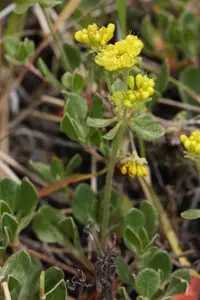
Sulphur-flower buckwheat (Eriogonum umbellatum) is a compact, long-lived perennial native to dry, open habitats across western North America. It often forms low mounds or mats of gray-green leaves topped by bright yellow flower clusters.
This species is common on rocky slopes, sagebrush steppe, and mountain hillsides, where it tolerates intense sun, wind, and poor, shallow soils. Its deep root system and drought tolerance make it valuable for erosion control and water-wise gardens.
Because it thrives in harsh, low-nutrient conditions, it usually resents rich, wet, or heavily amended soil. Gardeners who learn how to care for sulphur-flower buckwheat appreciate its durability, long bloom season, and strong support for native pollinators.

Care Difficulty
Moderate Care

Light Preference
Full Sun

Water Requirements
Low Water

Temperature Preference
Cold Hardy

Hardiness Zone
4–9

Soil Texture
Sandy, Loamy, Rocky

Soil pH
Slightly acidic (6.5–7.0), Slightly alkaline (7.0–7.5)

Soil Drainage
Well-drained

Fertilization
Minimal (feed rarely)
Scan your plant to receive care tips personalized for your specific plant
Available on iOS and Android
Eriogonum umbellatum thrives in strong, direct sun typical of dry, open habitats.
This species is strongly drought tolerant and easily damaged by excess moisture.
This dryland perennial handles wide temperature swings when roots stay well drained.
This species thrives in dry air and does not need added humidity.
Eriogonum umbellatum needs very lean, sharply drained soil that mimics rocky slopes.
This species can be grown in containers if drainage is excellent and the mix stays dry between waterings.
This drought-adapted native needs very little feeding, so use fertilizer sparingly for sulphur-flower buckwheat in poor soils only.
Pruning Eriogonum umbellatum is minimal and mainly used to maintain a tidy, compact mound and sustain flowering.
This species is most often grown in the ground, where transplanting is rare once plants are established.
Propagation of Eriogonum umbellatum is usually done from seed, with some forms also divided or layered.
This species is cold hardy in much of its range and generally needs little special winter care once established.

Plant Health Check
Not sure what's wrong with your plant? Check your plant's health inside the app.
The variety Eriogonum umbellatum var. aureum ‘Kannah Creek’ was selected and released by the Colorado Plant Select program, and sulphur-flower buckwheat is recognized there as an important native wildflower for dryland restoration and landscaping.
Its flat-topped flower clusters produce abundant nectar and pollen over a long period, supporting native bees, butterflies, and other insects in dry, high-elevation habitats where floral resources are often scarce.
Its deep, fibrous root system and low, mounded growth habit help stabilize rocky, sandy, or disturbed soils in western North American mountains, making it useful in habitat rehabilitation projects.

Some populations of this species show striking seasonal color changes, with foliage turning red or bronzy in cold or drought conditions, so a single planting can display gray-green leaves, yellow flowers, and red-toned foliage at different times of the year.
This species is highly attractive to native bees, butterflies, and many other beneficial insects. Its nectar-rich umbels provide extended forage through summer, making it useful in pollinator gardens and restoration plantings across dry, sunny landscapes.
Keep your plants happy and healthy with plant identification, disease detection, and easy care guidance.