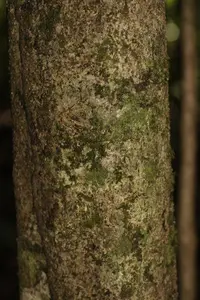
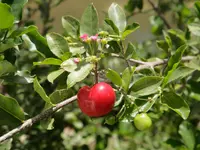
Irish Yew Care (Taxus baccata 'Fastigiata')

Also known as: English Yew, Common Yew, European Yew
Irish Yew

About Irish Yew

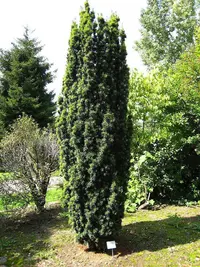
Irish yew, Taxus baccata 'Fastigiata', is a narrow, upright conifer grown mainly for its dense, dark green foliage and strong columnar shape. It is usually used as an architectural accent, hedge, or focal point in formal and contemporary gardens. This cultivar comes from the common yew native to Europe and western Asia, but it is now widely planted in temperate landscapes. It grows slowly and responds well to pruning, which makes it relatively manageable for small spaces. Understanding how to care for Irish Yew is important because the plant is long lived, dislikes waterlogged soil, and prefers cool, consistent moisture and partial shade to full sun.

Main Plant Requirements

Care Difficulty

Moderate Care

Light Preference

Partial Sun

Water Requirements

Moderate Water

Temperature Preference

Cold Hardy

Hardiness Zone

5–7

Soil Texture

Sandy, Loamy, Clay

Soil pH

Acidic (5.5–6.5), Slightly acidic (6.5–7.0)

Soil Drainage

Moist but well-drained

Fertilization

Minimal (feed rarely)

Get Personalized Care Plan

Scan your plant to receive care tips personalized for your specific plant

Available on iOS and Android

How to Care for the Irish Yew

Taxus baccata 'Fastigiata' grows best with consistent, moderate light exposure outdoors.

  • Provide 4–6 hours of direct sun, ideally morning sun with light afternoon shade, or bright dappled shade all day.
  • Tolerates partial to deep shade, but dense shade can cause sparse, open growth and reduced vigor in Irish Yew.
  • In hot summers, protect from intense afternoon sun to reduce needle scorch, and consider slightly more sun in winter to compensate for low light angles.

Watering should support steady growth while keeping the root zone aerated, not saturated.

  • After establishment, water when the top 3–5 cm of soil feel dry, then soak the root area deeply rather than giving light, frequent splashes.
  • Ensure sharply draining soil; puddling around the base, yellowing foliage, or blackened roots indicate overwatering and risk of root rot.
  • In cool, wet seasons, reduce or skip watering; in hot, dry spells, increase frequency if needles dull, tips droop, or soil dries quickly.

This yew tolerates a wide climate range but performs best in cool to moderate conditions.

  • Optimal growth occurs around 50–75°F (10–24°C), with steady moisture and shelter from extreme drying winds.
  • Mature plants can survive down to about -10°F (-23°C) or slightly lower, though young plants benefit from winter mulch over the root zone.
  • In summer, prolonged heat above 85°F (29°C) may stress the plant; provide shade, mulch, and consistent soil moisture to reduce heat stress.

Humidity is rarely critical for outdoor Taxus baccata 'Fastigiata' growth.

Taxus baccata 'Fastigiata' prefers stable, moderately moist, well-structured mineral soil.

  • Aim for a loamy or sandy-loam soil with moderate organic matter so roots stay moist but not saturated.
  • Ensure sharp drainage by mixing in coarse sand or fine gravel, especially in heavier clay-based ground.
  • Target a slightly acidic to neutral pH around 6.0–7.5; avoid strongly alkaline or saline conditions.
  • Improve aeration and structure by incorporating compost plus bark fines, but avoid peat-heavy, soggy mixes.

This yew adapts well to container growing when the pot is chosen for its eventual size and narrow, upright form.

  • Use a deep, heavy container to counteract the plant’s tall, columnar habit and reduce tipping in strong winds.
  • Select a mineral-based potting mix that resists compaction over time to maintain air spaces around roots.
  • Choose thick-walled or insulated pots in climates with hot summers to prevent root-zone overheating on patios or balconies.

This upright yew benefits from light, consistent nutrition rather than heavy feeding.

  • Use a balanced slow-release fertilizer (around 10-10-10) or well-rotted compost worked into the topsoil in early spring.
  • Feed established plants once per year; in poor soils, a second light application in midsummer supports healthy, dense Irish Yew growth.
  • Always apply fertilizers at half the label rate for shrubs to avoid salt buildup and root burn.
  • Do not fertilize in late fall or winter, as the plant is dormant and excess nutrients can cause weak, frost-sensitive growth.

Pruning helps maintain the narrow, columnar form of Taxus baccata 'Fastigiata' and removes unhealthy wood.

  • Carry out main pruning in late winter to early spring before new growth starts, with minor touch-ups in midsummer if needed.
  • Remove dead, diseased, or damaged branches first, then thin congested interior shoots to improve light and airflow.
  • Use sharp, clean hand pruners or loppers, cutting just above a bud or side branch to encourage neat, dense growth.
  • Limit hard cuts into very old, bare wood; yews can reshoot, but shaping is easier when light trimming is done over time.

This columnar yew is usually grown in the ground and only occasionally maintained in containers.

  • Transplant or shift container plants in early spring or early fall, when temperatures are mild and soil moisture is stable.
  • Look for circling roots, water running straight through the pot, or stalled growth as signs a container plant needs a larger volume.
  • Plan on moving container specimens every 3–4 years into a pot 1–2 in wider, using a free-draining, slightly acidic to neutral mix.
  • Reduce root stress by watering thoroughly before and after moving, handling the root ball gently, and shading the plant for several days if conditions are hot or windy.

New plants are most reliably produced from semi-ripe cuttings rather than from seed.

  • Take semi-ripe cuttings in late summer, choosing healthy, pencil-thick shoots 8–10 cm long from current-season growth.
  • Remove lower needles, lightly wound the base, and dip in rooting hormone to encourage root initiation.
  • Insert cuttings into a sharply draining mix, then keep at 60–70°F in bright, indirect light with high humidity but no waterlogging.
  • Seed propagation is possible but slow and erratic, as yew seeds need prolonged cold stratification to break dormancy.

This yew is generally cold hardy in much of the US and needs only modest winter attention once established.

  • Tolerates typical garden frosts but benefits from a 5–8 cm mulch layer over the root zone to moderate soil temperature swings.
  • In windy or exposed sites, use burlap screens to reduce winter wind scorch on foliage, especially for young plants.
  • Water thoroughly before the ground freezes in late fall, particularly for container-grown specimens with limited soil volume.

Care Tips

Snow load management

In regions with heavy, wet snow, gently shake or brush snow off the upright branches after storms to prevent them from splaying or snapping under the weight.

Stake young leaders

For very narrow, formal columns, lightly stake the central leader of young plants for the first 2–3 years to keep the outline tight and prevent wind from bending the top out of shape.

Weed‑free root zone

Maintain a clean, mulched ring 30–60 cm around the base so turf and weeds do not compete for moisture and nutrients or conceal early signs of pest or stem damage.

Layered screening design

When using plants as a hedge or screen, stagger them in a zigzag double row rather than a single straight line to create a denser visual barrier and better wind filtration with fewer gaps.

Tool hygiene routine

Always disinfect pruning shears before and after shaping, using isopropyl alcohol or a commercial sanitizer, to reduce the risk of spreading fungal cankers or other diseases while caring for Irish Yew.

Common Pests and Diseases

Taxus leaf blight

This disease causes yellowing, browning, and dieback of needles, often starting on lower, shaded branches and moving inward along the shoot. Symptoms include patchy thin areas in the canopy and clusters of dead needles that remain attached.

Solution

Prune out affected shoots back into healthy wood during dry weather and dispose of prunings away from the plant. Improve light penetration and air movement by thinning crowded branches, avoid overhead watering, keep mulch and debris away from the base, and, in severe or recurrent cases, consult local guidance on suitable fungicides for yews and apply according to label directions.

Phytophthora collar rot

This disease affects the crown and upper roots, leading to dull, sparse, yellowing foliage and progressive dieback, often on one side first. Symptoms include a reddish-brown discoloration under the bark at the soil line and sudden decline in plants growing on poorly drained sites.

Solution

Remove and discard severely affected plants including as much root material as possible, and avoid replanting yew in the same poorly drained spot. For mild or early cases, improve drainage, raise the planting area or install drainage channels, avoid overwatering, keep mulch away from the stem, and consider fungicidal drenches specifically labeled for Phytophthora on ornamental conifers if local regulations allow.

scale insects

These insects feed on needles and stems, causing yellowing, reduced vigor, and sooty mold growth on honeydew excretions. Symptoms include small shell-like bumps on twigs and a sticky residue on foliage or nearby surfaces.

Solution

For light infestations, gently scrub stems with a soft brush or cloth dipped in water with a small amount of insecticidal soap, and prune out heavily infested twigs. For larger shrubs or persistent problems, apply horticultural oil during the dormant season and, if needed, a targeted insect growth regulator or systemic product labeled for scale on conifers, following timing and dose instructions carefully.

yew gall midge

This pest causes distorted, swollen, or blistered needle clusters where larvae feed inside developing tissue. Symptoms include irregular tufts of twisted needles that may turn brown or drop early, giving the plant an uneven appearance.

Solution

Prune out and destroy affected shoots in late winter or very early spring before adults emerge, cutting several cm below visible damage. Maintain overall plant vigor through proper watering and fertilizing, and where infestations recur, consult local extension or a certified arborist about timing of targeted insecticidal sprays against adults as they emerge.

vine weevil

This pest has larvae that feed on roots and bark near the root collar, causing wilting, poor growth, and sometimes sudden plant collapse, while adults notch the edges of leaves or needles. Symptoms include loose, unstable plants in the soil and C-shaped white grubs in the root zone.

Solution

Hand-pick adult beetles from stems and branches at night and remove any heavily infested container plants for inspection. For effective long-term control, apply beneficial nematodes labeled for vine weevil to moist soil during the appropriate temperature window, and in high-value plantings consider combining this with physical barriers or targeted systemic insecticides approved for ornamental conifers.

Interesting Facts

Naturally columnar habit

This cultivar has a strong genetic tendency to grow in a narrow, dense column, often only 1–2 ft wide while reaching several meters tall, which makes it distinct from the wide-spreading wild-type yew.

Female clone origin

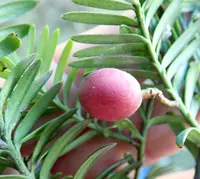
The original plant selected in Ireland in the 18th century was a female clone, so many traditional plantings consist almost entirely of female individuals that can bear red arils if a male yew is nearby.

Historic cemetery use

Its upright, space-efficient form and tolerance of clipping led to extensive use in European churchyards and formal gardens, where it has been planted for centuries as vertical accents and living architectural elements.

Botan icon

Did you know?

This cultivar arose as a chance columnar mutation of common yew in County Fermanagh, Ireland, and many plants grown worldwide today are vegetative descendants taken from that original tree.

FAQs about Irish Yew

Browning foliage usually results from drought stress, winter windburn, salt exposure, or root problems. Check soil moisture, mulch the root zone, shield from harsh winter winds, and avoid de-icing salt contact to prevent further damage.

Grow Healthy Plants with Botan Care

Keep your plants happy and healthy with plant identification, disease detection, and easy care guidance.

Botan plant care app — identify plants on mobile

Explore More Plants