Branch training
While stems are still flexible, gently spread and tie young branches to a fan shape using soft ties and a wire or wooden frame to improve light penetration and increase flowering and fruiting wood over time.

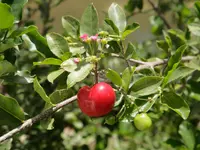
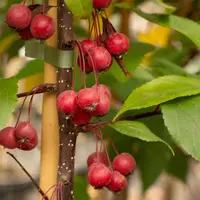
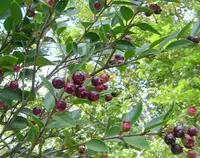
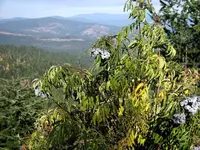
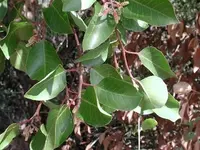
Wild crapemyrtle, Malpighia glabra, is a small evergreen shrub or compact tree valued for its glossy foliage and bright, cherry-like fruits. It tends to form a dense, branching habit, making it suitable for warm-climate hedges, patio containers, or trained bonsai-style specimens.
This species is native to tropical regions of the Americas, where it thrives in sun and well-drained soils. It prefers consistent warmth and does not tolerate prolonged cold, so it is often grown outdoors only in frost-free areas.
Flowering and fruiting are most reliable in strong light with moderate moisture, which also makes it easier to care for wild crapemyrtle in home gardens or protected spaces.

Care Difficulty
Moderate Care

Light Preference
Full Sun

Water Requirements
Moderate Water

Temperature Preference
Tropical / Frost Sensitive

Hardiness Zone
10–11

Soil Texture
Sandy, Loamy, Organic-rich

Soil pH
Acidic (5.5–6.5), Slightly acidic (6.5–7.0)

Soil Drainage
Well-drained

Fertilization
Light (every 4–6 weeks)
Scan your plant to receive care tips personalized for your specific plant
Available on iOS and Android
Malpighia glabra needs strong light to fruit well but benefits from some protection in harsh climates.
Malpighia glabra prefers evenly moist, well-drained soil that never stays saturated for long periods.
This species thrives in warm, frost-free conditions and reacts poorly to cold snaps.
This species prefers moderate to high humidity to sustain healthy foliage and flowering.
This species grows best in loose, well‑structured soil that drains quickly yet retains some moisture.
This species is suitable for container growing, especially in cooler climates or small spaces.
Malpighia glabra responds well to modest, consistent feeding during the warm growing season.
Pruning Malpighia glabra helps maintain a compact shape and encourages flowering wood.
Container-grown or young landscape plants benefit from careful transplanting to support steady growth.
New Malpighia glabra plants are most often produced from semi-ripe cuttings or fresh seed.
This tropical shrub is frost-sensitive and needs thoughtful winter care in cooler climates.

Plant Health Check
Not sure what's wrong with your plant? Check your plant's health inside the app.
The fruit of this species can contain extremely high levels of vitamin C, sometimes exceeding that of oranges many times over, which is why it is widely valued in juice and preserve production in tropical regions.
Its small pink flowers produce oil, not just nectar, which attracts specialized oil-collecting bees in the family Centridini that use the floral oils for nest construction and larval food.
In its native range from southern Mexico to northern South America and the Caribbean, this shrub often grows in coastal thickets where birds feed on the bright red fruits and disperse the seeds through their droppings.
This species gives its name to the plant family Malpighiaceae, which was established around it as a type genus, making it taxonomically central to how botanists define and study more than 1,000 related species worldwide.
Lack of flowering is often due to insufficient light, heavy pruning of new growth, or nutrient imbalance with too much nitrogen. Mild drought, pests, or root restriction can also reduce bud formation and overall bloom display.
Keep your plants happy and healthy with plant identification, disease detection, and easy care guidance.