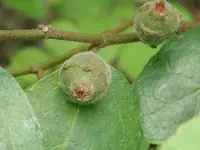
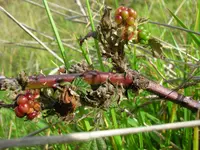
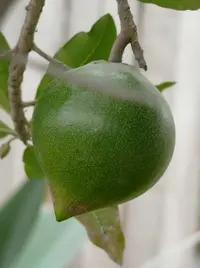
Crabapple Care (Malus 'Prairie Fire')

Also known as: Apple

About Crabapple

Malus 'Prairie Fire' is an ornamental crabapple tree grown mainly for its spring flowers and colorful foliage. It is a small deciduous tree suited to gardens and urban landscapes.

New leaves emerge reddish purple, then mature to dark green, while pink-red blossom clusters cover the branches in spring, followed by small, persistent fruit that attract birds. It originates from horticultural breeding rather than a wild habitat and is widely planted in temperate regions.

The tree is valued for strong disease resistance compared to many older crabapple varieties, which makes it relatively straightforward for gardeners who want to care for Crabapple. It prefers full sun, moderately moist, well-drained soil, and benefits from good air circulation to maintain healthy growth.

Main Plant Requirements

Care Difficulty

Moderate Care

Light Preference

Full Sun

Water Requirements

Moderate Water

Temperature Preference

Cold Hardy

Hardiness Zone

4–8

Soil Texture

Loamy, Sandy, Clay

Soil pH

Acidic (5.5–6.5), Slightly acidic (6.5–7.0)

Soil Drainage

Moist but well-drained

Fertilization

Minimal (feed rarely)

Get Personalized Care Plan

Scan your plant to receive care tips personalized for your specific plant

Available on iOS and Android

How to Care for the Crabapple

Malus 'Prairie Fire' performs best with strong, direct light for compact growth and abundant flowering.

  • Provide full sun for 6–8 hours daily; morning to early afternoon sun promotes dense foliage and heavy bloom on this Crabapple.
  • Tolerates light partial shade (3–4 hours sun), but flowering and fall color decline and growth becomes more open.
  • In hot inland areas, avoid intense late-afternoon sun reflecting off walls or pavement, which can scorch leaves; ensure open exposure in winter so short daylight still reaches the canopy.

Malus 'Prairie Fire' prefers evenly moist, well-drained soil rather than frequent shallow watering.

  • At planting and during the first 1–2 years, irrigate deeply when the top 5–8 cm of soil feel dry, allowing water to soak 20–30 cm down.
  • Reduce watering once established; in typical climates, deep irrigation every 7–14 days during dry spells is enough if the soil dries slightly between soakings.
  • Use well-drained loam or amended clay to prevent standing water, and watch for wilting or dull, curling leaves (too dry) versus yellowing leaves and dieback from the tips (possible overwatering).

This tree is cold-hardy yet handles warm summers if soil moisture and exposure are managed well.

  • Active growth and flowering occur best around 55–75°F (13–24°C), typical of spring and mild early summer conditions.
  • Fully hardy to about -20°F (-29°C) once established, tolerating winter freezes common in USDA zones 4–8 without extra protection.
  • Handles summer heat up to about 90–95°F (32–35°C) if roots stay moist but not waterlogged; prolonged extremes above this can stress the tree, so mulch the root zone and avoid reflected heat.

Humidity is rarely a limiting factor for outdoor Malus 'Prairie Fire' growth in typical garden conditions.

Malus 'Prairie Fire' performs best in moderately moist, well-aerated ground with reliable drainage.

  • Aim for a loamy structure that combines mineral soil with organic matter, so roots stay moist but not waterlogged.
  • Blend native soil with 25–40% compost to improve structure, nutrient holding, and biological activity around the root zone.
  • Keep pH slightly acidic to neutral, around 6.0–7.0, avoiding very alkaline sites that can cause chlorosis and weak growth.
  • Avoid hard-compacted clay or low-lying spots; if drainage is slow, mound the planting area 15–30 cm above surrounding grade.

This crabapple can be grown in large outdoor containers for several years if given careful root space and moisture control.

  • Choose a heavy, wide container that resists tipping once the canopy becomes dense and wind-exposed.
  • Use a deep potting volume to support a broad, fibrous root system, not a narrow tall pot that dries unevenly.
  • Select a slightly porous material such as thick-walled clay or fiberstone to moderate moisture swings around the roots.

Malus 'Prairie Fire' benefits from modest feeding to support flowering and steady growth in average garden soil.

  • Use a balanced slow-release fertilizer (for example 10-10-10) or well-rotted compost in early spring before new growth starts.
  • Apply once per year for established trees; young trees can receive a light second feeding in mid-summer if growth is weak.
  • Spread fertilizer over the root zone, staying away from the trunk, and water in thoroughly to prevent root burn.
  • Reduce or stop feeding in late summer and fall so growth hardens before winter; avoid high-strength products on Crabapple.

Pruning Malus 'Prairie Fire' helps maintain a strong framework, good airflow, and abundant flowers.

  • Plan main pruning for late winter or very early spring while the tree is still dormant and structure is visible.
  • Remove dead, diseased, or damaged branches first, then thin crossing or inward-growing shoots to reduce congestion.
  • Use clean, sharp bypass pruners or loppers, making cuts just outside the branch collar to support proper healing.
  • Limit heading cuts to shape the canopy lightly, keeping an open, rounded form that allows light into the center.

Malus 'Prairie Fire' is usually planted in the ground; focus on careful transplanting rather than frequent repotting.

  • Transplant container-grown trees in early spring or fall when temperatures are mild and the tree is not under heat stress.
  • Look for roots circling the container or emerging from drainage holes as signs it has outgrown its pot or nursery container.
  • Dig a wide planting hole, loosen circling roots gently, and set the tree at the same depth it grew in the pot to reduce shock.
  • Water thoroughly after planting, then keep soil evenly moist for the first season and apply mulch to stabilize moisture and temperature.

Propagation of Malus 'Prairie Fire' at home is possible but often challenging and slower than buying grafted nursery stock.

  • Take semi-hardwood cuttings in mid to late summer, using pencil-thick shoots treated with rooting hormone and placed in a moist, well-drained medium.
  • Maintain high humidity and bright, indirect light around cuttings, keeping the medium barely moist, not waterlogged, to limit rot.
  • Collect ripe seeds in fall, then cold-stratify them in moist medium at 34–41°F for 3–4 months to break dormancy before sowing.
  • Expect seedlings to vary from the parent; true-to-type plants usually require grafting onto a suitable rootstock using dormant-season techniques.

This crabapple is cold hardy in much of the US and usually needs only basic winter care once established in the ground.

  • Ensure trees enter winter well-watered but not waterlogged, especially after dry autumn weather.
  • Apply 5–8 cm of mulch around the root zone, keeping it a few cm away from the trunk to reduce freeze–thaw stress.
  • Wrap young trunks with tree guards or breathable trunk wrap in cold regions to limit sunscald and rodent damage.
  • Move container-grown trees to a sheltered, unheated but frost-moderated area, insulating pots to prevent root freezing.

Care Tips

Trunk protection

Wrap the lower trunk with a breathable tree guard or hardware cloth from late fall to early spring to prevent sunscald and rodent damage, leaving space so the bark can dry and avoiding any contact with mulch.

Prevent root suckers

Inspect the base of the tree 2–3 times per year and promptly cut off any shoots emerging from the rootstock at or below soil level to keep the canopy strong and avoid energy loss to unwanted growth.

Canopy thinning

Every 2–3 years, selectively remove a few small interior branches that cross or rub to improve air movement and light penetration, which reduces disease pressure and encourages better flowering when growing Crabapple.

Flower and fruit cleanup

Rake up and dispose of fallen petals and fruit promptly, especially in humid or wet periods, to lower the risk of fungal diseases and reduce attraction of wasps and rodents.

Targeted pest scouting

From bud break through midsummer, check weekly for aphids, Japanese beetles, and caterpillars on new growth and flower clusters, and treat early with a hard water spray, hand-picking, or a labeled low-toxicity product before infestations build.

Common Pests and Diseases

Apple scab

This disease causes olive-green to dark brown, velvety spots on leaves and young fruit, which may distort growth or cause early leaf drop. Symptoms include more damage in cool, wet spring weather.

Solution

Collect and dispose of fallen leaves and mummified fruit in autumn to reduce spores, and prune to open the canopy for better airflow and faster drying. In areas with a history of severe scab, apply a registered fungicide labeled for crabapples at bud break and repeat through wet spring periods following local extension guidance for Malus 'Prairie Fire' care.

Cedar-apple rust

This disease produces bright yellow to orange spots on leaves, sometimes with raised, rust-colored spore structures on the undersides. Symptoms include leaf yellowing, early drop, and occasional lesions on fruit in mid to late season.

Solution

Remove and discard heavily infected leaves and fruit, and prune the tree to improve air circulation and light penetration. If nearby junipers act as alternate hosts, reduce infection pressure by removing or replacing highly susceptible juniper varieties and, in high-pressure areas, use a labeled fungicide in spring from pink bud through petal fall.

Fire blight

This disease causes new shoots, blossoms, and small branches to blacken, wilt, and bend into a characteristic shepherd’s crook shape, often looking scorched. Symptoms include sunken, oozing cankers on branches and twigs that can spread rapidly in warm, wet weather.

Solution

Prune out infected shoots during dry weather, cutting 20–30 cm below visible damage and disinfecting tools between cuts with 70% alcohol or a 10% bleach solution. Avoid high-nitrogen fertilization that encourages soft, susceptible growth, and in high-risk areas consider planting fire blight–resistant crabapple cultivars or using a targeted bloom-time bactericide if allowed locally.

Apple maggot

This pest is a small fly whose larvae tunnel inside developing fruit, creating brown, winding trails and causing premature fruit drop. Symptoms include misshapen, pitted fruit with soft, discolored flesh.

Solution

Remove and dispose of infested or fallen fruit promptly to interrupt the life cycle, and use sticky red sphere traps hung in the canopy to monitor and reduce adult populations. In problem areas, protect developing fruit with kaolin clay sprays or fine mesh bags, or apply a targeted insecticide timed to adult fly emergence according to local extension forecasts for growing Crabapple outdoors.

Aphids

These insects cluster on tender shoots and leaf undersides, sucking plant sap and causing curling, distortion, and sticky honeydew that can lead to sooty mold. This pest reproduces quickly in late spring and early summer, especially on lush new growth.

Solution

Dislodge colonies with a strong stream of water from a hose and encourage natural predators such as lady beetles by minimizing broad-spectrum insecticides. For persistent infestations, use insecticidal soap or horticultural oil thoroughly on affected shoots, repeating at 5–7 day intervals while monitoring new growth.

Interesting Facts

Cold-hardy blossom display

This crabapple reliably flowers even after harsh Midwestern and Northeastern winters, with deep rose-pink blooms that hold their color instead of fading quickly to pale pink or white.

Persistent dark fruit

It produces small maroon to dark red fruits that often stay on the tree well into winter, providing a long-lasting visual accent and a cold-season food source for birds.

Foliage resists disease

Its foliage is notably resistant to common crabapple diseases such as apple scab, fire blight, and cedar-apple rust, which makes Malus 'Prairie Fire' plant care more reliable in humid and disease-prone regions.

Botan icon

Did you know?

This cultivar was specifically developed at the University of Wisconsin–Madison for ornamental value combined with high disease resistance, and it became one of the benchmark selections that shifted crabapple breeding toward long-season color and lower chemical input in North American landscapes.

FAQs about Crabapple

Lack of flowers often results from insufficient light, heavy pruning at the wrong time, or nutrient imbalance. Late frosts can also damage flower buds. Consistent conditions and correct pruning timing are key parts of Malus 'Prairie Fire' care.

Grow Healthy Plants with Botan Care

Keep your plants happy and healthy with plant identification, disease detection, and easy care guidance.

Botan plant care app — identify plants on mobile

Explore More Plants