Chestnut Oak Care (Quercus montana)

Also known as: Rock chestnut oak
Chestnut Oak

About Chestnut Oak

Chestnut oak, Quercus montana, is a long-lived deciduous tree native to rocky ridges and dry uplands in eastern North America. It forms a broad, rounded crown and develops thick, deeply furrowed bark with age.

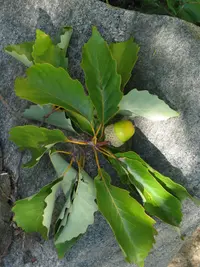
Leaves are large, with shallow rounded lobes and a rich dark green color that turns yellow-brown in fall. The tree produces acorns that support wildlife and contribute to natural regeneration.

This species is adapted to poor, well-drained, often rocky soils and shows good drought tolerance once established. These traits make it relatively forgiving for those who want to learn how to care for Chestnut Oak in suitable outdoor conditions.

Main Plant Requirements

Care Difficulty

Moderate Care

Light Preference

Full Sun

Water Requirements

Moderate Water

Temperature Preference

Cold Hardy

Hardiness Zone

4–8

Soil Texture

Sandy, Loamy, Rocky

Soil pH

Acidic (5.5–6.5), Slightly acidic (6.5–7.0)

Soil Drainage

Well-drained

Fertilization

Minimal (feed rarely)

Get Personalized Care Plan

Scan your plant to receive care tips personalized for your specific plant

Available on iOS and Android

How to Care for the Chestnut Oak

This species prefers full sun but tolerates some light shade, especially when young.

  • Provide 6–8 hours of direct sun daily; morning and midday sun support strong growth and dense crowns in mature trees.
  • Allow partial shade (3–4 hours direct sun) for seedlings and saplings to reduce leaf scorch and moisture stress while roots establish.
  • Chestnut Oak growing in dense shade develops sparse foliage, slower growth, and weaker wood; avoid planting where buildings or large trees block most light, especially in summer.

This oak is drought-tolerant once established but still benefits from thoughtful watering in its early years.

  • During the first 2–3 growing seasons, water when the top 5–8 cm of soil is dry, applying a slow, deep soak to moisten the upper 20–30 cm of soil.
  • Ensure soil drains freely; standing water, sour smells, yellowing leaves, or dieback on young stems suggest overwatering or poor drainage.
  • After establishment, rely mainly on rainfall, but in prolonged drought with curling or browning leaves, give an infrequent, thorough soak rather than light, frequent sprinkling around Quercus montana.

This native oak handles a wide temperature range but grows best under moderate conditions.

  • Active growth is strongest in spring and early summer when temperatures sit around 60–80°F (16–27°C).
  • Mature trees tolerate winter lows near -20°F (-29°C) once hardened; young plants need protection from sudden cold snaps and drying winter winds.
  • In hot spells above 90°F (32°C), growth can slow and leaves may scorch, so mulch the root zone to stabilize soil temperature and conserve moisture.

Quercus montana handles a wide humidity range and usually does not need special humidity management outdoors or in landscape conditions.

Quercus montana prefers deep, well‑structured mineral soils that balance moisture retention with rapid drainage.

  • Use a loamy to sandy-loam soil with moderate organic matter, allowing water to drain while roots stay aerated.
  • Aim for slightly acidic to neutral pH, around 5.5–7.0, avoiding strongly alkaline or saline conditions.
  • In landscape planting, incorporate 5–20% compost into the backfill only if native soil is very poor or compacted.
  • Avoid heavy, waterlogged clays; improve drainage with coarse sand or fine gravel rather than excessive peat or unmixed compost.

This species is not well suited to long-term container growing, except as a short-term seedling or young sapling in training.

  • Choose a tall, heavy container that resists tipping, since early growth can become top-heavy even at modest height.
  • Use a deep, sharply draining mix so the taproot can develop without sitting in a saturated zone near the base.
  • Position the container where wind exposure is reduced, because limited root anchorage makes the young tree more vulnerable to rocking.

Quercus montana is a slow-growing native oak that usually needs minimal fertilization in the ground if planted in suitable soil.

  • For young or stressed trees, apply a balanced slow-release NPK fertilizer (such as 10-10-10) once in early spring.
  • Keep total nitrogen modest to avoid overly lush, weak growth; follow label rates rather than increasing dosage.
  • Use a light topdressing of compost over the root zone in spring to improve soil structure and microbial activity.
  • Avoid fertilizing in late summer or fall so new growth hardens before winter dormancy.

Pruning Quercus montana focuses on safety, structure, and removal of problem wood rather than frequent shaping.

  • Schedule structural pruning in late winter while the tree is dormant and branch structure is easy to see.
  • Remove dead, diseased, rubbing, or storm-damaged branches with clean, sharp bypass pruners or a pruning saw.
  • Thin crowded interior branches selectively to improve air flow and light, maintaining the natural oval crown.
  • Avoid large heading cuts; favor cutting back to branch collars to support proper wound closure and long-term strength.

Chestnut oak is usually established directly in the landscape, with transplanting focused on young trees rather than ongoing repotting.

  • Transplant in late fall or early spring when the tree is dormant to limit water stress and transplant shock.
  • Look for circling roots in containers or poor growth in-ground as signs a young tree should be shifted to a larger site.
  • Dig a wide planting hole no deeper than the root ball, gently loosen circling roots, and keep the flare at soil level.
  • Water deeply after planting, apply 5–7 cm of mulch outside the trunk, and maintain consistent moisture during the first 1–2 years.

Quercus montana is usually propagated from seed, as vegetative methods are slow and less reliable for this species.

  • Collect healthy acorns in fall when they turn brown and detach easily from the tree.
  • Discard acorns that float in water, then store viable ones cool and slightly moist to prevent drying before sowing.
  • Sow acorns in deep pots or outdoor nursery beds, 2–3 cm deep, in well-drained soil or a sandy mix.
  • Protect germinating seedlings from rodents and heavy browsing, providing full sun to light shade and even moisture.

Mature Quercus montana is very cold hardy in its native range and usually needs little winter care once established.

  • Apply 5–8 cm of mulch over the root zone of young trees to moderate soil temperature and conserve moisture.
  • Avoid piling mulch against the trunk to reduce bark rot and rodent damage through winter.
  • For container-grown saplings, overwinter pots in an unheated garage or sheltered cold frame to reduce freeze–thaw root injury.

Care Tips

Protect Young Bark

Install a light-colored tree guard or hardware cloth around the lower trunk of young trees to prevent sunscald, mower damage, and rodent girdling during the first 3–5 years.

Encourage Deep Roots

During the first few seasons, use a wide mulch ring (7–10 ft) instead of frequent surface watering to keep competition down and encourage the tree to develop a deep, drought-resilient root system.

Manage Competing Vegetation

Keep turf and aggressive groundcovers at least 3–4 ft away from the trunk, using mulch or landscape fabric plus mulch, so the oak does not have to compete for moisture and nutrients in the critical root zone.

Monitor For Oak Pests

Inspect leaves, twigs, and bark 2–3 times per year for early signs of borers, caterpillars, or scale insects, and contact a certified arborist promptly if you see extensive dieback, exit holes, or heavy sap flow.

Plan For Mature Size

Before planting, verify there is at least 40–50 ft of overhead clearance and 20–30 ft of lateral space from buildings and utilities, since planning for size is essential when growing Chestnut Oak successfully long-term.

Common Pests and Diseases

Gypsy moth

This pest can cause heavy defoliation on chestnut oak, especially during outbreak years, weakening trees and slowing growth. Symptoms include large patches of missing foliage and dark caterpillar droppings beneath the canopy.

Solution

Monitor foliage in late spring for caterpillars and feeding damage, and encourage or preserve natural predators and native parasitoids where possible. For high‑value landscape trees, a certified arborist can apply targeted biological products containing Bacillus thuringiensis (Bt) to young caterpillars and may recommend banding or sticky traps to reduce climbing larvae.

Oak wilt

This disease causes rapid wilting, browning of leaves, and eventual death of affected oaks, often starting in the upper crown. Symptoms include sudden leaf drop in summer and vertical streaking in sapwood under the bark.

Solution

Promptly remove and properly dispose of infected trees or major infected limbs to limit spread, and avoid pruning or wounding trees during the growing season when beetle vectors are active. In high‑risk areas, use clean pruning tools, avoid moving oak firewood, and consult a certified arborist about possible root graft disruption and, in some cases, trunk injection with systemic fungicides for nearby high‑value specimens.

Oak leaf blister

This disease produces raised, blister‑like, pale patches on leaves that later turn brown and distorted, but it rarely kills trees. Symptoms include scattered thickened spots that give the leaf a puckered appearance.

Solution

Rake and dispose of fallen leaves in autumn to reduce overwintering spores and improve airflow through the canopy by proper structural pruning during dormant seasons. In landscapes where repeated severe infections occur on valued trees, a professional may apply a preventative fungicide just before bud break, as curative treatments are ineffective once symptoms appear.

Two‑lined chestnut borer

This pest attacks stressed chestnut oaks, causing branch dieback that usually starts in the upper crown and progresses downward. Symptoms include thinning foliage, dead branch tips, and D‑shaped exit holes in the bark along with galleries under the bark.

Solution

Reduce stress by avoiding soil compaction, overmulching, and drought stress, and irrigate during prolonged dry periods to keep soil evenly moist but not waterlogged. Remove and destroy heavily infested branches or trees to reduce beetle populations, and consult an arborist about the timing of systemic insecticide treatments for high‑value trees that show early signs of attack.

Armillaria root disease

This disease affects weakened or stressed chestnut oaks, leading to crown thinning, reduced vigor, and eventual death. Symptoms include resin or dark staining at the root collar, white fungal growth beneath the bark at the base, and honey‑colored mushrooms near the trunk in wet seasons.

Solution

Improve tree vigor by reducing competition from turf, maintaining a moderate mulch layer (5–8 cm) away from the trunk, and providing consistent but not excessive watering during drought. Severely affected trees should be removed, including as much of the major root system as practical, and new oaks should not be planted directly into known infested stumps or root zones; instead, choose non‑susceptible species for replanting nearby.

Interesting Facts

Acid-tolerant upland oak

This species is one of the dominant oaks on dry, rocky ridges and shallow, acidic soils in the Appalachian region, often forming almost pure stands where many other tree species struggle to survive.

Exceptional drought resilience

Its thick, deeply furrowed bark and extensive root system allow it to withstand frequent drought and fire, making it a key component of dry oak woodland and oak–pine forest ecosystems.

Wildlife food specialist

The large, thick-shelled acorns are relatively low in tannins compared with some other red oaks, so they are an important autumn and winter food source for black bear, white-tailed deer, wild turkey, and many small mammals.

Botan icon

Did you know?

Chestnut oak can live for several centuries, and very old individuals on exposed Appalachian ridges often become short, gnarled, and bonsai-like, creating distinctive cliff-top and rocky outcrop woodlands that are shaped by wind, drought, and thin soils over long periods of time.

FAQs about Chestnut Oak

This species grows at a slow to moderate rate, usually adding about 30–60 cm per year once established. Growth is quicker on deep, well-drained, slightly acidic soils and slower on thin, dry ridge sites.

Grow Healthy Plants with Botan Care

Keep your plants happy and healthy with plant identification, disease detection, and easy care guidance.

Botan plant care app — identify plants on mobile

Explore More Plants