Japanese tree lilac Care (Syringa reticulata)

Japanese tree lilac

About Japanese tree lilac

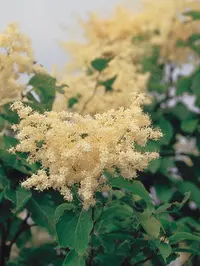
The Japanese tree lilac, Syringa reticulata, is a small ornamental tree or large shrub valued for its early-summer clusters of creamy white, fragrant flowers. It develops a rounded to oval crown with attractive dark green foliage and showy bark, making it suitable as a focal tree in gardens and streetscapes.

This species is native to Japan and parts of East Asia and adapts well to many temperate climates. It is generally considered easier to grow than many other lilacs, with good tolerance to urban conditions and cold climates.

It prefers full sun, moderately moist but well-drained soil, and benefits from simple, consistent maintenance, which makes it relatively straightforward to care for Japanese tree lilac.

Main Plant Requirements

Care Difficulty

Easy Care

Light Preference

Full Sun

Water Requirements

Moderate Water

Temperature Preference

Cold Hardy

Hardiness Zone

3–7

Soil Texture

Loamy, Sandy, Clay

Soil pH

Slightly acidic (6.5–7.0), Slightly alkaline (7.0–7.5)

Soil Drainage

Well-drained

Fertilization

Minimal (feed rarely)

Get Personalized Care Plan

Scan your plant to receive care tips personalized for your specific plant

Available on iOS and Android

How to Care for the Japanese tree lilac

This species performs best in open sites with strong, direct light.

  • Provide 6–8 hours of full sun daily; morning and midday sun support dense branching and abundant flower clusters on Japanese tree lilac.
  • Tolerates light partial shade, especially with afternoon shade in hotter regions, but flowering and canopy density decline if total direct sun drops below about 4 hours.
  • Avoid deep shade near tall buildings or dense trees; insufficient light causes leggy growth, fewer blooms, and higher susceptibility to fungal issues, especially in cool, damp seasons.

This tree prefers evenly moist, well-drained soil rather than frequent shallow watering.

  • At planting and during the first 1–2 growing seasons, water deeply when the top 5–8 cm of soil feels dry, then soak the root zone so moisture reaches 20–30 cm deep.
  • Once established, Syringa reticulata usually needs deep watering only during extended dry spells, guided by dry soil and slight leaf dullness or droop as indicators.
  • Ensure soil drains freely; puddling for more than 2–3 hours or persistent wilting with soft, yellowing leaves suggests overwatering and potential root stress.

This hardy tree is adapted to cold winters and moderate summer heat outdoors.

  • Active growth and flowering are strongest in 60–80°F (16–27°C); cooler nights within this range improve bud development and overall vigor.
  • Dormant wood tolerates winter lows near -30°F (-34°C) in suitable climates, but sudden spring frosts after bud swell can damage flower buds and young shoots.
  • In summer, trees tolerate brief heat up to about 90–95°F (32–35°C) if soil moisture is adequate; prolonged extreme heat with dry soil can cause leaf scorch and reduced flowering in the following year.

Humidity is rarely a limiting factor for Syringa reticulata, which copes well with typical outdoor levels in temperate regions.

  • Performs reliably at 30–60% humidity commonly found in most outdoor garden settings.
  • Tolerates drier air without injury, so extra humidifying is not usually necessary when caring for Japanese tree lilac outdoors.
  • If grown in an unusually hot, dry microclimate, occasional deep watering of the root zone prevents leaf edge browning often mistaken for humidity stress.

Syringa reticulata prefers deep, structured soil that drains freely yet holds moderate moisture.

  • Use a loamy soil with a mix of mineral particles and organic matter so roots anchor well and stay aerated.
  • Aim for slightly acidic to neutral pH around 6.5–7.5 to support nutrient availability and stable growth.
  • Incorporate 20–30% compost plus coarse sand or fine gravel to improve both fertility and drainage in heavy ground.
  • Avoid compacted clay, waterlogged low spots, or pure sand, which either suffocate roots or dry out too quickly for stable establishment.

This species can be grown in large containers for several years, but only with careful attention to stability and root space.

  • Choose a heavy, wide-based pot (concrete, ceramic, or thick terracotta) to prevent the tall canopy from tipping in wind.
  • Select a container at least 45–60 cm deep so the woody root system can extend downward rather than circle tightly near the surface.
  • Fill with a free-draining, bark-amended mix and keep the pot slightly elevated on feet or blocks so drainage holes never sit in pooled water.

This tree grows well in average soil and often needs only light feeding once established.

  • For young or nutrient-poor plantings of Japanese tree lilac, apply a balanced slow-release fertilizer (such as 10-10-10) in early spring.
  • Use compost or well-rotted manure as a 2–5 cm surface mulch, keeping it away from the trunk flare.
  • Feed only 1x per year in the growing season; skip or greatly reduce feeding in winter dormancy.
  • If using liquid fertilizer, apply at half-strength to moist soil to limit root burn.

Pruning Syringa reticulata focuses on maintaining structure and flowering rather than frequent shaping.

  • Time major pruning for right after flowering in late spring to avoid removing next year’s flower buds.
  • Remove dead, diseased, or crossing branches with clean, sharp bypass pruners or loppers.
  • Thin crowded interior shoots to increase light and airflow, which supports healthier growth.
  • Limit cuts to smaller branches to preserve the natural tree form and reduce stress.

This species is usually grown in the ground, so care focuses on transplanting young trees rather than container repotting.

  • Transplant in early spring or early fall when temperatures are mild and soil is workable.
  • Look for signs like circling roots in nursery pots or stalled growth as indicators the plant needs more space.
  • Set the root flare at soil level in a wider, not much deeper, planting hole to reduce root stress.
  • Water thoroughly after planting and keep soil evenly moist for the first season while roots establish.

Propagation of Syringa reticulata is possible but tends to be moderate in speed rather than rapid.

  • Take semi-hardwood cuttings in mid to late summer, 10–15 cm long, with 2–3 nodes.
  • Use a well-drained medium (for example, 1:1 peat and perlite) and apply rooting hormone to the cut base.
  • Maintain bright, indirect light, high humidity, and temperatures around 65–75°F for rooting.
  • Sow seeds outdoors in fall or cold-stratify indoors for several weeks to improve germination.

Mature plants are cold hardy and generally need minimal winter care in most temperate climates.

  • In late fall, apply a 5–8 cm mulch layer around the root zone, keeping it away from the trunk.
  • Young or newly transplanted trees benefit from extra mulch and careful watering before the ground freezes.
  • Container-grown specimens in cold regions should be moved to a sheltered, unheated but frost-moderated area.

Care Tips

Trunk Training

In the first 3–5 years, remove low, competing stems and select 1–3 main trunks to create a strong tree form that resists storm damage and keeps the canopy above head height.

Graft Union Protection

Inspect the base of the tree to locate the graft union and keep mulch, soil, and lawn equipment away from it to prevent bark injury and suckering from the rootstock.

Sucker Management

Check 2–3 times per season for shoots emerging from the base or roots and cut them off cleanly at their point of origin to maintain vigor in the main canopy and a neat outline.

Blooming Wood Renewal

Every 2–3 years, remove a small portion of the oldest, thickest flowered branches right after bloom to stimulate new flowering wood and support long-term blooming performance when growing Japanese tree lilac.

Targeted Pest Monitoring

From late spring through summer, inspect flower clusters and new growth every 1–2 weeks for scale insects, borers, or leaf spot, and address issues early with pruning of infested twigs or appropriate, label-approved treatments before damage spreads.

Common Pests and Diseases

Powdery mildew

This disease appears as white, powdery patches on leaves, young shoots, and sometimes flower clusters, often developing in warm, dry conditions with poor air circulation.

Solution

Prune crowded branches to improve airflow, remove and dispose of heavily infected leaves, and avoid overhead watering; if needed, apply a labeled fungicide containing myclobutanil or sulfur in late spring when symptoms first appear, following local Syringa reticulata care instructions.

Bacterial blight

This disease causes blackened, water-soaked spots on leaves and young shoots that may wilt and die back, often after cool, wet spring weather or late frost injury.

Solution

Promptly prune and discard infected shoots several inches below visible damage, disinfect pruning tools between cuts, avoid overhead irrigation, and reduce excess nitrogen fertilization to limit soft, susceptible growth; in areas with recurring issues, select well-drained, open sites and consider more resistant lilac selections for new plantings.

Lilac borer

This pest is a clearwing moth whose larvae tunnel inside stems and trunks, leading to wilting shoots, rough or cracked bark, and sawdust-like frass at entry holes.

Solution

Keep the tree vigorous through proper watering and avoiding trunk injury, prune out and destroy infested or dead stems in late winter, and where pressure is high, use an appropriate trunk or lower-stem insecticide timed to adult moth flight, often in late spring, according to local extension guidance.

Oystershell scale

These insects form small, elongated, shell-like coverings on branches and twigs, sucking sap and causing twig dieback, leaf yellowing, and general decline in heavily infested plants.

Solution

Inspect stems closely and prune out badly infested branches, then treat remaining plants in late spring with a horticultural oil spray targeting the crawler stage; repeat monitoring yearly and encourage natural predators by avoiding broad-spectrum insecticides.

Leaf miners

These insects create winding, pale tunnels inside leaves, which can make foliage look blotchy and reduce photosynthetic area, though mature trees often tolerate light damage.

Solution

Rake and discard fallen leaves to remove overwintering stages, prune and destroy heavily affected shoots, and if damage is severe on young trees, use a systemic insecticide labeled for leaf miners applied at the appropriate timing based on local recommendations.

Interesting Facts

Unusually late flowering

This species flowers in early to mid-summer, much later than common lilacs, providing nectar and pollen when many spring-flowering shrubs are already finished.

Fragrant panicle structure

Its large, creamy-white flower clusters are compound panicles composed of many tiny tubular flowers, an arrangement that maximizes visual and scent signals to pollinating insects.

Urban tolerance traits

Japanese tree lilac shows relatively high tolerance to road salt, air pollution, and compacted soils, which makes it a frequent choice for street and parking-lot plantings in temperate cities.

Botan icon

Did you know?

In its native range in Japan, this species naturally occurs as a small tree on cool, rocky mountain slopes and forest edges, a habitat preference that helps explain its good cold tolerance and performance in cooler urban climates.

FAQs about Japanese tree lilac

Lack of blooms often comes from too much shade, overly heavy pruning, or excess nitrogen fertilizer. Young trees also need several years to mature before flowering reliably, even with good Syringa reticulata care.

Grow Healthy Plants with Botan Care

Keep your plants happy and healthy with plant identification, disease detection, and easy care guidance.

Botan plant care app — identify plants on mobile

Explore More Plants