Windfirm training
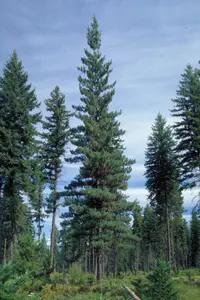
In the first 3–4 years, select a single strong central leader and remove or shorten competing uprights to create a windfirm, pyramid-shaped crown that tolerates storms without major breakage.

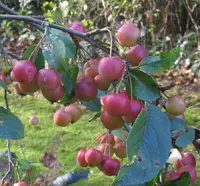
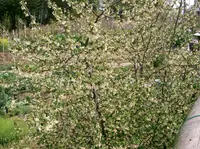
Siberian crab apple, Malus × robusta, is a hardy deciduous tree grown mainly for its small colorful fruits and cloud-like spring blossom. It usually forms a rounded crown with dense branches and attractive autumn foliage.
This hybrid originates from colder regions of Northeast Asia and is widely used in orchards and landscapes as a pollinator and ornamental tree. Its strong cold tolerance and general disease resistance make it relatively straightforward to care for Siberian crab apple in suitable climates.
It prefers full sun, moderately moist but well-drained soil, and benefits from a site with good air movement to reduce fungal problems.

Care Difficulty
Moderate Care

Light Preference
Full Sun

Water Requirements
Moderate Water

Temperature Preference
Cold Hardy

Hardiness Zone
3–7

Soil Texture
Loamy, Sandy, Clay

Soil pH
Acidic (5.5–6.5), Slightly acidic (6.5–7.0)

Soil Drainage
Moist but well-drained

Fertilization
Minimal (feed rarely)
Scan your plant to receive care tips personalized for your specific plant
Available on iOS and Android
Malus × robusta thrives in full sun but tolerates some light shade, especially in hotter regions.
Malus × robusta prefers evenly moist, well-drained soil rather than frequent shallow watering.
This crab apple is a cold-hardy tree that manages wide outdoor temperature swings once established.
This crab apple tolerates a wide humidity range and usually does not need special humidity control outdoors.
Malus × robusta grows best in moderately moist, fertile, well‑structured mineral soil with reliable drainage.
This species can be grown in containers for several years, but only with careful attention to root space and stability.
Malus × robusta benefits from moderate feeding to support flowering and fruit set in typical garden soils.
Pruning Malus × robusta maintains a strong framework, good light penetration, and healthy fruiting wood.
This crab apple is usually grown in the ground, so focus on correct outdoor transplanting rather than frequent repotting.
Malus × robusta is most reliably propagated by grafting, with seeds and cuttings used mainly for rootstocks or breeding work.
This species is cold hardy in most temperate climates and usually needs little special winter care once established.

Plant Health Check
Not sure what's wrong with your plant? Check your plant's health inside the app.
This crabapple is a naturally occurring hybrid between Malus baccata (Siberian crabapple) and Malus prunifolia, combining cold hardiness from M. baccata with the more robust growth and fruiting of M. prunifolia.
It tolerates very low winter temperatures and has been used extensively in breeding programs to pass on cold-hardiness traits to modern apple and crabapple rootstocks and ornamentals.
The tree produces numerous small, bright crabapples that often remain on the branches well into winter, providing visual interest and an important late-season food source for birds in cold regions.

Malus × robusta has been used as a rootstock and breeding parent in regions with severe winters, helping expand commercial and ornamental apple growing into colder climates by improving resistance to frost damage and winter dieback.
Poor flowering usually comes from insufficient sunlight, heavy pruning at the wrong time, nutrient imbalance, or a young tree that is not yet mature. Late frosts, drought stress, and root damage can also reduce or prevent blossom formation.
Keep your plants happy and healthy with plant identification, disease detection, and easy care guidance.