Structured formative training
During the first 3–5 years, select 3–5 well-spaced primary scaffold branches and remove steep, upright competitors in late winter to create a strong open framework that resists breakage under fruit and snow load.

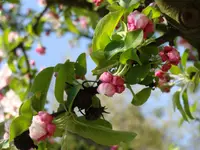
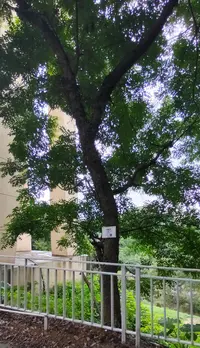
O-zumi, Malus × zumi, is a small ornamental crabapple tree often used in gardens and streetscapes. It usually forms a rounded crown with dense branching and fine twigs. In spring it carries showy white to pink blossoms, followed by small colorful fruits that can persist into winter and attract birds. This hybrid has roots in East Asian crabapple species but is now widely cultivated in temperate regions. The tree is valued for its cold hardiness, floral display, and relatively manageable size, which makes it suitable for many residential gardens. It prefers full sun, moderately moist, well-drained soil, and benefits from simple, regular pruning to care for o-zumi.

Care Difficulty
Moderate Care

Light Preference
Full Sun

Water Requirements
Moderate Water

Temperature Preference
Cold Hardy

Hardiness Zone
4–8

Soil Texture
Loamy, Sandy, Clay

Soil pH
Acidic (5.5–6.5), Slightly acidic (6.5–7.0)

Soil Drainage
Moist but well-drained

Fertilization
Minimal (feed rarely)
Scan your plant to receive care tips personalized for your specific plant
Available on iOS and Android
This deciduous crabapple grows best in full sun but accepts light shade in hotter regions.
This species prefers consistently moist, well-drained soil rather than frequent shallow watering.
This hardy crabapple thrives in climates with cold winters and moderate summers.
Malus × zumi tolerates a broad humidity range and rarely needs special humidity management outdoors.
Malus × zumi grows best in deep, moisture-retentive yet well-drained loamy soil.
This species can be grown in containers for several years when given a large, heavy, and very stable pot.
Malus × zumi benefits from moderate feeding to support healthy growth and flowering, especially in poorer soils.
Pruning Malus × zumi helps maintain structure, safety, and reliable flowering.
Malus × zumi is usually grown in the ground, so transplanting young trees correctly is more important than repotting.
Propagation of Malus × zumi for home gardeners is usually done by grafting rather than from seed to keep named cultivars true to type.
Mature Malus × zumi trees are generally cold hardy in most temperate climates and require minimal winter care.

Plant Health Check
Not sure what's wrong with your plant? Check your plant's health inside the app.
This crabapple is a natural hybrid between Malus mandshurica and Malus sieboldii, combining cold hardiness from its Manchurian parent with disease resistance and ornamental traits from the Siebold crabapple.
Malus × zumi tolerates very low winter temperatures and is widely used as a hardy rootstock and ornamental tree in regions with harsh, continental-type climates.
It is valued in breeding programs for its abundant white to soft pink blossom, small decorative fruits, and generally good resistance to common crabapple diseases such as apple scab.

Malus × zumi has been extensively used as a rootstock and breeding parent in Japan and other temperate countries, helping to develop many modern ornamental crabapple cultivars that combine showy flowers with improved disease resistance and winter hardiness.
This crabapple usually flowers in mid to late spring on 1-year-old wood. Flowering is reduced by heavy shade, overfertilizing with nitrogen, drought stress, or improper pruning that removes short flowering spurs.
Keep your plants happy and healthy with plant identification, disease detection, and easy care guidance.