dulse Care (Palmaria palmata)

dulse

About dulse

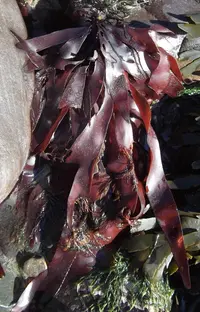
Dulse, Palmaria palmata, is a red seaweed rather than a land plant, naturally attached to rocks in cold North Atlantic coastal waters. It forms soft, flat, reddish-brown fronds that fan out in flexible, leafy layers.

In nature it grows in clean, nutrient-rich seawater with steady wave movement and cool temperatures. It is harvested for food and as a mineral-rich supplement.

For those exploring how to care for dulse in controlled systems, stable cool water, good water movement, and strong but not excessive light are key factors for success.

Main Plant Requirements

Care Difficulty

Hard Care

Light Preference

Partial Shade

Water Requirements

Aquatic

Temperature Preference

Cool Climate

Hardiness Zone

Unknown

Soil Texture

Sandy, Silty, Organic-rich

Soil pH

Neutral (7.0), Slightly alkaline (7.0–7.5)

Soil Drainage

Waterlogged tolerant

Fertilization

Minimal (feed rarely)

Get Personalized Care Plan

Scan your plant to receive care tips personalized for your specific plant

Available on iOS and Android

How to Care for the dulse

Palmaria palmata grows best in cool, well-lit coastal waters with moderate sun exposure.

  • Provide 3–6 hours of low-angle sun, such as morning or late afternoon light, avoiding intense midday exposure in clear, shallow water.
  • Allow partial shade from rocks, overhangs, or suspended particles; 30–70% filtered light helps prevent bleaching and tissue damage.
  • Limit strong direct sun in summer, as prolonged exposure can overheat and desiccate fronds; in winter, slightly clearer water improves light penetration for steady growth.

Palmaria palmata is a marine red alga that depends on stable, clean seawater movement rather than traditional soil watering.

  • Maintain constant submersion in cool, fully saline seawater; avoid stagnant conditions by ensuring steady but gentle water flow or wave action.
  • Watch for stress signs: limp, fading, or pale fronds can signal poor water quality or insufficient flow, while rapid darkening with decay suggests pollution or extreme stress.
  • In warmer seasons, increased water temperatures raise metabolic demand, so consistent circulation and oxygenation become more critical for Palmaria palmata health.

This cold-water seaweed prefers cool marine conditions with limited temperature swings.

  • Aim for 41–59°F (5–15°C) for best growth; sustained conditions around 46–54°F (8–12°C) suit long-term development of healthy fronds.
  • Tolerates down to about 32°F (0°C) in seawater without ice formation but suffers damage with prolonged freezing or sudden temperature shocks.
  • Handles short periods up to 64–68°F (18–20°C), but warmer water beyond this range increases stress, slows growth, and can lead to tissue breakdown over time.

This red seaweed prefers cool, moist marine-style conditions but survives brief drier air if kept hydrated.

  • Aim for 60–80% humidity when storing or displaying fresh dulse to slow dehydration and texture loss.
  • Crisping, darkening fronds and quick weight loss indicate humidity stress and excessive drying.
  • Increase humidity around harvested fronds by covering loosely, using a humid container, or placing a damp towel nearby without direct soaking.

Palmaria palmata is not a terrestrial plant, so it does not use conventional potting soil but attaches to hard marine substrates.

  • In cultivation, mimic rocky coastal habitats with inert, non-calcareous rock, shells, or plastic mesh rather than any loamy or sandy terrestrial mix.
  • Maintain growth in clean, well-circulated seawater (or synthetic seawater) with stable salinity around 30–35 ppt instead of relying on soil-based nutrients.
  • Avoid calcareous substrates that significantly raise pH, since this alga prefers slightly alkaline but stable seawater conditions rather than shifting, soil-driven chemistry.
  • If using artificial culture systems, secure fronds to mesh or small stones to improve water flow around tissues and prevent smothering by sediments.

This marine alga is suitable for container growing only in dedicated seawater tanks or aquaria, not in standard pots.

  • Use a wide, shallow marine tank that spreads fronds in a thin layer so all tissue receives light and flowing water.
  • Choose a stable, non-reactive container material such as glass or food-grade plastic to prevent leaching that could alter salinity or pH.
  • Position water inlets to create gentle laminar flow across the fronds, avoiding dead zones where detritus can accumulate on the thallus surface.

Palmaria palmata in natural coastal conditions gains enough nutrients from seawater and attached substrates, so additional fertilization is usually unnecessary.

Palmaria palmata benefits from light pruning to maintain healthy fronds and limit fouling by epiphytes.

  • Trim back dead, bleached, or decaying blades at low tide during active growth for safest handling.
  • Remove damaged or heavily fouled fronds, leaving healthy holdfasts attached to the rock or culture line.
  • Use clean, sharp scissors or a knife, making smooth cuts that avoid tearing the thallus tissue.
  • Moderate thinning of crowded blades improves light penetration and water flow, supporting renewed growth.

This seaweed is usually grown on ropes, nets, or rocks, so management focuses on transplanting rather than classic repotting.

  • Transplant when clumps become crowded, growth slows, or biomass thins in the center of a culture line or panel.
  • Carry out transfers in cool conditions, ideally early in the growing season, to reduce stress and desiccation.
  • Every 1–2 years, renew or reposition culture substrates, attaching healthy holdfast pieces to fresh rope or mesh.
  • Keep fronds moist with seawater during handling, minimize air exposure, and secure attachments firmly to limit mechanical stress.

Palmaria palmata is commonly propagated in cultivation by vegetative fragments and holdfast pieces rather than by spores.

  • Take healthy blade sections or holdfast pieces in spring–early summer when growth is strongest.
  • Attach fragments to ropes, nets, or shells using soft ties or mesh sleeves, avoiding tight compression.
  • Maintain constant immersion in clean, cool, moderately moving seawater to support attachment and new growth.
  • Control light and nutrients to moderate levels, reducing algal overgrowth and improving survival of new plants.

In its native cold-temperate coasts, this marine alga is naturally winter hardy and usually needs no special seasonal care.

Care Tips

Tidal mimicry

Use a shallow, wide container and alternate between full submersion and brief exposure to air to mimic natural tidal cycles, which supports healthier frond texture and color when growing dulse.

Water movement

Install a gentle air stone or low-flow circulation pump to keep seawater slowly moving around the fronds, which helps prevent stagnation, film buildup, and localized nutrient depletion.

Salinity monitoring

Measure salinity regularly with a refractometer and top up with fresh or marine saltwater to keep levels stable, since sudden drops or spikes quickly stress this seaweed.

Clean-harvest technique

When harvesting, trim only the outer, mature fronds with clean scissors and leave the holdfast and younger central tissue intact so the colony can regrow efficiently.

Biofouling control

Inspect fronds weekly and gently remove filamentous algae or small invertebrates by hand or with a soft brush under flowing seawater to maintain light access and reduce competition.

Common Pests and Diseases

Epiphytic filamentous algae

This disease appears as fine green, brown, or filamentous strands growing over the dulse blades, reducing light penetration and gas exchange. Symptoms include stunted growth and blades that feel slimy or heavily fouled.

Solution

Reduce nutrient and organic load in the water, increase gentle water movement, and manually remove fouling by lightly rinsing or swishing fronds in clean seawater. In culture systems, lower stocking density and improve filtration to limit excess dissolved nutrients that favor filamentous algae over Palmaria palmata.

Marine biofouling invertebrates

This pest group includes small barnacles, bryozoans, and tube‑building worms that attach to blades and stiffen or deform the fronds. Symptoms include rough, encrusted patches on otherwise smooth tissue and reduced flexibility of the thallus (seaweed body).

Solution

Inspect fronds regularly and physically remove heavily encrusted sections to prevent spread and shading. In cultivation tanks or ropes, manage water exchange and location to avoid highly fouling-prone areas and periodically clean culture gear so juveniles have fewer hard surfaces from which to spread onto dulse.

Endophytic red algae

This disease involves microscopic algae living inside the dulse tissue, often visible as discolored streaks or patches and progressive thinning of the blades. Symptoms include reduced growth rates, weakened texture, and irregular coloration that does not match normal pigmentation patterns.

Solution

Select and maintain clean, symptom-free starter material and promptly discard any fronds showing internal streaking or abnormal translucency. In farming systems, rotate culture lines and avoid reusing heavily affected material so endophyte load is gradually reduced over production cycles.

Bacterial blade necrosis

This disease shows as small pale spots that turn into soft, perforated areas on the blades, often starting on damaged tissue. Symptoms include fraying margins, ragged holes, and rapid deterioration of weakened parts of the thallus.

Solution

Improve water quality by reducing organic pollution and sudden temperature or salinity stress, which favor opportunistic bacteria. Remove and discard visibly necrotic sections to limit bacterial spread along blades, and in culture systems avoid mechanical damage from overcrowding or rough handling to reduce entry points for infection.

Interesting Facts

Cold-water red alga

This species is a red seaweed that thrives in cold North Atlantic and North Pacific waters, often growing attached to rocks in the lower intertidal to subtidal zone where light still penetrates well.

Natural vitamin source

Its blades contain notable amounts of vitamins such as vitamin B12 and minerals like iodine and iron, which has led to long-standing use as a traditional food in coastal regions of Ireland, Iceland, and Atlantic Canada.

Distinctive blade anatomy

The fronds are usually fan-shaped and leathery with dichotomous branching, meaning they repeatedly split into two, which increases surface area for photosynthesis and nutrient uptake in low-light underwater conditions.

Botan icon

Did you know?

This seaweed can accumulate the pigment phycoerythrin, which allows it to absorb blue-green light efficiently and continue photosynthesis at depths where many other algae cannot compete, giving it an advantage in dim subtidal habitats.

FAQs about dulse

Yes, this red seaweed is edible and widely used as a food. It can be eaten dried, roasted, or rehydrated, and added to soups, salads, breads, and snacks as a mineral-rich, umami seasoning.

Grow Healthy Plants with Botan Care

Keep your plants happy and healthy with plant identification, disease detection, and easy care guidance.

Botan plant care app — identify plants on mobile

Explore More Plants