chaga Care (Inonotus obliquus)

Also known as: Chaga fungus, chaga mushroom
chaga

About chaga

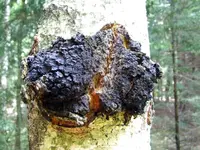
Chaga, Inonotus obliquus, is a slow-growing parasitic fungus that forms hard, charcoal-black masses on the trunks of living birch trees. It is not grown like a typical houseplant but as a specialized outdoor crop or wild-harvested organism.

The outer surface looks cracked and burnt, while the interior is rusty orange-brown. In nature it occurs mainly in cold forests of northern Europe, Russia, Asia, Canada, and the northern United States.

It is challenging to cultivate because it depends on living birch hosts, a long colonization period, and very specific climate conditions. Most home growers who want to care for chaga focus on supporting existing host trees rather than starting new infections.

Main Plant Requirements

Care Difficulty

Hard Care

Light Preference

Partial Shade

Water Requirements

Moderate Water

Temperature Preference

Cold Hardy

Hardiness Zone

2–6

Soil Texture

Loamy, Sandy, Organic-rich

Soil pH

Strongly acidic (4.5–5.5), Acidic (5.5–6.5)

Soil Drainage

Moist but well-drained

Fertilization

Minimal (feed rarely)

Get Personalized Care Plan

Scan your plant to receive care tips personalized for your specific plant

Available on iOS and Android

How to Care for the chaga

This wood-decay fungus prefers cool, shaded forest conditions rather than direct open sun exposure.

  • Site host birch trees where they receive dappled or filtered light, with no more than 1–2 hours of weak direct sun, ideally in early morning.
  • Avoid strong midday or afternoon sun, which can overheat bark and dry surface wood, making conditions less suitable for stable chaga development.
  • Prioritize stable partial shade year-round; in managed stands, retain canopy cover so trunks stay mostly shaded even as seasonal sun angles change.

This fungus relies on natural moisture in its host tree and surrounding environment rather than direct watering.

  • Focus on maintaining a consistently moist woodland setting with well-drained but humus-rich soil, rather than applying water to the fungus itself.
  • Inonotus obliquus benefits from environments where the upper 2–5 cm of forest soil do not stay waterlogged for more than 24 hours after rain.
  • Persistent standing water, sour smells, or slimy bark indicate poor drainage and excess moisture, while deep bark cracking and very dry litter suggest overly dry conditions.

This species is adapted to cold and cool-temperate climates with long winters and mild summers.

  • Optimal activity occurs roughly around 40–70°F (4–21°C), typical of cool forests, with growth slowing in warmer conditions.
  • The fungus tolerates very low winter temperatures, often below 0°F (-18°C), as long as the host birch remains alive and structurally sound.
  • Extended heat above 80–86°F (27–30°C), especially combined with drought, can stress the host tree and indirectly reduce long-term colonization success.

Humidity is a minor factor for Inonotus obliquus compared with host-tree health and outdoor climate.

This fungus depends on the living birch host rather than independent soil conditions, but site soil still influences host vigor and infection success.

  • Select a site with moderately moist, well-drained, loamy soil so birch roots receive oxygen and avoid chronic waterlogging.
  • Aim for slightly acidic soil, around pH 5.0–6.5, which favors both birch growth and natural Inonotus obliquus development.
  • Incorporate leaf mold or well-rotted compost into the top 10–15 cm to increase organic matter and microbial activity without creating soggy conditions.
  • Avoid compacted clay, standing water, or highly alkaline substrates, as these stress birch roots and reduce long-term colonization potential.

This species is not suitable for container growing because it is an obligate parasite of living birch trees and depends on their long-term, in-ground root systems.

Inonotus obliquus is a wild, wood-decaying fungus that does not need conventional fertilizing and relies on its host tree for nutrients.

Pruning does not apply in a conventional sense to Inonotus obliquus, since it is a parasitic fungus forming sterile conks on living birch and other trees.

Transplanting focuses on host trees rather than the fungus itself, since Inonotus obliquus naturally colonizes living birch and is not suited to container culture.

  • Plant young birch or other suitable hosts in well-drained, cool soils in early spring or fall for lowest stress.
  • Transplant only when the tree is dormant, minimizing disturbance to the root ball and avoiding root tearing.
  • Water thoroughly after transplanting and maintain even soil moisture while new feeder roots establish.
  • Avoid frequent moving of host trees; fungal establishment is slow and benefits from a stable site.

Propagation of Inonotus obliquus at home is challenging, usually requiring controlled inoculation of host trees rather than simple home techniques.

  • Use spawn or dowel plugs from a specialized supplier to inoculate healthy birch with existing chaga genetics.
  • Drill shallow holes into the trunk during mild spring or early summer, then insert plugs and seal with wax.
  • Maintain the host tree in low-stress conditions with adequate water to support long-term colonization.
  • Expect several years before noticeable conk development; success depends more on host health than on typical how to take care of chaga methods.

Mature Inonotus obliquus on hardy birch tolerates very low winter temperatures and usually needs no special protection.

  • Ensure the host tree species is suited to local winter lows, as fungal survival depends on host health.
  • Apply 5–8 cm of mulch around the tree’s root zone in late fall to moderate soil temperature and moisture.
  • Avoid de-icing salts and winter lawn chemicals near the tree, since root damage can indirectly affect the fungus.

Care Tips

Select Host Trees

Choose healthy, mature birch trees with intact bark and no large trunk wounds, since weak or heavily damaged hosts are less likely to support stable chaga formation over many years.

Sanitize Inoculation Tools

Disinfect drill bits, chisels, and inoculation tools with alcohol before each tree to reduce the risk of introducing competing fungi or bacterial infections at the wound site.

Control Wound Size

Drill only to the depth and diameter specified by your spawn supplier and avoid clustering many holes together, which helps the tree compartmentalize the wound and remain structurally sound.

Mark And Map Trees

Label each inoculated tree with weatherproof tags and keep a simple map or GPS log so you can monitor colonization progress, avoid double-inoculating the same spot, and plan long-term harvest cycles when growing chaga.

Harvest Conservatively

When removing chaga, leave a portion firmly attached to the trunk and avoid cutting into the tree’s cambium layer so the host tree can continue to live and possibly produce additional conks over time.

Everything About chaga

Common Pests and Diseases

Competing saprotrophic fungi

This disease involves other wood-decay fungi colonizing the same birch host and competing with the chaga conk. Symptoms include stalled or deformed growth of the sterile conk and patches of differing texture or color on the host bark or exposed wood.

Solution

Remove and discard clearly contaminated outer tissue when harvesting, keeping only firm, uniform, dark chaga material. Harvest only from birch where a single, stable conk is present, avoid trees with multiple different fungal growths, and dry harvested chaga quickly at low heat with good airflow to reduce further fungal competition.

Bark-boring beetles

These insects tunnel into weakened birch bark and underlying wood, indirectly damaging the chaga conk by drying or destabilizing the colonized area. This pest often leaves small round or oval exit holes, frass (wood dust), and cracking or peeling bark around or below the conk.

Solution

Select host birch with intact, firm bark and no visible borer exit holes or sawdust when choosing trees for growing chaga. Avoid harvesting from heavily infested trunks, and when possible use physical barriers (such as fine mesh wraps on cultivated logs) and keep logs off the ground and under cover to reduce beetle access.

Sap beetles

These insects are attracted to sap flows and fermenting tissues around injured birch and can cluster on or near the chaga mass. This pest can introduce secondary microorganisms and accelerate decomposition of exposed tissue.

Solution

Choose host trees or cut logs that do not have fresh sap runs or open, wet wounds near the chaga colony. In managed or experimental setups, keep inoculated logs in a shaded, airy, relatively dry location and remove rotting or overly wet bark sections that attract sap beetles, relying on sanitation and environmental control instead of chemical treatments.

Surface mold contamination

This disease appears when green, white, or gray mold colonizes the surface of harvested or stored chaga. Symptoms include fuzzy growth, off-odors, and softening or discoloration of the outer layers.

Solution

Trim away and discard any moldy or softened parts and only keep firm, dry material with a consistent dark color. To prevent recurrence, dry chaga pieces promptly after collection at 95–120°F with strong airflow, then store in breathable containers in a cool, dry place, following conservative Inonotus obliquus care instructions focused on clean handling and rapid drying.

Interesting Facts

Sterile conk growth

The black, cracked mass known as chaga is a sterile conk that forms from the fungus invading living birch tissue, rather than a typical mushroom fruiting body with gills or pores.

Cold-adapted distribution

This species is strongly associated with cold and boreal forests and is especially common on birch trees in northern regions such as Siberia, Scandinavia, and northern North America.

Slow host decay

Although it is a parasite of birch, the fungus often progresses slowly, allowing the host tree to survive for many years while internal wood decay gradually spreads around the infection site.

Botan icon

Did you know?

The visible chaga conk can take many years to reach a substantial size, and the actual spore-producing stage usually appears only once the host tree is dead or dying, emerging as a thin, inconspicuous fruiting layer under the bark rather than from the black conk itself.

FAQs about chaga

This fungus grows slowly. In natural conditions, it usually takes 10–20 years to form a large, harvestable conk on a host birch. Growth rate depends on tree health, climate, and competition from other fungi.

Grow Healthy Plants with Botan Care

Keep your plants happy and healthy with plant identification, disease detection, and easy care guidance.

Botan plant care app — identify plants on mobile

Explore More Plants