Use fresh substrate
Prepare fresh, pasteurized hardwood sawdust or well-aged wood chips for each new batch, since reusing decomposed substrate reduces nutrient availability and increases contamination risk when growing Collybia alboflavida.

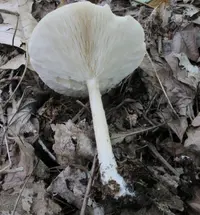
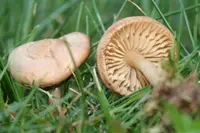
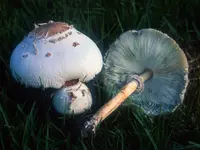
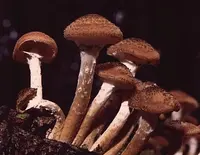
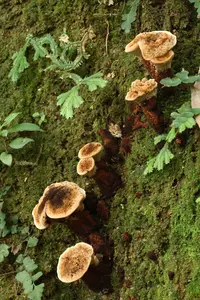
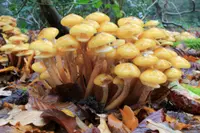
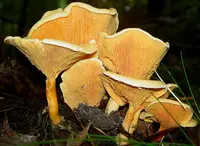
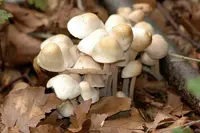
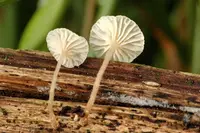
Collybia alboflavida is a small saprobic mushroom, not a leafy houseplant. It typically forms clusters of thin, pale yellow to whitish caps on decaying wood or forest litter. The caps are narrow and fragile, with slender stems that give the group a delicate, tufted look. It is usually found in temperate forests, often in mixed or conifer woods where organic debris is abundant.
This fungus depends on consistently moist, cool, shaded conditions and nutrient-rich, decomposing material. These habitat needs make it interesting to observe in nature but not a straightforward choice for home cultivation. For anyone trying to care for Collybia alboflavida, maintaining stable humidity and access to decaying wood is the main challenge.

Care Difficulty
Moderate Care

Light Preference
Partial Shade

Water Requirements
Keep Soil Moist

Temperature Preference
Cool Climate

Hardiness Zone
Unknown

Soil Texture
Loamy, Organic-rich

Soil pH
Acidic (5.5–6.5)

Soil Drainage
Moist but well-drained

Fertilization
Minimal (feed rarely)
Scan your plant to receive care tips personalized for your specific plant
Available on iOS and Android
This woodland fungus prefers cool, shaded conditions that mimic the forest floor.
Moist, not waterlogged, conditions are essential for reliable fruiting.
This species thrives in cool to mild conditions typical of shaded woodland environments.
This saprotrophic mushroom has moderate humidity needs, preferring conditions similar to a moist forest floor.
Collybia alboflavida fruits best on loose, moist, organic-rich substrates rather than dense mineral soil.
This species can be grown in containers when the focus is on maintaining a controlled, moist, wood-based substrate rather than decorative display.
This saprophytic fungus usually grows on nutrient-rich forest litter and does not need additional fertilizer in cultivation.
Collybia alboflavida does not require pruning because mushroom fruiting bodies are short-lived and naturally decompose.
When grown for observation on sterilized substrate, this fungus is handled more like a culture than a typical potted plant.
Propagation of Collybia alboflavida is specialized work and is rarely attempted by typical home growers.
Outdoor colonies behave like other woodland fungi and usually need no deliberate winter care from gardeners.

Plant Health Check
Not sure what's wrong with your plant? Check your plant's health inside the app.
This small gilled fungus is native to North America and is most often recorded from coniferous or mixed forests, where it fruits on decaying wood, needles, and forest litter, helping to break down organic matter and recycle nutrients.
The caps typically show whitish to pale yellow tones, a feature that inspired the epithet alboflavida, which combines Latin words for white and yellow, referring to its characteristic coloration.
Documented collections show that its fruiting bodies usually appear in the warmer months, often from late spring through early autumn, coinciding with periods of higher decomposition activity in forest litter.
This fungus is not considered a choice edible and is poorly documented in food safety studies. It should be treated as inedible. Foraging guides generally recommend avoiding consumption and focusing on better-known, reliably identified mushroom species.
Keep your plants happy and healthy with plant identification, disease detection, and easy care guidance.