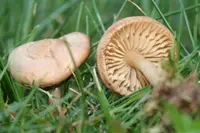
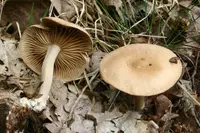
Log selection
Use well-seasoned but not fully rotted hardwood logs or stumps from oak or similar species, as stable, low-resin wood supports more reliable and long-lasting fruiting when growing Coltricia montagnei outdoors.

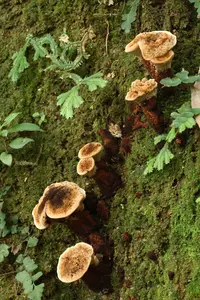
Coltricia montagnei is a small, woody polypore fungus, not a leafy houseplant. It forms thin, circular fruiting bodies with concentric zones of brown, tan, and sometimes reddish tones, often resembling tiny rosettes or rosetted brackets. The surface is usually velvety when young and becomes tougher with age.
This species typically grows on soil rich in organic matter, often among mosses or on decaying roots in forests. It is mainly encountered by mushroom enthusiasts rather than kept in regular home collections.
Because it is a wild wood-decay fungus with specific habitat needs, it is not straightforward to cultivate indoors or in gardens. Most guides on how to care for Coltricia montagnei focus on conserving its natural woodland environment rather than active cultivation.

Care Difficulty
Moderate Care

Light Preference
Partial Shade

Water Requirements
Moderate Water

Temperature Preference
Warm Climate

Hardiness Zone
Unknown

Soil Texture
Loamy, Sandy, Organic-rich

Soil pH
Acidic (5.5–6.5), Slightly acidic (6.5–7.0)

Soil Drainage
Well-drained

Fertilization
Minimal (feed rarely)
Scan your plant to receive care tips personalized for your specific plant
Available on iOS and Android
This bracket fungus prefers stable, woodland-type light conditions rather than direct, open sun.
This wood-decaying fungus depends on consistently moist but not waterlogged substrates rather than direct watering.
This species is adapted to temperate forest conditions with moderate seasonal temperature shifts.
This bracket fungus is not typically managed by adjusting air humidity in cultivation.
Coltricia montagnei is a wood-rot fungus that develops on stumps or woody debris rather than conventional potting soil.
This species is not well suited to standard container growing because it naturally fruits from buried or exposed wood rather than soil-filled pots.
This wood-decay fungus usually grows on nutrient-poor, acidic soils and does not need supplemental feeding in natural or garden settings.
Coltricia montagnei does not need pruning, as it is a short-lived bracket fungus rather than a woody plant.
This species is not suited to container culture, so care focuses on avoiding unnecessary disturbance at its natural site.
Reproducing Coltricia montagnei is complex because it relies on spores and specific soil and substrate conditions.
This fungus is cold hardy in temperate climates and normally requires no targeted winter care.

Plant Health Check
Not sure what's wrong with your plant? Check your plant's health inside the app.
The fruiting body typically has a concentrically zoned cap with alternating dark and light brown bands and a distinctly velvety to finely hairy surface, which helps distinguish it from many smoother polypores.
Unlike many polypores that are wood-decay specialists, this species forms ectomycorrhizae with the roots of trees, exchanging mineral nutrients for carbohydrates and influencing forest nutrient cycling.
This fungus is often reported on nutrient-poor, acidic, or sandy soils, where its mycorrhizal association may give host trees a competitive advantage under stressful site conditions.
This bracket fungus is considered inedible. The fruiting body is tough, corky, and lacks culinary value. It is used mainly for ecological observation or mycological study, not for food or medicinal purposes.
Keep your plants happy and healthy with plant identification, disease detection, and easy care guidance.