Use clean substrates
When moving fruiting twigs or branches for observation or culture, select recently fallen wood without visible mold or soft rot and rinse off soil to reduce competing fungi and bacteria.

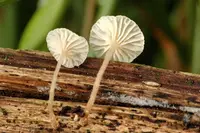
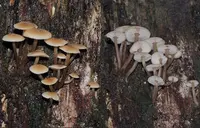
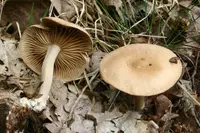
Twig parachute is a small saprotrophic fungus that grows on dead twigs and branches rather than a traditional leafy houseplant. Collybiopsis ramealis forms tiny, pale caps on slender stems, often in clusters, giving a delicate, umbrella-like look.
It occurs widely in temperate forests, hedgerows, and shrub thickets, especially where woody debris stays damp. This species relies on consistently moist, decaying wood and shaded conditions, which makes it unsuitable for typical pot culture and more challenging for beginners to maintain indoors.
Those interested in how to care for Twig Parachute should focus on replicating cool, shaded woodland conditions with ample, slowly decomposing woody material and stable moisture levels.

Care Difficulty
Moderate Care

Light Preference
Shade

Water Requirements
Keep Soil Moist

Temperature Preference
Cool Climate

Hardiness Zone
Unknown

Soil Texture
Loamy, Organic-rich

Soil pH
Acidic (5.5–6.5)

Soil Drainage
Moist but well-drained

Fertilization
Minimal (feed rarely)
Scan your plant to receive care tips personalized for your specific plant
Available on iOS and Android
This small wood-inhabiting fungus prefers cool, shaded forest conditions with only brief indirect sun exposure.
Collybiopsis ramealis develops on consistently moist, decaying twigs rather than in actively watered soil.
This species fruits best in cool to mild outdoor conditions rather than high heat or hard frost.
This wood-inhabiting fungus does not need controlled humidity when grown outdoors on natural substrates.
This species does not grow in conventional soil but on decaying twigs and small branches.
This fungus is not naturally suited to decorative container culture, though it may occasionally appear in pots with woody debris by chance.
Collybiopsis ramealis is a saprophytic woodland fungus that gains nutrients from decaying twigs and generally does not need supplemental fertilizer in cultivation.
Pruning is not relevant for Collybiopsis ramealis because its fruiting bodies are seasonal and short-lived.
For this twig-decaying fungus, management focuses on substrate renewal rather than classic repotting or transplanting.
Collybiopsis ramealis is best propagated by spreading mycelium on fresh, suitable woody debris rather than by seeds or cuttings.
In its usual outdoor woodland setting, Collybiopsis ramealis is cold hardy and requires no special winter care.

Plant Health Check
Not sure what's wrong with your plant? Check your plant's health inside the app.
This fungus almost always fruits on very thin, dead twigs of broadleaf trees and shrubs, often no thicker than a matchstick, rather than on larger logs or stumps.
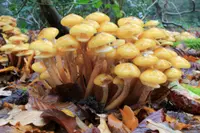
Its small, pale caps often appear in dense, tufted clusters from a single twig, each fruit body arising from a tough, dark stem that helps anchor it to the narrow substrate.
In many temperate regions it commonly fruits in late autumn to winter, when leaf litter is wet and cool, helping to decompose fine woody debris during colder parts of the year.

Collybiopsis ramealis is part of a group that was historically placed within the large, catch-all genus Collybia, and its current classification reflects modern DNA-based studies that split this old genus into several more precise lineages.
This small woodland mushroom is not considered a good edible species. It is usually classified as inedible due to its tiny size, insubstantial flesh, and lack of culinary value. It should not be collected for food.
Keep your plants happy and healthy with plant identification, disease detection, and easy care guidance.