Spore-friendly substrate
When working with this ectomycorrhizal mushroom, use a substrate rich in well-rotted hardwood leaf litter and fine wood chips from local oak or pine to better mimic its natural forest floor and support reliable fruiting.

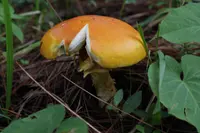
Bas' Caesar, Amanita basii, is a gilled mushroom species rather than a leafy houseplant. It forms sturdy, fleshy fruiting bodies with a rounded cap, usually in warm red to orange shades, supported by a thick pale stem. It typically occurs in oak and pine woodlands in parts of Mexico and nearby regions, often appearing on the forest floor during wet seasons. This species can be challenging to cultivate because it relies on a mycorrhizal relationship, a nutrient exchange partnership with tree roots. Those wishing to care for Bas' Caesar should understand it is not a typical indoor or potted species and depends on specific trees and natural soil conditions.

Care Difficulty
Hard Care

Light Preference
Partial Shade

Water Requirements
Keep Soil Moist

Temperature Preference
Warm Climate

Hardiness Zone
Unknown

Soil Texture
Loamy, Organic-rich

Soil pH
Acidic (5.5–6.5)

Soil Drainage
Moist but well-drained

Fertilization
Minimal (feed rarely)
Scan your plant to receive care tips personalized for your specific plant
Available on iOS and Android
This ectomycorrhizal mushroom thrives in woodland light conditions rather than full, open sun.
This forest-dwelling fungus prefers consistently moist but not waterlogged soil around its host trees.
This species is adapted to mild, temperate woodland conditions with moderate seasonal variation.
Humidity is not a primary factor for Amanita basii, which relies more on appropriate soil and host-root conditions than on ambient moisture.
This ectomycorrhizal fungus relies on specific tree-root associations and cannot be managed like a typical potted plant, but soil conditions still influence where Amanita basii will successfully fruit outdoors.
This species is not suitable for container growing because it depends on complex, long-term associations with the roots of mature trees in open ground.
Amanita basii is a wild mycorrhizal fungus that should not be fertilized directly in a home or garden setting.
Amanita basii is not a plant and must not be pruned like ornamental or woody species.
Amanita basii forms symbiotic associations with tree roots and is not suited to conventional repotting or transplanting.
Propagation of Amanita basii under garden or indoor conditions is not practical for home growers.
Bas' Caesar is a wild fungus that overwinters naturally and does not require managed winter care in gardens or indoors.

Plant Health Check
Not sure what's wrong with your plant? Check your plant's health inside the app.
This species is closely associated with montane oak forests in central Mexico, forming ectomycorrhizal partnerships where its underground hyphae connect with oak roots and enhance water and nutrient uptake.
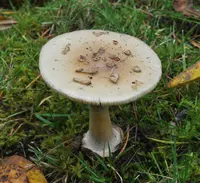
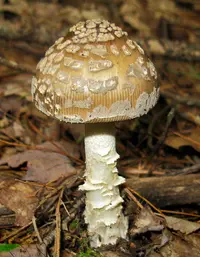
Mature basidiomes typically show a smooth, bright orange to reddish-orange cap with a striate (finely grooved) margin and a white to pale yellow stem, giving it a characteristic contrast that helps separate it from similar caesarea-like amanitas.
It belongs to the Amanita caesarea group (section Caesareae), a lineage of mainly warm-temperate to subtropical species that share features such as a sac-like white volva at the base and yellowish to orange hues on the cap and gills.
Amanita basii was described relatively recently in 1998, yet it has since become an important model within its group for studying diversity and endemism of caesarea-like amanitas in Mexican highland oak ecosystems.
This mushroom is considered toxic and should never be eaten by people or animals. Ingestion may cause serious gastrointestinal and neurological symptoms. Always prevent children and pets from handling or consuming wild specimens that resemble this species.
Keep your plants happy and healthy with plant identification, disease detection, and easy care guidance.