


Safe handling protocol
Treat all parts of the fungus as toxic, use gloves when handling, keep it away from children and pets, and wash tools and hands thoroughly after any work related to caring for False Death-cap.

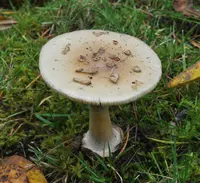
False death-cap, Amanita citrina, is a woodland mushroom rather than a traditional houseplant. It forms pale yellow to whitish caps with a distinct, sometimes lemon-like smell. The caps are often rounded when young and flatten with age, supported by a stout stem with a ring and a swollen base.
This species usually grows on the ground in mixed or deciduous forests, especially near beech and oak, forming mycorrhiza, a nutrient-exchange partnership with tree roots. It is not suitable for regular home cultivation, as it depends on living trees and complex soil fungi. Anyone trying to care for False Death-cap should understand that it is best appreciated in its natural habitat rather than as a garden or indoor specimen.

Care Difficulty
Hard Care

Light Preference
Partial Shade

Water Requirements
Keep Soil Moist

Temperature Preference
Cool Climate

Hardiness Zone
Unknown

Soil Texture
Loamy, Silty, Organic-rich

Soil pH
Strongly acidic (4.5–5.5), Acidic (5.5–6.5)

Soil Drainage
Moist but well-drained

Fertilization
Minimal (feed rarely)
Scan your plant to receive care tips personalized for your specific plant
Available on iOS and Android
This woodland fungus prefers low, filtered light rather than direct open sun.
This mycorrhizal fungus relies on consistent, slightly moist forest soil rather than direct watering.
This species fruits best in cool to mild conditions typical of temperate forests.
Humidity control is not relevant for Amanita citrina, which grows outdoors in natural forest conditions.
This ectomycorrhizal fungus relies on undisturbed forest soil rather than prepared mixes.
This species is not suitable for container growing, as it depends on complex root associations in natural forest soil.
Amanita citrina is a wild ectomycorrhizal fungus that should not be fertilized directly in garden or container culture.
Pruning is not appropriate for Amanita citrina, because the visible mushroom is only the short-lived fruiting body of a larger underground organism.
Transplanting False Death-cap is not recommended, as this fungus depends on a stable symbiosis with tree roots and specific soil conditions.
Propagation of Amanita citrina is not a practical or recommended activity for home growers, because it relies on complex relationships with host trees and soil microbes.
No special winter care is needed for Amanita citrina, which persists underground as mycelium and naturally tolerates seasonal cold in its native range.

Plant Health Check
Not sure what's wrong with your plant? Check your plant's health inside the app.
This species closely resembles the deadly Amanita phalloides but is distinguished by its pale lemon to grey-yellow cap, strong raw potato smell, and different spore and chemical profile, which makes it less toxic although still not considered safe to eat.
Amanita citrina forms ectomycorrhizae, a mutualistic root association, mainly with oaks and beeches in temperate European forests, where it enhances mineral and water uptake for the host tree while receiving carbohydrates in return.
Its flesh and bulb tissue show a distinct color change when exposed to certain chemical reagents such as potassium hydroxide or Melzer’s reagent, a feature that helps mycologists separate it from visually similar Amanita species.

Despite its common presence on forest floors in much of Europe, this species is rarely consumed by wildlife compared with many other mushrooms, likely because of its unappealing odor and mild toxicity, so its fruiting bodies often persist longer than neighboring fungi.
Yes, this mushroom is considered poisonous and should never be eaten. Ingestion may cause gastrointestinal upset and other symptoms. Children, pets, and foragers should be kept away, as it resembles some edible species.
Keep your plants happy and healthy with plant identification, disease detection, and easy care guidance.

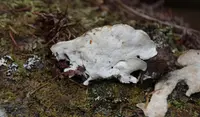
Bitter Bracket
Amaropostia stiptica
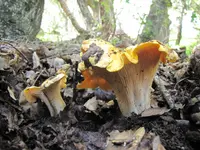
California Golden Chanterelle
Cantharellus californicus
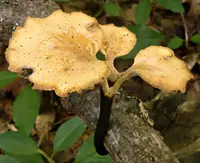
Elegant Polypore
Cerioporus varius
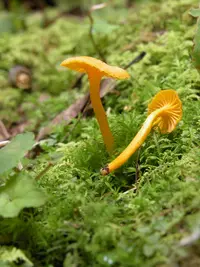
Small Chanterelle
Cantharellus minor
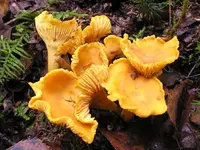
Golden Chanterelle
Cantharellus cibarius
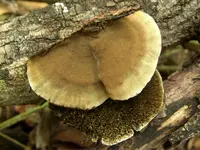
Cerrena hydnoides
Cerrena hydnoides
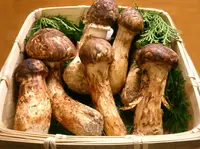
Matsutake
Tricholoma matsutake
blackening chanterelle
Cantharellus melanoxeros