


Host tree selection
Establish blackening chanterelle near compatible ectomycorrhizal hosts such as oaks, beeches, or pines, and keep root disturbance and turf removal around those trees to a minimum to preserve the fine root–fungus contact.

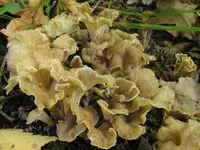
The blackening chanterelle, Cantharellus melanoxeros, is a wild mycorrhizal fungus that lives in close association with tree roots, not a typical houseplant. It forms funnel-shaped, often twisted fruiting bodies that darken to black with age or handling, giving it a distinctive appearance in the forest floor litter.
This species is usually found in temperate woodlands, often with oaks or other broadleaf trees, and appears in moist, well-drained, leaf-rich soils. It is considered challenging to cultivate because it depends on a stable partnership with host trees, so attempts to care for blackening chanterelle at home are rarely successful.
In nature, it prefers dappled light, moderate moisture, and undisturbed soil rich in organic matter.

Care Difficulty
Hard Care

Light Preference
Partial Shade

Water Requirements
Regular Water

Temperature Preference
Cool Climate

Hardiness Zone
Unknown

Soil Texture
Loamy, Silty, Organic-rich

Soil pH
Strongly acidic (4.5–5.5), Acidic (5.5–6.5)

Soil Drainage
Moist but well-drained

Fertilization
Minimal (feed rarely)
Scan your plant to receive care tips personalized for your specific plant
Available on iOS and Android
This forest-dwelling fungus prefers dappled woodland light rather than strong open sun.
This mycorrhizal fungus depends on consistently moist, not saturated, forest soil.
This species prefers cool to mild conditions typical of temperate forests.
This ectomycorrhizal fungus needs steadily moist, cool air rather than typical household conditions.
Soil conditions must mimic a cool, undisturbed forest floor for Cantharellus melanoxeros to establish.
This species is not suitable for reliable container cultivation because it depends on complex partnerships with tree roots in stable forest soil.
This ectomycorrhizal fungus depends on its tree partners for nutrition, so the blackening chanterelle generally needs no direct fertilization.
Pruning is not applicable to Cantharellus melanoxeros, as it is a wild mycorrhizal fungus rather than a conventional garden plant.
This species is rarely grown in containers; focus instead on establishing suitable host trees and undisturbed soil.
Propagation of Cantharellus melanoxeros is technically complex and not reliable for home growers.
In natural settings this fungus is cold hardy and requires no special winter care from gardeners.

Plant Health Check
Not sure what's wrong with your plant? Check your plant's health inside the app.
This species is known for its flesh and ridges turning black when bruised or aged, a reaction that helps distinguish it from other yellow chanterelles in the field.
It forms ectomycorrhizal associations with oak and some other broadleaf trees, exchanging mineral nutrients from the soil for sugars produced by the host tree.
It is reported mainly from parts of central and western Europe and is considered local or uncommon in many regions, often confined to specific forest types and soil conditions.

Some mycologists consider this taxon part of a complex or group of closely related chanterelles, and molecular studies have suggested that collections labeled as Cantharellus melanoxeros may include more than one cryptic species that are difficult to separate by appearance alone.
This species is considered an edible wild mushroom in many regions and is often valued for its flavor. Correct identification is critical, and collection should only be done by experienced foragers or with expert confirmation.
Keep your plants happy and healthy with plant identification, disease detection, and easy care guidance.

Botryobasidium aureum
Botryobasidium aureum
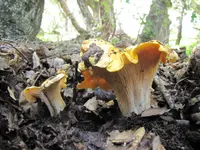
California Golden Chanterelle
Cantharellus californicus
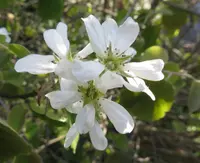
Pacific serviceberry
Amelanchier interior
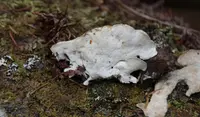
Bitter Bracket
Amaropostia stiptica
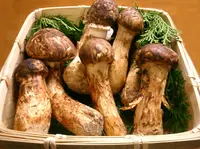
Matsutake
Tricholoma matsutake
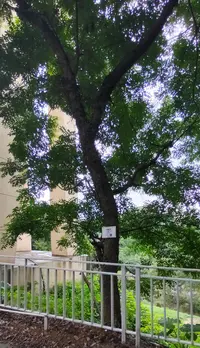
Nepali hog plum
Choerospondias axillaris
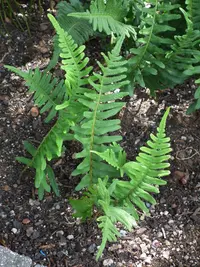
common polypody
Polypodium vulgare
Ouricury palm
Syagrus coronata