Nepali hog plum Care (Choerospondias axillaris)

Also known as: lapsi, aamli
Nepali hog plum

About Nepali hog plum

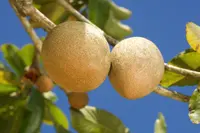
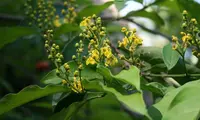
Nepali hog plum, Choerospondias axillaris, is a deciduous fruit tree valued for its sour, aromatic drupes and sturdy timber. It typically forms a medium to large tree with a rounded crown and pinnate leaves that give a soft, feathery look.

The species is native to the Himalayan region and parts of Southeast Asia, where it grows in warm, humid, subtropical forests and village landscapes. Its adaptability to different soils and moderate drought tolerance generally make it easier to establish than many tropical fruit trees.

Understanding how to care for Nepali hog plum mainly involves providing full sun, well-drained but moisture-retentive soil, and protection from severe frost, especially for young trees.

Main Plant Requirements

Care Difficulty

Moderate Care

Light Preference

Full Sun

Water Requirements

Moderate Water

Temperature Preference

Warm Climate

Hardiness Zone

9–11

Soil Texture

Sandy, Loamy, Organic-rich

Soil pH

Acidic (5.5–6.5), Slightly acidic (6.5–7.0)

Soil Drainage

Well-drained

Fertilization

Minimal (feed rarely)

Get Personalized Care Plan

Scan your plant to receive care tips personalized for your specific plant

Available on iOS and Android

How to Care for the Nepali hog plum

Choerospondias axillaris grows best in full sun to light partial shade in most temperate to subtropical climates.

  • Aim for 6–8 hours of direct sun daily, with morning sun preferred and some protection from intense mid‑afternoon summer sun in hotter regions.
  • Young Nepali hog plum trees tolerate light partial shade, but prolonged shade reduces flowering, fruiting, and overall vigor.
  • In cooler climates, choose the sunniest, south‑ or west‑facing site; in hot climates, provide light overhead or western-side filtering to limit leaf scorch.

This species prefers steadily moist, well‑drained soil and responds best to deep, infrequent watering.

  • Let the top 3–5 cm of soil dry before watering again, then water deeply so moisture reaches the main root zone rather than just the surface.
  • Reduce watering frequency in cool seasons or during dormancy, but avoid letting the soil become dust‑dry or cracked around the root area.
  • Watch for yellowing, soft leaves or persistent wet soil as signs of overwatering, and for leaf edge browning, droop, and very dry topsoil as signs of underwatering in Choerospondias axillaris.

This tree is adapted to warm temperate to subtropical conditions and dislikes extended cold or extreme heat.

  • Optimal growing temperatures are about 68–86°F (20–30°C), with strongest shoot and leaf growth in consistently warm, frost‑free periods.
  • Mature trees can tolerate brief drops near 28–30°F (-2 to -1°C), but young plants are more tender and should be protected from any frost.
  • Extended exposure above 95°F (35°C) may cause leaf scorch and stress, so provide mulch and, where possible, light shade during extreme heat waves.

This species prefers moderate ambient humidity but adapts to a broad range in most home and outdoor conditions.

  • Target 40–60% humidity for young or container-grown Nepali hog plum to reduce leaf edge browning and tip dieback.
  • It tolerates drier air once established, but prolonged humidity below 30% can cause leaf curl and slow growth.
  • Increase humidity locally by grouping plants, using a nearby water tray, or briefly misting foliage in very dry, hot weather.

Choerospondias axillaris grows best in deep, well-aerated, moderately moist soil that drains freely.

  • Use a loamy structure with a mix such as 50% garden loam, 30% coarse sand, and 20% compost to balance drainage and nutrient holding.
  • Aim for slightly acidic to neutral pH, roughly 6.0–7.0, which supports nutrient availability and healthy root development.
  • Improve drainage and aeration by incorporating coarse sand or fine gravel if the native soil is heavy or tends to compact.
  • Avoid waterlogged clay, standing water, or very shallow, stony soil that restricts root penetration and increases root rot risk.

This tree can be grown in large containers for a limited period, mainly when young or maintained as a small specimen.

  • Choose a tall, heavy container that resists tipping as the canopy size and wind exposure increase.
  • Provide a very free-draining mix in a deep pot so the strong taproot and lateral roots can expand downward rather than circle tightly near the surface.
  • Position the container where it will not overheat; dark, thin-walled pots can cause excessive root-zone temperature and moisture loss in full sun.

Choerospondias axillaris benefits from modest, balanced nutrition in cultivation, especially in poor soils.

  • Apply a balanced NPK granular or slow-release fertilizer in early spring at half the label rate around the drip line.
  • Supplement with well-rotted compost or manure once a year to improve soil structure and long-term nutrient supply.
  • During the main growing season, 1–2 light applications of diluted liquid feed (1/2 strength) are sufficient.
  • Stop feeding Nepali hog plum in late summer to allow wood to mature before winter and avoid soft, frost-prone growth.

Choerospondias axillaris responds well to light structural pruning to maintain a healthy, stable canopy.

  • Carry out main pruning in late winter or very early spring before bud break to reduce stress and sap bleed.
  • Remove dead, diseased, crossing, or inward-growing branches first to improve airflow and light penetration.
  • Thin crowded shoots to maintain a single strong leader and well-spaced scaffold branches for long-term structure.
  • Use clean, sharp bypass pruners or a pruning saw, making smooth cuts just outside the branch collar.

This species is usually field-grown, so focus on careful transplanting of young trees rather than frequent repotting.

  • Transplant in late winter or early spring while still dormant, when soil is workable and not waterlogged.
  • Look for circling roots, root-bound containers, or slowed growth in nursery stock as cues to move into the ground.
  • Plant in a hole 2–3× wider than the root ball at the same depth, spreading roots outward gently to reduce stress.
  • Water deeply after planting, apply a 5–8 cm mulch layer, and keep soil evenly moist for the first growing season.

Propagation of Choerospondias axillaris is most commonly done from seed, with some use of grafting for selected forms.

  • Collect fully ripe fruits, then clean and dry seeds; some benefit from stratification, a cool moist period that breaks dormancy.
  • Sow seeds in spring in a deep, well-drained mix, keeping the medium slightly moist and temperatures around 68–77°F.
  • Use deep containers or nursery beds to accommodate strong taproot development and reduce later transplant shock.
  • Graft desirable cultivars onto vigorous seedling rootstocks during late winter while plants are dormant.

Mature Choerospondias axillaris trees are moderately cold hardy and often need only minimal winter attention once established.

  • In regions with freezing winters, add 5–8 cm of organic mulch over the root zone, keeping it clear of the trunk.
  • Young or newly planted trees benefit from trunk wraps or tree guards to limit frost cracks and sunscald.
  • Container-grown specimens in colder climates should be moved to a sheltered, frost-free but cool location for winter.

Care Tips

Early structural training

In the first 3–4 years, select a single strong leader and 3–5 evenly spaced scaffold branches, removing competing uprights during late winter to build a stable framework that resists wind and heavy fruit loads.


Fruit load management

Thin crowded young fruits so that clusters are spaced 10–15 cm apart along branches, which reduces breakage risk and helps remaining fruit size and quality.

Wind and stake support

In exposed sites, use a sturdy stake and flexible tree ties for the first 2–3 years, positioning the stake on the windward side and checking ties yearly so the trunk can thicken without girdling.

Mulch for root resilience

Maintain a 5–8 cm layer of coarse organic mulch in a wide ring around the tree, keeping it 5–10 cm away from the trunk collar to moderate soil temperature, retain moisture, and protect surface roots from mechanical damage.

Seasonal sanitation routine

At the end of the growing season, remove and dispose of fallen leaves and mummified fruit from under the canopy to reduce overwintering pests and diseases, which is a key step when caring for Nepali hog plum in humid regions.

Common Pests and Diseases

Fruit fly infestation

These insects lay eggs in ripening fruits, and larvae feed inside, causing browning, internal tunneling, and premature fruit drop.

Solution

Collect and destroy infested and fallen fruits, use bait traps or pheromone traps around trees, and apply fine mesh bagging over nearly mature fruits where practical to reduce egg laying and support growing Nepali hog plum for usable harvests.

Bark-boring beetles

These insects tunnel into young stems and branches, leading to wilting shoots, frass (sawdust-like material), and dieback of affected sections.

Solution

Prune and destroy infested twigs and branches, improve tree vigor through proper watering and balanced fertilization, and wrap young trunks with protective mesh or tree guards where beetle pressure is high to reduce new attacks.

Leaf spot

This disease causes small brown to dark spots on leaves that may merge into larger patches, leading to early yellowing and leaf drop in humid conditions.

Solution

Remove and dispose of heavily spotted fallen leaves, ensure good spacing and airflow around trees, water at soil level rather than over foliage, and apply a copper-based or other registered fungicide during prolonged wet periods if spotting is severe.

Powdery mildew

This disease presents as white, powdery growth on young leaves and shoots, which can curl, distort, and grow more slowly.

Solution

Increase light and airflow around the canopy, avoid excessive nitrogen fertilization that encourages soft new growth, remove heavily infected shoots, and use a registered sulfur or potassium bicarbonate spray at the first sign of infection if needed.

Scale insects

These pests appear as small, fixed bumps on stems and leaf undersides, sucking sap and causing yellowing, reduced vigor, and sticky honeydew that may lead to sooty mold.

Solution

Wipe or gently scrub small infestations off with a cloth dipped in soapy water, prune heavily infested twigs, encourage natural predators such as lady beetles, and apply a horticultural oil spray during the crawler stage to reduce populations.

Interesting Facts

Himalayan pioneer tree

This deciduous tree is native to mid-elevation forests of the Himalayas and adjacent regions, where it often behaves as a pioneer species, colonizing disturbed slopes and clearings and helping stabilize soils.

Dual-dispersed fruits

Its fleshy yellow fruits are eaten by birds and mammals that disperse the seeds, while the extremely hard endocarp (the inner stone) allows some seeds to persist in the soil seed bank for several years before germinating.

Distinctive wood and scent

The wood is light but relatively strong and is locally used for construction and packaging, while the crushed leaves and unripe fruits release a characteristic resinous aroma that helps distinguish the species in the field.

Botan icon

Did you know?

Archaeobotanical evidence from ancient sites in the Himalayan region shows that people have been using the fruits and stones of this species for thousands of years, indicating a long history of human interaction that predates many widely cultivated tree crops in the area.

FAQs about Nepali hog plum

Growth is moderate. Young trees usually add about 30–60 cm in height per year under warm conditions with consistent moisture and fertile, well-drained soil. Cooler climates, drought, poor soil, or container restriction slow growth noticeably.

Grow Healthy Plants with Botan Care

Keep your plants happy and healthy with plant identification, disease detection, and easy care guidance.

Botan plant care app — identify plants on mobile

Explore More Plants