Sucker Management
Remove basal suckers with clean, sharp pruners at ground level in late spring to keep the plant as a single or multi-stem shrub rather than a thicket, and reduce competition for water and nutrients.

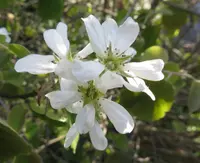
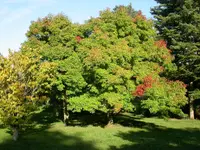
Pacific serviceberry, Amelanchier interior, is a deciduous shrub or small tree valued for its multi-season interest and adaptability. It typically forms an upright, multi-stemmed shape with smooth gray bark.
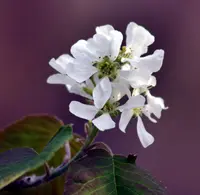
In spring it produces white, star-shaped flowers, followed by small purple berries and clean, often colorful fall foliage. The berries are edible for humans and highly attractive to birds.
This species is native to parts of central and western North America, often found along streams, open woods, and rocky slopes. It generally prefers sun to light shade, moderately moist, well-drained soil, and is considered relatively easy if you understand how to care for Pacific serviceberry.

Care Difficulty
Moderate Care

Light Preference
Full Sun

Water Requirements
Moderate Water

Temperature Preference
Cold Hardy

Hardiness Zone
2–7

Soil Texture
Sandy, Loamy, Clay

Soil pH
Acidic (5.5–6.5), Slightly acidic (6.5–7.0)

Soil Drainage
Moist but well-drained

Fertilization
Minimal (feed rarely)
Scan your plant to receive care tips personalized for your specific plant
Available on iOS and Android
Amelanchier interior prefers bright outdoor conditions with a balance of direct sun and partial shade.
Amelanchier interior prefers evenly moist, well-drained soil rather than frequent shallow watering.
This shrub is cold hardy yet appreciates moderate temperatures during active growth.
Amelanchier interior tolerates a wide humidity range and rarely needs special humidity management in typical outdoor conditions.
Amelanchier interior prefers deep, moderately moist, well‑drained loam that supports steady root development.
This species can be grown in large containers for several years with careful attention to root space and stability.
Amelanchier interior is adapted to lean soils and usually needs little supplemental feeding once established outdoors.
Pruning Amelanchier interior focuses on maintaining a healthy, open structure and supporting flowering.
This species is usually grown in the ground; focus on careful transplanting rather than frequent repotting.
Amelanchier interior is most often propagated by seed or softwood cuttings in managed settings.
This shrub is cold hardy and usually requires minimal winter care in typical outdoor plantings.

Plant Health Check
Not sure what's wrong with your plant? Check your plant's health inside the app.
This species is native to the north-central US and southern Canada and is especially associated with dry, rocky bluffs, limestone outcrops, and open woodland edges, where its deep root system helps it tolerate drought and shallow soils.
The white, five-petaled flowers open very early in spring, often before full leaf-out, providing one of the first significant nectar and pollen sources for native bees and other early-flying pollinators in its range.
Its dark purple pomes (berry-like fruits) ripen in early summer and are rapidly consumed by songbirds, which disperse the seeds and help maintain scattered populations across rocky landscapes.
This shrub or small tree grows at a moderate rate, typically adding about 20–40 cm per year once established. Growth is slower in poor soil or dry sites and faster in deep, moist, well-drained ground.
Keep your plants happy and healthy with plant identification, disease detection, and easy care guidance.