Support woody stems
Install a discreet stake or small trellis early on and loosely tie the main stems, as this shrub becomes woody and top-heavy and benefits from support to keep its form compact and upright in pots.

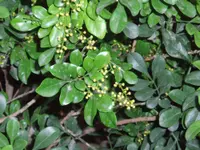
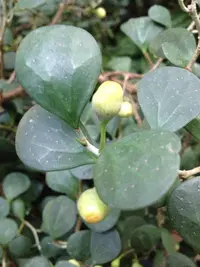
Chinese perfume plant, Aglaia odorata, is a compact evergreen shrub valued for its small, fragrant yellow flowers and neat, glossy foliage. It is often grown in pots or as a small patio or balcony specimen.
In nature, it occurs in warm parts of Southeast Asia and southern China, where it grows in bright, filtered light and warm, stable temperatures. Its slow to moderate growth and tolerance of pruning make it suitable for shaping and for small spaces.
This species prefers bright indirect light, evenly moist but well-drained soil, and good air circulation. With attention to warmth and light, it is relatively straightforward to care for Chinese perfume plant.

Care Difficulty
Moderate Care

Light Preference
Partial Sun

Water Requirements
Moderate Water

Temperature Preference
Tropical / Frost Sensitive

Hardiness Zone
10–11

Soil Texture
Sandy, Loamy, Organic-rich

Soil pH
Acidic (5.5–6.5), Slightly acidic (6.5–7.0)

Soil Drainage
Moist but well-drained

Fertilization
Light (every 4–6 weeks)
Scan your plant to receive care tips personalized for your specific plant
Available on iOS and Android
This species prefers bright, indirect light with some gentle direct sun each day.
This shrub likes evenly moist but not saturated soil.
This plant prefers warm, stable conditions typical of subtropical climates.
This species prefers moderately humid air but usually adapts to typical home conditions if extremes are avoided.
Aglaia odorata grows best in a loose, well-aerated mix that drains quickly yet holds some moisture.
This shrub is well suited to container growing when the pot supports its woody root system and upright form.
Nutrient support helps Aglaia odorata bloom well in containers but should stay moderate.
Thoughtful pruning keeps Aglaia odorata compact, well-shaped, and flowering more freely.
Container-grown plants benefit from occasional repotting to maintain healthy root growth and stable flowering.
New plants are usually raised from semi-ripe cuttings, with seeds used less often.
This subtropical shrub is frost-sensitive and needs specific winter protection in cooler climates.

Plant Health Check
Not sure what's wrong with your plant? Check your plant's health inside the app.
This species produces tiny yellow flowers with a strong, sweet fragrance that is often compared to a mix of citrus and jasmine, despite each flower being only a few millimeters wide.
It belongs to the citrus family Rutaceae, which explains its subtle citrus-like scent chemistry and the presence of aromatic oil glands in its leaves and floral tissues.
Due to its naturally fine branching, small leaves, and fragrant blooms, this shrub is widely used as a flowering bonsai, especially in East and Southeast Asia.

In parts of southern China and Vietnam, this species has long been grown near doorways and courtyards so its evening fragrance drifts indoors, and it is traditionally associated with a refined, elegant home atmosphere rather than showy garden display.
Flowering often stops when light, nutrients, or pruning are off. Insufficient light, heavy pruning at the wrong time, low potassium, or a pot that is too small can all reduce bud formation and bloom frequency.
Keep your plants happy and healthy with plant identification, disease detection, and easy care guidance.