Orange jasmine Care (Murraya paniculata)

Also known as: Chinese box, orange jessamine, Mock Orange, Satinwood
Orange jasmine

About Orange jasmine

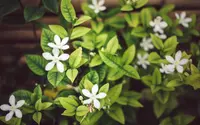
Orange jasmine, Murraya paniculata, is a compact, evergreen shrub valued for its glossy foliage and fragrant white flowers. It is often grown as a patio plant, low hedge, or container specimen.

In the wild, it occurs in tropical and subtropical regions of South and Southeast Asia and northern Australia, where it experiences warm temperatures and seasonal rainfall. The plant is moderately easy to grow if it receives bright light, regular moisture, and well-drained soil.

Its slow to moderate growth rate and good response to pruning make it suitable for shaping and long-term container culture. Understanding how to care for Orange jasmine helps maintain dense foliage and reliable flowering.

Main Plant Requirements

Care Difficulty

Moderate Care

Light Preference

Partial Sun

Water Requirements

Moderate Water

Temperature Preference

Tropical / Frost Sensitive

Hardiness Zone

9–11

Soil Texture

Sandy, Loamy, Organic-rich

Soil pH

Acidic (5.5–6.5), Slightly acidic (6.5–7.0)

Soil Drainage

Moist but well-drained

Fertilization

Light (every 4–6 weeks)

Get Personalized Care Plan

Scan your plant to receive care tips personalized for your specific plant

Available on iOS and Android

How to Care for the Orange jasmine

This shrub prefers bright exposure with some protection during the hottest part of the day.

  • Provide 4–6 hours of direct morning sun with light afternoon shade; in very hot climates, give filtered light after 1–2 p.m.
  • Orange jasmine tolerates light partial shade but becomes leggy and flowers less if it gets under 3–4 hours of sun daily.
  • In summer, shield from harsh reflective heat that can scorch leaves; in winter, choose the sunniest, south-facing spot available.

This species prefers evenly moist but never waterlogged soil.

  • Water when the top 3–5 cm of soil feel dry, then soak thoroughly so water reaches the deeper roots and excess drains away.
  • In warm growing seasons, drying happens faster; in cooler months, extend the interval, always checking soil by touch rather than using a fixed schedule.
  • Signs of excess water include yellowing leaves and soft stems, while crisp leaf edges and dull, wilting foliage indicate Murraya paniculata is too dry.

This plant thrives in warm, frost-free conditions throughout the year.

  • Aim for 65–80°F (18–27°C) for active growth, as this range supports steady foliage and flower production.
  • It tolerates brief drops to about 40°F (4°C) but growth slows; exposure below 32°F (0°C) can damage foliage and young shoots.
  • In hot climates above 90°F (32°C), provide light afternoon shade and consistent soil moisture, and avoid planting where cold winds or frost pockets settle.

This species prefers moderately humid air but usually adapts to typical indoor levels.

  • Aim for 40–60% relative humidity for stable foliage and flowering in Orange jasmine.
  • Tolerates brief drier air, but prolonged humidity below 35% can cause leaf edge browning and increased leaf drop.
  • Increase humidity with a nearby pebble tray or grouped plants rather than misting, which offers only short-lived benefit.

This shrub grows best in airy, well-drained, moderately fertile soil.

  • Use a loose, loamy mix such as 2 parts peat- or coir-based potting mix, 1 part compost, and 1 part perlite or coarse sand for Murraya paniculata.
  • Ensure fast drainage so water passes through within seconds, leaving the mix moist but never waterlogged.
  • Aim for slightly acidic to neutral pH, around 6.0–7.0, which keeps nutrients available and reduces stress.
  • Avoid heavy clay, compacted mixes, or those with high fine-sand content that hold standing water and suffocate roots.

This shrub is well suited to long-term container growing.

  • Choose a deep, slightly heavy pot to anchor the plant’s woody, often top-heavy canopy in wind or on balconies.
  • Select containers with broad drainage holes raised on feet or pot risers so drainage is not blocked from below.
  • Use a pot material with moderate porosity, such as thick-walled terracotta or ceramic, to buffer moisture swings in warm climates.

Murraya paniculata responds well to moderate feeding that supports steady growth and flowering.

  • Use a balanced slow-release fertilizer (around 10-10-10 or similar NPK) or well-rotted compost at the start of spring.
  • Feed Orange jasmine every 6–8 weeks during the active growing season, following label rates and avoiding excess nitrogen.
  • Reduce or stop fertilizing in late fall and winter when growth slows or in cool conditions.
  • For liquid feeds, apply at half-strength to moist soil to lower the risk of root burn.

Pruning Murraya paniculata helps maintain a dense, flowering shrub with a controlled size.

  • Carry out main pruning in late winter to early spring before strong new growth starts.
  • Remove dead, damaged, crossing, or inward-growing branches first to improve air flow and light penetration.
  • Shorten overly long shoots to shape the plant and encourage bushier growth with more flowering tips.
  • Use clean, sharp hand pruners or shears, making angled cuts just above a healthy outward-facing bud.

Container-grown Murraya paniculata benefits from occasional repotting or careful transplanting when rootbound.

  • Check for roots circling the pot, pushing through drainage holes, or slowed growth as signs a larger container is needed.
  • Plan repotting or transplanting for late winter to early spring, before vigorous new growth and flowering begin.
  • Move to a pot 2–5 cm wider with free-draining soil, loosening circling roots gently without tearing thick roots.
  • Water thoroughly after moving, keep out of harsh sun and strong wind for 1–2 weeks, and avoid heavy feeding until recovery.

Murraya paniculata is most commonly propagated by semi-hardwood cuttings and seeds under warm, stable conditions.

  • Take 8–12 cm semi-hardwood cuttings in late spring to summer, removing lower leaves and any flowers or buds.
  • Dip the cut base in rooting hormone and place in a sterile, free-draining mix, such as perlite and peat or coco coir.
  • Maintain bottom warmth around 70–75°F, high humidity, and bright, indirect light until roots form.
  • Sow fresh seeds shallowly in warm soil, keep evenly moist, and expect uneven, sometimes slow germination.

This subtropical shrub dislikes frost and needs winter care in cooler climates.

  • In regions below about 25°F, grow Murraya paniculata in containers so it can be moved during cold spells.
  • Bring potted plants indoors or into a greenhouse before forecast frost, giving bright light and reduced watering.
  • For in-ground plants in mild climates, mulch the root zone 5–8 cm deep to buffer temperature swings and conserve moisture.
  • Avoid heavy pruning or high-nitrogen feeding late in the season so new growth hardens before winter temperatures drop.

Care Tips

Root zone mulching

Apply a 3–5 cm layer of fine bark or composted wood chips over the root zone, keeping it 3–5 cm away from the trunk, to stabilize soil moisture and protect shallow feeder roots from heat stress.

Structured canopy training

While stems are still flexible, choose 3–5 evenly spaced main branches and lightly tie them to a central stake or frame to build a strong, balanced framework that resists wind damage and supports heavy flowering.

Post-bloom grooming

After each main flush of flowers, remove spent flower clusters and any weak interior twigs to reduce pest hiding spots and redirect energy into new flowering wood.

Scale and sooty mold check

Inspect leaf undersides and stems every 2–4 weeks for scale insects and sticky honeydew, and if found, prune heavily infested twigs and treat remaining growth with repeated applications of horticultural oil according to label directions.

Container rotation routine

For potted plants, rotate the container 90° every 2–3 weeks and lightly brush or shake the foliage outdoors to encourage even, compact growth and help dislodge early pests when caring for Orange jasmine.

Common Pests and Diseases

Citrus psyllid

This pest feeds on new flushes of growth, causing cupped, distorted leaves and sooty deposits from honeydew. This insect also vectors bacterial diseases such as huanglongbing (citrus greening) in citrus-growing regions.

Solution

Prune off and destroy heavily infested soft shoots and avoid letting the plant produce large uncontrolled flushes of tender growth. Use a strong water spray to dislodge nymphs, introduce or conserve natural enemies like lady beetles, and, if local regulations and conditions allow, apply a narrow-range horticultural oil to young foliage, coating leaf undersides thoroughly.

Citrus leaf miner

This pest tunnels inside young leaves, creating silvery winding trails and causing leaves to twist or curl. Damage reduces photosynthesis and can slow growth on young or recently pruned plants.

Solution

Remove and dispose of affected young leaves before larvae complete their development, taking care not to over-prune. Reduce flushes of very soft growth with heavy fertilization, use pheromone traps where available to monitor adults, and apply horticultural oil to new leaves at the start of a growth flush to make them less attractive for egg-laying.

Scale insects

These insects attach to stems and leaf undersides, appearing as small bumps that excrete sticky honeydew leading to sooty mold. Symptoms include yellowing leaves, slow growth, and generalized decline in vigor.

Solution

Wipe stems and leaves with a cloth or cotton pad dipped in diluted insecticidal soap or alcohol to remove visible scales, repeating weekly until clear. For heavier infestations, combine careful manual removal with applications of horticultural oil, ensuring good coverage of stems, leaf undersides, and branch crotches while improving light and airflow around the plant.

Sooty mold

This disease is a group of fungi that grow on the sugary honeydew produced by sap-sucking insects, forming a black, soot-like film on leaves and stems. Symptoms include dull, blackened foliage and reduced photosynthesis, though the fungus itself rarely invades plant tissues.

Solution

Focus on controlling the underlying honeydew-producing insects, such as scale, aphids, or psyllids, through washing, pruning, and targeted use of insecticidal soaps or oils. Gently wipe or hose off affected foliage to improve light penetration, and thin dense growth to enhance airflow and drying.

Anthracnose leaf spot

This disease causes irregular brown to dark lesions on leaves and sometimes shoots, which may coalesce and lead to premature leaf drop in warm, humid conditions. Symptoms include scattered dead patches on foliage and a generally thinned canopy over time.

Solution

Prune out and discard infected leaves and twigs, avoiding overhead watering and watering at soil level instead. Improve air circulation by thinning crowded branches, keep fallen leaves cleaned up, and apply a copper-based fungicide during prolonged warm, wet periods if the plant has a history of recurring infection to support Murraya paniculata plant care.

Interesting Facts

Night-scented flowers

The white flowers open mainly in the evening and release a strong, sweet fragrance at night, attracting moths and other nocturnal pollinators rather than daytime insects.

Berry-forming citrus relative

This species is in the Rutaceae family alongside citrus, but instead of juicy segmented fruits it produces small, oval, red berries that are eaten by birds and help spread the seeds.

Urban hedge specialist

It is widely planted as a hedge in tropical and subtropical cities because its dense branching, tolerance of regular pruning, and ability to resprout after cutting make it form compact, long-lived living fences.

Botan icon

Did you know?

In several warm regions, including parts of Australia, this ornamental shrub has become an invasive species because its bird-dispersed seeds germinate readily in native bushland, allowing it to outcompete local understory plants.

FAQs about Orange jasmine

Lack of blooms often comes from insufficient light, heavy pruning at the wrong time, or excess nitrogen fertilizer. Provide bright conditions, avoid cutting off flower buds, and use a balanced, not high-nitrogen, fertilizer to restore flowering.

Grow Healthy Plants with Botan Care

Keep your plants happy and healthy with plant identification, disease detection, and easy care guidance.

Botan plant care app — identify plants on mobile

Explore More Plants