Chinese privet Care (Ligustrum sinense)

Chinese privet

About Chinese privet

Chinese privet (Ligustrum sinense) is a fast-growing, woody shrub often used for dense hedges and screens. It forms a rounded to spreading shape with many slender branches.

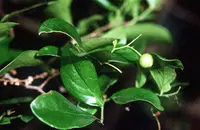
The plant carries small, oval, dark-green leaves and produces clusters of creamy white, fragrant flowers followed by small dark berries. It originates from China and surrounding regions and has naturalized widely in warm-temperate climates.

This species is generally tough and adaptable, which can make it invasive outdoors in some areas. To care for Chinese privet, provide moderate light, evenly moist but not waterlogged soil, and good drainage.

Main Plant Requirements

Care Difficulty

Easy Care

Light Preference

Full Sun

Water Requirements

Moderate Water

Temperature Preference

Cold Hardy

Hardiness Zone

6–10

Soil Texture

Sandy, Loamy, Clay

Soil pH

Acidic (5.5–6.5), Slightly acidic (6.5–7.0)

Soil Drainage

Moist but well-drained

Fertilization

Minimal (feed rarely)

Get Personalized Care Plan

Scan your plant to receive care tips personalized for your specific plant

Available on iOS and Android

How to Care for the Chinese privet

Ligustrum sinense grows best in bright outdoor conditions with moderate direct sun exposure.

  • Provide 4–6 hours of direct sun daily, ideally with morning sun and light afternoon shade, to support dense foliage and flowering.
  • Plant in a site that receives partial shade in hotter regions, as intense afternoon sun can scorch young leaves or dry soil too quickly.
  • In winter, sun is usually weaker, so sites with full sun are acceptable; in deep shade, growth becomes sparse and leggy over time.

This shrub prefers evenly moist but not saturated soil, with some drought tolerance once established.

  • Water when the top 3–5 cm of soil feels dry, applying a deep soak so moisture reaches the root zone rather than frequent light splashes.
  • Ensure soil drains well; prolonged puddling, sour smell, or yellowing soft leaves indicate overwatering and possible root stress.
  • In the first growing season, monitor closely in heat or wind for wilting or curling leaves; reduce frequency in cool, wet seasons to prevent root problems in Ligustrum sinense.

This species is a hardy shrub that adapts to a wide climate range when planted outdoors.

  • Optimal growth occurs around 60–80°F (16–27°C), where shoots extend steadily and foliage remains dense and glossy.
  • Mature plants generally tolerate down to about 0°F (−18°C); light frosts may mark young tips but usually do not kill established shrubs.
  • In summer heat above 90°F (32°C), provide mulch to cool roots and prevent stress; prolonged extreme cold below 0°F (−18°C) can cause dieback.

This species handles 30–60% humidity and rarely needs special humidity management.

  • Chinese privet tolerates dry indoor air well, so extra humidity measures are usually unnecessary.
  • Low humidity stress appears mainly as crispy leaf edges combined with underwatering rather than humidity alone.
  • If air is very dry and hot, group plants together or place near a tray of water and pebbles to slightly raise local humidity.

Ligustrum sinense adapts to many mineral soils but responds best to loose, moderately fertile, well-drained substrates.

  • Use a loamy mix with 40–60% general-purpose potting soil, 20–30% compost, and 20–30% sand or fine grit for structure and nutrients.
  • Ensure drainage is fast enough that water does not stand longer than a few minutes after watering, which limits root rot risk.
  • Aim for slightly acidic to neutral pH around 6.0–7.5; avoid strongly acidic peat-only mixes or strongly alkaline, chalky fill.
  • Improve aeration by blending coarse sand, pumice, or perlite into dense or clay-heavy soil until it feels loose and crumbly.

This shrub is suitable for container growing when the pot provides stable support and rapid drainage.

  • Choose a heavy, wide-based container to prevent tipping as the shrub becomes woody and top-heavy.
  • Select a pot deep enough to allow a fibrous root system to spread downward at least 25–30 cm for stable anchorage.
  • Use porous materials like unglazed clay if extra evaporation is needed in wet climates, or thicker plastic to retain moisture in hot, dry sites.

Ligustrum sinense responds well to moderate feeding but does not need heavy fertilizer inputs in average garden soil.

  • Use a balanced slow-release fertilizer (for example 10-10-10) or well-rotted compost at the start of spring growth.
  • Feed container plants every 4–6 weeks in the growing season with a half-strength balanced liquid fertilizer.
  • Reduce or stop fertilizing in fall and winter when growth slows or stops.
  • Water before and after applying fertilizer to limit root burn and improve nutrient uptake.

Pruning helps manage size, density, and flowering of Ligustrum sinense in landscape settings.

  • Carry out main pruning in late winter to early spring before strong new growth begins.
  • Remove dead, diseased, crossing, or inward-growing branches to improve light and air movement.
  • Shorten long shoots to shape hedges, encouraging dense branching and a compact form.
  • Use clean, sharp bypass pruners or loppers and make cuts just above a healthy outward-facing bud.

Chinese privet is usually grown in the ground, so guidance focuses on transplanting rather than container repotting.

  • Transplant in late fall or early spring when growth is slow and temperatures are mild.
  • Look for signs such as poor vigor, crowded spacing, or roots circling a nursery pot before moving the plant.
  • Replant at the same depth in a prepared hole, spreading roots outward and backfilling with native soil.
  • Water deeply after transplanting, then keep soil evenly moist and mulch 5–8 cm to limit stress and root drying.

Ligustrum sinense is commonly propagated for hedging and screening using simple, reliable methods.

  • Take semi-ripe cuttings in late spring to summer, 10–15 cm long, and remove lower leaves.
  • Dip cut ends in rooting hormone, then place in a moist, free-draining mix under bright, indirect light.
  • Keep humidity high with a loose cover and maintain 68–75°F until roots develop.
  • Collect ripe seed in fall, clean, and sow in trays outdoors for natural cold stratification over winter.

Ligustrum sinense is generally cold hardy in much of the US and needs only modest winter care in the ground.

  • In regions colder than its rated zone, apply 5–8 cm of mulch around the root zone, keeping it off the trunk.
  • Container plants are more exposed and benefit from moving to a sheltered, unheated but frost-free location.
  • Avoid heavy pruning late in the season so new shoots have time to harden before freezing conditions.

Care Tips

Establish a hedge line

When planting multiple shrubs, snap a taut string between end stakes at the desired hedge line and plant just behind it so trunks align visually even as the shrubs fill out and knit together.


Root-zone mulching

Maintain a 5–7 cm layer of wood chip or shredded bark mulch over the root zone, keeping it 5–8 cm away from stems, to stabilize soil moisture, suppress weeds, and reduce mower and trimmer damage.

Renewal pruning cycle

Every 2–3 years on mature plants, remove 20–30% of the oldest stems at ground level in late winter to encourage vigorous new shoots and maintain dense foliage from the base up.

Directed shoot training

On young plants, select strong, outward-facing shoots and lightly tie them to canes or low wires for one season to build an evenly spaced framework before the hedge becomes dense.

Invasive spread control

In regions where caring for Chinese privet requires containment, promptly remove suckers beyond the intended planting area and deadhead spent flower clusters before seed set to limit unwanted spread.

Everything About Chinese privet

Common Pests and Diseases

White wax scale

This pest appears as white, waxy, domed bumps along stems and leaves that excrete sticky honeydew, which can lead to sooty mold. Symptoms include yellowing foliage, reduced vigor, and ants attracted to the honeydew.

Solution

Prune and dispose of heavily infested twigs, then wash remaining stems and leaves with a strong spray of water to dislodge scales. For lingering problems, apply a light horticultural oil or insecticidal soap thoroughly to stems and leaf undersides during the crawler stage, repeating as label directions indicate.

Privet rust mite

This pest is a microscopic eriophyid mite that feeds inside leaf tissue, causing bronzing, russeting, and a rough or distorted leaf surface. Symptoms include dull, discolored foliage and overall thinning of the canopy.

Solution

Remove and discard heavily damaged shoots to reduce mite populations. Improve plant vigor with proper watering and fertilization, then use a horticultural oil or labeled miticide if damage continues, ensuring thorough coverage of both upper and lower leaf surfaces.

Leaf spot

This disease causes small tan to dark brown spots on leaves, often with purple margins, which can merge into blotches and lead to premature leaf drop. Symptoms include thinning foliage and reduced aesthetic quality, especially in humid or crowded plantings.

Solution

Remove and destroy fallen leaves and badly affected shoots to reduce inoculum, and increase spacing or pruning to improve airflow and faster drying of foliage. If conditions stay wet and spots advance, use a copper-based or other labeled fungicide according to directions, applying during periods of frequent rain.

Anthracnose

This disease produces irregular brown lesions along leaf veins and on young shoots, which can cause leaf distortion, dieback of twig tips, and occasional defoliation. Symptoms include patchy browning on new growth and a generally sparse canopy in severe cases.

Solution

Prune and dispose of infected twigs and leaves, making cuts into healthy wood, and avoid overhead watering so foliage dries quickly. During cool, wet periods, apply a suitable ornamental fungicide as directed and maintain good plant vigor to help new, healthy growth replace damaged tissues.

Ligustrum eriophyid mite galls

This pest forms small, blister-like galls or puckered areas on leaves caused by eriophyid mites feeding and living inside tissue. Symptoms include distorted leaves and cosmetic damage, though plants often remain structurally healthy.

Solution

Hand-remove and discard heavily galled leaves and lightly thin dense interior growth to improve airflow and reduce mite habitat. If new growth continues to show fresh galls, treat during early leaf expansion with horticultural oil or a labeled miticide, focusing on young leaves where mites are most active and supporting overall Ligustrum sinense care with appropriate watering and nutrition.

Interesting Facts

East Asian origin

This shrub is native to China and parts of Korea and Vietnam, where it typically grows in forest edges, thickets, and disturbed ground rather than in dense, closed-canopy forests.

Bird-dispersed invasion

In regions such as the southeastern United States, birds eat its abundant dark berries and disperse the seeds into natural areas, which has contributed significantly to its spread as an invasive shrub.

Shade-tolerant thickets

The species tolerates partial shade and forms dense, multi-stemmed thickets that suppress native understory plants by blocking light and monopolizing soil resources.

Botan icon

Did you know?

Chinese privet was widely planted as a hedge and ornamental in the 19th and early 20th centuries, and those landscape introductions are the primary source of its current large-scale invasions in parts of the United States.

FAQs about Chinese privet

This shrub is highly invasive in many warm-temperate regions, especially the southeastern US. It spreads by seeds and suckers, forming dense thickets that displace native plants. Always check local regulations and avoid planting near natural areas.

Grow Healthy Plants with Botan Care

Keep your plants happy and healthy with plant identification, disease detection, and easy care guidance.

Botan plant care app — identify plants on mobile

Explore More Plants