farkleberry Care (Vaccinium arboreum)

Also known as: sparkleberry, Treeberry
farkleberry

About farkleberry

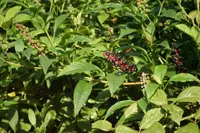
Farkleberry, Vaccinium arboreum, is a hardy, slow-growing shrub or small tree in the blueberry family. It has small, glossy leaves, white bell-shaped flowers, and dark, berry-like fruits. Mature plants develop attractive, rough bark and a dense, branching habit that suits naturalistic or woodland-style plantings.

This species is native to the southeastern United States, where it grows on dry, acidic, often rocky soils and tolerates heat and seasonal drought. Its preference for lean, well-drained, acidic ground and full sun to light shade makes it reliable in low-fertility sites. These traits generally make it easier to care for farkleberry in suitable climates, but it does not adapt well to heavy, poorly drained, or alkaline soils.

Main Plant Requirements

Care Difficulty

Moderate Care

Light Preference

Full Sun

Water Requirements

Moderate Water

Temperature Preference

Warm Climate

Hardiness Zone

6–9

Soil Texture

Sandy, Loamy, Organic-rich

Soil pH

Strongly acidic (4.5–5.5), Acidic (5.5–6.5)

Soil Drainage

Well-drained

Fertilization

Minimal (feed rarely)

Get Personalized Care Plan

Scan your plant to receive care tips personalized for your specific plant

Available on iOS and Android

How to Care for the farkleberry

Vaccinium arboreum prefers full sun for best flowering and fruiting but tolerates some light shade.

  • Provide 6–8 hours of direct sun daily; morning sun with light afternoon shade is ideal in hotter regions.
  • Allow partial shade (3–4 hours sun) in very hot climates, though farkleberry may produce fewer flowers and fruits.
  • Watch leaves for stress: pale, leggy growth signals too little light, while scorched, crispy edges indicate excessive intense afternoon sun.

This shrub prefers consistently moist but not saturated soil, especially while establishing.

  • Irrigate when the top 3–5 cm of soil feels dry, applying a deep soak rather than frequent shallow splashes to encourage deeper roots.
  • During the first 1–2 growing seasons, monitor Vaccinium arboreum weekly in dry weather; reduce watering once roots are established.
  • Use fast-draining, acidic soil; yellowing leaves, soft stems, or sour smell suggest overwatering, while drooping, dry leaves and brittle twigs indicate underwatering.

This species is a hardy shrub that handles a wide temperature range once established outdoors.

  • Aim for active growth in 65–85°F (18–29°C); plants tolerate typical summer heat if soil moisture is maintained.
  • Mature shrubs usually withstand down to about 0–10°F (-18 to -12°C), with short dips slightly lower if well rooted and mulched.
  • Provide 5–8 cm of mulch to buffer roots from winter freezes and summer heat spikes above 95°F (35°C), reducing stress and dieback.

This species adapts to a wide humidity range and usually does not need special humidity management outdoors.

Vaccinium arboreum prefers acidic, well-drained, low-fertility soils that mimic its native sandy or rocky habitats.

  • Use a sandy or sandy-loam mix with 30–50% coarse material such as pine bark fines to keep the structure open.
  • Aim for acidic conditions around pH 4.5–5.5; avoid adding lime or alkaline amendments.
  • In containers, blend peat or fine bark with coarse sand or perlite to improve drainage and root aeration.
  • Do not plant in heavy clay, compacted ground, or spots where water lingers after rain, as roots are prone to decline.

This shrub can be grown in containers when given a deep, very free-draining setup and is often used for growing farkleberry on patios or terraces.

  • Choose a tall, heavy container to support its woody, upright form and reduce tipping in strong wind.
  • Use a narrow-but-deep pot profile to encourage a vertical root system rather than shallow circling roots.
  • Avoid dark metal containers in full sun, which overheat the root zone and increase water stress.

Vaccinium arboreum is a low-demand feeder, so focus on modest, well-timed nutrition rather than heavy fertilization.

  • Use a light application of slow-release, acid-forming fertilizer or balanced NPK (around 10-10-10) in early spring as new growth begins.
  • Supplement with a thin layer of acidic compost or pine bark mulch once a year to support soil structure and steady nutrients for farkleberry.
  • During the growing season, avoid more than 1–2 light feedings; reduce strength to half-label rate to prevent salt buildup.
  • Stop feeding by late summer and do not fertilize in winter dormancy to avoid tender, frost-sensitive growth.

Vaccinium arboreum benefits from light, structural pruning to maintain health and form rather than heavy cutting.

  • Prune in late winter to very early spring before active growth, when branch structure is easy to see.
  • Use clean, sharp bypass pruners to remove dead, diseased, crossing, or inward-growing branches at their origin.
  • Thin crowded interior shoots to improve air flow and light penetration, which supports flowering and overall vigor.
  • Limit height and shape the canopy by shortening long, awkward shoots, keeping natural, open form rather than tight shearing.

This shrub is usually grown in the ground, so focus on careful transplanting rather than frequent container repotting.

  • Transplant young Vaccinium arboreum in late fall or early spring, when temperatures are mild and soil is workable.
  • Look for slow growth, poor vigor, or roots circling a nursery pot as signals that a larger planting space is needed.
  • Dig a wide, shallow hole, keep the root ball intact, and set the plant at the same depth to limit transplant shock.
  • Water thoroughly after planting, mulch 5–8 cm deep, and keep soil evenly moist for the first growing season to help roots establish.

Propagation of Vaccinium arboreum is possible but somewhat specialized, most often done by seeds or semi-hardwood cuttings.

  • Collect ripe berries in late summer to early fall, clean seeds, and stratify them in moist medium at 35–40°F for 2–3 months.
  • Sow stratified seeds on acidic, well-drained mix, keep evenly moist, and provide bright, indirect light for germination.
  • Take semi-hardwood cuttings in mid to late summer, 8–10 cm long, and remove lower leaves to reduce moisture loss.
  • Insert cuttings into an acidic, airy medium, use rooting hormone, and maintain high humidity and bottom warmth around 70–75°F.

This species is generally cold hardy in much of its range and usually needs minimal winter care once established.

  • In USDA zones roughly 6–9, mature plants tolerate normal winter frosts without additional covering.
  • Apply 5–8 cm of organic mulch around the root zone in late fall to buffer soil temperature and conserve moisture.
  • For young or container-grown plants in colder areas, move pots to a sheltered spot and insulate containers from severe freezes.

Care Tips

Mulch For Roots

Apply a 5–8 cm layer of pine bark or pine needle mulch over the root zone to keep the shallow roots cool, conserve moisture, and slowly maintain the acidic surface soil the shrub prefers.

Encourage Bushy Form

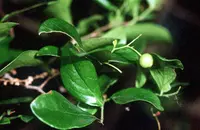
Pinch or lightly tip-prune new shoots in late winter on young plants to promote denser lateral branching and create a fuller, more wind-stable shrub for landscape use.

Selective Thicket Management

In naturalized plantings, thin out crowded stems at ground level every 2–3 years rather than topping branches, which maintains air flow, reduces disease pressure, and preserves the plant’s natural form.

Understory Companion Planting

Plant shallow-rooted, acid-loving companions such as native azaleas or other Vaccinium species nearby to create a stable, low-competition understory that helps retain soil moisture and organic matter.

Wildlife And Fruit Management

If fruit harvest is desired, use bird netting only during the ripening period and remove it promptly afterward to avoid damage to bark and branches while still allowing wildlife access outside the harvest window when growing farkleberry.

Common Pests and Diseases

Blueberry stem blight

This disease causes sudden wilting and dieback of individual stems, often following drought or other stress. Symptoms include brown to black discoloration inside canes when they are cut open.

Solution

Prune out affected stems 15–20 cm below visible damage and destroy the prunings, then disinfect tools between cuts. Reduce stress by maintaining even soil moisture, avoiding heavy nitrogen fertilization, and improving drainage and airflow around plants.

Leaf spot

This disease produces small circular to irregular tan or reddish spots on leaves that can merge and cause premature leaf drop. Symptoms include thinning foliage that weakens the shrub over time.

Solution

Remove and discard heavily spotted or fallen leaves to reduce spore spread, and avoid overhead watering to keep foliage dry. Improve spacing and air circulation; in severe, recurring cases, apply a labeled fungicide for blueberries in early spring according to local extension or product directions.

Mummy berry

This disease infects flowers and developing berries, causing them to shrivel into hard, pale, mummified fruits that drop or remain on the plant. Symptoms include blighted young shoots and distorted new growth early in the season.

Solution

Rake and remove mummified berries from under and within the shrub before spring growth to break the life cycle. Maintain good airflow, limit overhead irrigation during bloom, and if disease pressure is high in the area, follow regional Vaccinium arboreum care instructions that include timely fungicide sprays labeled for mummy berry on blueberries.

Cranberry fruitworm

This pest is a caterpillar that bores into developing berries, causing them to redden prematurely, soften, and drop. This pest often webs together clusters of damaged fruit with silk and frass.

Solution

Hand-pick and destroy infested fruit clusters as soon as damage is seen, and remove plant litter that can shelter pupae. In areas with a history of fruitworm issues, use pheromone traps for monitoring and, if needed, apply a labeled Bacillus thuringiensis (Bt) or other targeted insecticide just after petal fall, following label directions for blueberry-type crops.

Blueberry maggot

These insects lay eggs in ripening berries, and the larvae feed inside, turning fruit soft and unmarketable. Symptoms include berries that look normal from the outside but become mushy and discolored when opened.

Solution

Use yellow sticky traps or species-specific baited traps to monitor adult flies and time control measures. Promptly harvest ripe fruit, remove and destroy dropped berries, and in high-pressure areas, apply an appropriate, labeled insecticide timed to adult fly activity while following local regulations and pollinator-safety guidance.

Interesting Facts

Evergreen blueberry relative

Vaccinium arboreum is unusual among North American blueberries because it is typically evergreen or semi-evergreen in mild climates, keeping much of its foliage through winter while many other Vaccinium species are fully deciduous.

Key host for butterflies

This species is a documented larval host plant for several hairstreak butterflies, including the great purple hairstreak (Atlides halesus), which rely on it for caterpillar development in pine and oak woodlands of the southeastern United States.

Extreme soil tolerance

Unlike many cultivated blueberries that demand strongly acidic, moist soils, Vaccinium arboreum naturally grows on dry, sandy, rocky, and even relatively alkaline sites, showing a broad tolerance to soil pH compared with most of its relatives.

Botan icon

Did you know?

In commercial blueberry breeding, Vaccinium arboreum has been used as a rootstock and genetic resource to improve drought tolerance, root disease resistance, and soil adaptability in highbush blueberry cultivars, making it an important wild species for long-term crop improvement.

FAQs about farkleberry

Poor flowering usually comes from too much shade, heavy pruning at the wrong time, or nutrient imbalance. Avoid cutting stems after flower buds form, maintain slightly acidic soil, and ensure the shrub receives enough light to set buds.

Grow Healthy Plants with Botan Care

Keep your plants happy and healthy with plant identification, disease detection, and easy care guidance.

Botan plant care app — identify plants on mobile

Explore More Plants