BotaN logo

American pokeweed Care (Phytolacca americana)

Also known as: Red Ink Plant, Scoke, American Nightshade, Cancer Jalap, Garget, Inkberry, Poke Root, Redweed, Coakum, Pigeon Berry, Pocan Bush, virginian pokeweed, pokeweed, poke, pokeberry, common pokeweed, North American pokeweed, Virginian Poke, Cancer Root, Chongras, Common Pokeberry, Jalap, Kermes Bush, Pocan, Scoke Berry

About American pokeweed

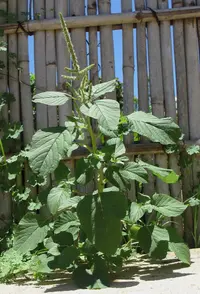
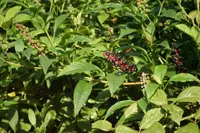
American pokeweed, Phytolacca americana, is a robust, fast-growing perennial often found in fields, woodland edges, and disturbed ground across much of eastern North America. It forms tall, branching clumps with reddish stems, large simple leaves, and drooping clusters of white flowers that mature into deep purple berries.

The plant spreads readily from seed and can become weedy in gardens if not controlled. It tolerates poor soils and variable moisture, which makes it easy to establish but harder to remove once mature.

Those who want to care for American pokeweed should know it prefers full sun to light shade and well-drained soil, and often appears without deliberate planting.

Main Plant Requirements

Care Difficulty

Easy Care

Light Preference

Full Sun

Water Requirements

Moderate Water

Temperature Preference

Cold Hardy

Hardiness Zone

4–8

Soil Texture

Sandy, Loamy, Clay

Soil pH

Acidic (5.5–6.5), Slightly acidic (6.5–7.0)

Soil Drainage

Moist but well-drained

Fertilization

Minimal (feed rarely)

Get Personalized Care Plan

Scan your plant to receive care tips personalized for your specific plant

Available on iOS and Android

How to Care for the American pokeweed

This robust perennial thrives in full sun but tolerates some shade depending on climate.

  • Provide 6–8 hours of direct sun daily for strongest stems and best fruiting, especially in cooler regions.
  • In hot summers, give American pokeweed light afternoon shade or dappled shade to reduce leaf scorch and drought stress.
  • Plants in too much shade grow tall and weak, with fewer berries; increase sun exposure gradually to avoid sudden scorch.

This deep-rooted perennial prefers evenly moist, free-draining soil once established.

  • Water when the top 3–5 cm of soil feels dry, aiming for moist but not saturated soil around the root zone.
  • During hot, dry periods, increase watering and watch for drooping leaves by midday, which suggests the plant needs more moisture.
  • If Phytolacca americana shows yellowing, soft stems, or persistent soggy soil, reduce watering and improve drainage to prevent root problems.

This hardy species tolerates a wide temperature range once established outdoors.

  • Active growth is strongest around 65–85°F (18–29°C), with rapid stem and leaf expansion in late spring and early summer.
  • Mature roots survive winter cold down to about 0°F (-18°C) in many regions, though top growth dies back after hard frosts.
  • Plants handle summer heat up to about 95°F (35°C) if soil moisture is maintained; extended heat plus drought can cause wilting and leaf scorch.

This species is tolerant of a wide humidity range and usually does not need special humidity management outdoors.

This herbaceous perennial prefers deep, moist, well-drained soil that allows its strong taproot to develop fully.

  • Use a loamy or sandy loam soil with plenty of organic matter such as compost or leaf mold to support Phytolacca americana growth.
  • Aim for slightly acidic to neutral pH around 6.0–7.0, which supports nutrient availability and healthy root function.
  • Ensure drainage is reliable by avoiding heavy, compacted clay; integrate coarse sand or fine gravel if water lingers after rain.
  • Improve aeration by mixing in chunky organic material that prevents crusting and allows oxygen to reach deeper roots.

This species is generally unsuited to long-term container growing due to its large size and deep taproot.

Phytolacca americana usually thrives in average garden soil with minimal fertilization needs.

Phytolacca americana benefits from basic structural and hygienic pruning in managed landscapes.

  • Cut back dead, damaged, or diseased stems in late winter or very early spring using clean, sharp pruners.
  • Thin crowded shoots at the base to limit spread and improve air circulation where control is desired.
  • After fruiting, remove unwanted flower and fruit clusters to reduce self-seeding and manage plant size.

Transplanting American pokeweed focuses on managing its large taproot and preventing unwanted spread.

  • Plan moves for early spring or late fall when growth is slow and soil is workable.
  • Transplant only when necessary, such as crowding, poor site conditions, or unwanted volunteers.
  • Dig deeply and widely to keep as much of the taproot and side roots intact as possible.
  • Replant at the same depth, water thoroughly, and keep soil evenly moist until new growth resumes.

Phytolacca americana spreads mainly by seed, which germinates readily in suitable conditions.

  • Collect ripe, dark berries in late summer to fall and remove pulp from seeds before sowing.
  • Sow seeds outdoors in fall or provide 2–3 months of cold, moist stratification at 35–40°F.
  • Use a free-draining seed mix, keep it lightly moist, and place trays in bright, indirect light.
  • Expect variable germination times; thin seedlings to reduce crowding and transplant only when well rooted.

This hardy perennial usually needs minimal winter care in temperate climates.

  • Tolerates typical frost and freezing in much of its range, with top growth dying back naturally.
  • After hard frost, cut stems to ground level to tidy beds and reduce disease carryover.
  • Apply a light 5–8 cm organic mulch over the root zone in colder areas to buffer soil temperature.

Care Tips

Control Self-Seeding

Deadhead or cut seed clusters before they fully ripen and drop to limit unwanted spread and reduce the number of volunteer seedlings in surrounding beds.

Use Protective Barriers

Install a deep edging or root barrier 20–30 cm into the soil around planting areas to slow rhizome and root spread into lawns, paths, or neighboring plantings.

Safe Handling Practices

Wear gloves and long sleeves when cutting or digging plants, then bag and trash roots and fruits rather than composting them, since viable seeds and root pieces can persist in home compost.

Targeted Patch Removal

To reduce a large stand gradually, cut stems to ground level just as flower spikes form, then repeat several times in the season to exhaust the root system instead of deep, disruptive digging.

Wildlife Management Strategy

If birds are spreading berries into unwanted areas, leave a few fruiting plants at the edge of the property as a decoy food source while removing or deadheading plants closer to garden beds, which helps when caring for American pokeweed in mixed landscapes.

Common Pests and Diseases

Leaf spot

This disease causes small dark, water-soaked or tan lesions on leaves that may merge into larger blotches and lead to early leaf drop. Symptoms include most severe damage on older foliage in warm, wet weather.

Solution

Remove and discard affected leaves to reduce inoculum, avoid overhead watering, and space plants so foliage dries quickly. If the problem is recurring and severe, use a copper-based fungicide labeled for ornamental plants, applied according to directions during extended wet periods.

Rust

This disease produces orange to brown powdery pustules on the undersides of leaves and sometimes on stems, often leading to yellowing and premature leaf drop. Symptoms include worse expression under humid conditions with poor airflow.

Solution

Cut off and dispose of rust-infected leaves and thin dense patches to improve air movement around plants. In sites with repeated rust issues, apply a sulfur or copper fungicide preventively in early season when conditions turn warm and humid.

Japanese beetles

These insects skeletonize leaves by eating the tissue between veins, often leaving only a lace-like network on pokeweed foliage. This pest tends to feed in groups and can strip plants quickly during peak season.

Solution

Hand-pick beetles in the early morning into a container of soapy water and remove heavily infested leaves where practical. To reduce future feeding, use row covers on nearby valued ornamentals, and avoid placing beetle-attracting traps close to pokeweed or other host plants.

Verticillium wilt

This disease blocks the plant’s water-conducting tissue, causing sudden wilting, yellowing, and dieback on one side of the plant or on individual stems. Symptoms include foliage that may not recover even when soil is moist.

Solution

Remove and destroy symptomatic stems and any severely affected plants, including as much root as possible, and avoid replanting susceptible species in the same area. Improve soil health with organic matter, avoid water stress, and choose tolerant replacement species if wilt persists on the site.

Interesting Facts

Bird-dispersed toxicity filter

The berries are highly toxic to humans and many mammals, yet birds can safely eat them and act as the main seed dispersers by passing viable seeds through their digestive tract.

Massive perennial taproot

This species survives winter through a very large, fleshy taproot that can grow to substantial size, storing enough energy for rapid spring regrowth even after the top has been cut back.

Distinctive berry color change

The fruit clusters go through a marked color progression from green to bright red stems with glossy dark purple to black berries, a visual cue closely tied to ripeness and attractiveness to birds.

Botan icon

Did you know?

The plant’s intensely colored berries and stems contain natural pigments once used as a folk dye, including for fabric and inks, although modern toxicological knowledge has largely ended such use due to safety concerns.

FAQs about American pokeweed

This species self-seeds heavily and can form dense thickets from bird-dispersed berries. Roots are deep and tough, so unwanted plants are hard to remove. Regular removal of seedlings and flower spikes limits spread and long-term dominance.

Grow Healthy Plants with Botan Care

Keep your plants happy and healthy with plant identification, disease detection, and easy care guidance.

Botan plant care app — identify plants on mobile

Explore More Plants