Toxicity management
Grow this species in a locked or fenced area away from children and pets, and always wear gloves and avoid inhaling dust when cutting, removing, or disposing of any part of the plant, especially seeds and dried pods.

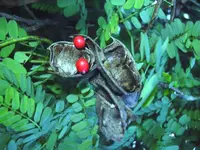
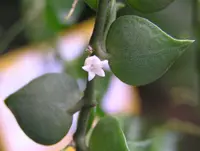
Rosarypea, Abrus precatorius, is a twining tropical vine known for its bright red seeds with a black spot, often called prayer beads. It has delicate, fern-like leaves and small pale flowers, giving it a fine, lacy appearance when grown on supports.
This species is native to tropical regions of Asia but is now found in many warm areas worldwide, often becoming invasive in suitable climates. It can be challenging to manage outdoors because it grows quickly and self-seeds easily, yet it can be grown in containers where spread is controlled.
Those who care for rosarypea should note that it prefers warm conditions, bright light, and well-drained soil with steady but moderate moisture.

Care Difficulty
Hard Care

Light Preference
Full Sun

Water Requirements
Moderate Water

Temperature Preference
Tropical / Frost Sensitive

Hardiness Zone
10–12

Soil Texture
Sandy, Loamy, Organic-rich

Soil pH
Acidic (5.5–6.5), Slightly acidic (6.5–7.0)

Soil Drainage
Well-drained

Fertilization
Light (every 4–6 weeks)
Scan your plant to receive care tips personalized for your specific plant
Available on iOS and Android
Abrus precatorius prefers strong light in warm climates but needs some protection from harsh midday sun.
This species prefers evenly moist, well-drained soil and does not tolerate prolonged saturation.
This tropical vine grows best in consistently warm, frost-free conditions.
This species adapts to a fairly wide humidity range but benefits from slightly moist air in heated homes.
Abrus precatorius prefers light, fast-draining soil that still holds moderate moisture around the roots.
This species can be grown in containers if the pot supports its twining, vigorous root and vine growth.
This twining legume needs only modest feeding, but targeted nutrition supports healthy foliage and flowering in rosarypea.
Thoughtful pruning keeps Abrus precatorius manageable, encourages branching, and helps maintain flowering performance.
This species is often grown outdoors, so care usually focuses on careful transplanting rather than frequent container repotting.
New Abrus precatorius plants are most commonly raised from seed, which requires careful handling and specific conditions for safe germination.
Cold sensitivity is high, so winter care focuses on preventing frost damage and protecting roots.

Plant Health Check
Not sure what's wrong with your plant? Check your plant's health inside the app.
The bright red and black seeds contain abrin, a plant toxin far more potent than ricin by weight, and even a single well-chewed seed can be lethal to humans.
The hard, glossy seeds have been widely used as beads in jewelry and rosaries in tropical regions, because the seed coat is very tough and resists wear when intact.
This twining legume can smother shrubs and young trees, forms dense mats, and is listed as an invasive species in parts of the southern United States, where it displaces native vegetation and is difficult to eradicate.

In traditional Indian goldsmithing, the seeds of this species, known as ratti, were historically used as a precise weight standard for gemstones and precious metals, because individual seeds are remarkably uniform in mass.
All parts are highly toxic, especially the seeds. Chewing even a single seed can be fatal to children, pets, or livestock. Handle with care, avoid ingestion, and keep plants and loose seeds completely out of reach.
Keep your plants happy and healthy with plant identification, disease detection, and easy care guidance.