Jelly Melon Care (Cucumis metuliferus)

Also known as: African horned cucumber, Horned Melon, Kiwano, Jelly Melon / Rooikomkommer, Horned Cucumber
Jelly Melon

About Jelly Melon

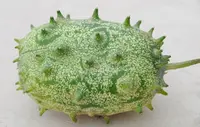
Jelly melon, or Cucumis metuliferus, is a tender annual vine in the cucumber family grown for its striking, spiky orange fruits. The plant climbs or sprawls, producing long stems with tendrils, yellow flowers, and heavily armed, oval fruits with bright green, jelly-like pulp.

It is native to arid and semi-arid regions of southern Africa but is now also cultivated in gardens and small farms in other warm climates. The species grows relatively quickly but needs warmth, consistent moisture, and support for its vines, which influences how to care for Jelly Melon in home gardens.

In suitable conditions with sun, well-drained soil, and protection from cold, it is generally not difficult to grow, though it can be sensitive to frost and prolonged wet, cool weather.

Main Plant Requirements

Care Difficulty

Moderate Care

Light Preference

Full Sun

Water Requirements

Regular Water

Temperature Preference

Tropical / Frost Sensitive

Hardiness Zone

10–11

Soil Texture

Sandy, Loamy, Organic-rich

Soil pH

Acidic (5.5–6.5), Slightly acidic (6.5–7.0)

Soil Drainage

Moist but well-drained

Fertilization

Moderate (every 2–4 weeks)

Get Personalized Care Plan

Scan your plant to receive care tips personalized for your specific plant

Available on iOS and Android

How to Care for the Jelly Melon

This sun-loving annual vine needs strong, direct light to fruit well in open ground.

  • Provide 6–8 hours of full sun daily; morning and midday sun give the best growth and yield for Jelly Melon.
  • Tolerates light afternoon shade in very hot regions, but prolonged shade reduces flowering, weakens vines, and leads to poor fruit set.
  • In shorter-day seasons, prioritize the brightest, south-facing exposure and avoid planting where nearby structures or taller crops cast heavy shade.

This vine prefers evenly moist, well-drained soil and does poorly in waterlogged conditions.

  • Before watering, let the top 3–5 cm of soil dry, then water deeply so moisture reaches the main root zone.
  • Increase watering frequency during hot, dry spells and fruiting; reduce once nights cool, always checking soil rather than following a fixed schedule.
  • Signs of overwatering include yellowing lower leaves and soft stems; underwatering shows as dull, wilting foliage that recovers after thorough watering for Cucumis metuliferus.

This warm-season crop needs consistently mild to hot conditions for strong growth and fruiting.

  • Optimal growth occurs at 70–85°F (21–29°C); vines slow noticeably below 65°F (18°C).
  • Plants are very frost-sensitive; avoid exposure below 50°F (10°C) and protect if a late cold snap is forecast.
  • Tolerates short periods up to about 95°F (35°C) if soil moisture is stable, but extended extreme heat with dry soil can cause flower drop and poor fruit set.

This species prefers moderately dry air and rarely suffers from humidity issues in typical home or outdoor conditions.

  • Aim for 30–50% humidity, which matches most household and outdoor environments.
  • Plants tolerate drier air if soil moisture is consistent; short dry spells in the air alone seldom cause stress.
  • If leaves wilt despite moist soil and strong sun, provide light wind protection rather than extra humidity, since heat stress is more likely.

This scrambling annual fruit vine needs well-structured, fast-draining soil to support rapid growth and fruiting.

  • Use a loose, sandy or loamy soil enriched with compost to combine drainage with steady nutrient release.
  • Target a slightly acidic to neutral pH of 6.0–7.0, which supports nutrient availability for Cucumis metuliferus.
  • Improve aeration and drainage by mixing in coarse sand or perlite at about 20–30% of the total volume.
  • Avoid heavy clay, compacted ground, or mixes that stay waterlogged, which promote root rot and slow growth.

This species can be grown successfully in containers when provided with adequate root volume and support for climbing vines.

  • Choose a deep, heavy container (at least 30–40 cm tall) to anchor trellises and prevent tipping in wind.
  • Select a pot material that suits climate, such as plastic for slower drying in hot regions or clay for faster drying in cool, wet areas.
  • Ensure large, unobstructed drainage holes and elevate the container slightly so excess water escapes freely after irrigation or rain.

Cucumis metuliferus benefits from moderate feeding during its active warm-season growth for good vine vigor and fruiting.

  • Use a balanced NPK fertilizer (such as 10-10-10) or well-rotted compost as the main nutrient source for Jelly Melon.
  • Feed every 3–4 weeks during the growing season, focusing on already moist soil to avoid root burn.
  • Apply liquid fertilizer at 1/2 strength, or use a slow-release product mixed into the top 5–8 cm of soil.
  • Reduce or stop feeding in late fall and winter when growth slows or plants are removed after harvest.

Pruning Cucumis metuliferus is mainly used to manage vine spread, improve airflow, and support fruit production.

  • In early to mid season, pinch back overly long, non-flowering shoots to encourage branching and manageable size.
  • Remove dead, yellowing, or diseased leaves and stems with clean, sharp pruning shears to limit pests and pathogens.
  • Thin out crowded inner vines so more light and air reach the foliage and developing fruit.
  • Avoid heavy late-season cutting that removes flowering shoots, as this can reduce fruit set.

Cucumis metuliferus is usually started in containers and then transplanted outdoors once conditions are warm and stable.

  • Transplant when seedlings have 2–3 true leaves and roots lightly fill the starter cell but are not tightly circling.
  • Move plants in late spring after frost has passed and soil warms to around 65°F for reliable establishment.
  • Shift into slightly larger pots or garden beds every season, as this annual seldom needs long-term container culture.
  • Minimize root stress by watering well before transplanting, handling the root ball gently, and shading plants for 1–2 days after planting out.

Cucumis metuliferus is most commonly propagated by seed, which offers reliable and fast establishment for seasonal crops.

  • Sow seeds in late spring when soil or indoor media is at 70–85°F for optimal germination.
  • Start seeds 1–2 cm deep in a well-drained seed mix, keeping moisture even but not waterlogged.
  • Provide bright light and good airflow so seedlings grow sturdy rather than elongated and weak.
  • Transplant seedlings outdoors after frost, hardening them off over 5–7 days to adapt to sun and wind.

This warm-season annual melon is frost sensitive and usually completes its life cycle before winter in temperate climates.

  • Expect vines to die back with the first hard frost; harvest mature fruit before freezing nights arrive.
  • In cooler regions, start plants indoors each year instead of overwintering outdoors.
  • For container plants, extend the season slightly by moving them into a bright, frost-free space until vines naturally decline.

Care Tips

Sturdy trellis support

Install a strong trellis or wire mesh before planting and train young vines onto it early, as this reduces fruit rot on wet soil and improves airflow around foliage.

Hand pollination boost

In cool or low-insect conditions, gently transfer pollen from male to female flowers with a small brush or cotton swab in the morning to increase fruit set and yield.

Mulch for cooler roots

Apply a 5–8 cm layer of clean straw or shredded bark around the base once soil has warmed to keep roots evenly cool, reduce splashing that spreads disease, and limit weed competition.

Selective fruit thinning

If vines set very heavy clusters, remove some small, misshapen, or overcrowded fruits so the remaining ones size up better and ripen more uniformly when growing Jelly Melon.

Regular pest scouting

Inspect leaf undersides and young shoots twice weekly for aphids, spider mites, and cucumber beetles, and remove or treat early with targeted controls before populations build up and stress the plant.

Common Pests and Diseases

Powdery mildew

This disease commonly affects leaves and stems of Cucumis metuliferus in warm, dry conditions, causing white, powdery fungal growth. Symptoms include yellowing, distortion, and reduced vigor, especially in dense plantings.

Solution

Remove heavily infected leaves to reduce spore load, avoid overhead watering, and improve spacing and airflow around vines. If needed, apply a sulfur, potassium bicarbonate, or neem oil spray labeled for powdery mildew on cucurbits, following label directions and treating early when the first spots appear.

Downy mildew

This disease develops in humid, cool to warm weather and causes yellow angular leaf spots with gray to purplish fuzzy growth on the underside. Symptoms include rapid leaf blighting and plant decline, especially in crowded or poorly ventilated areas.

Solution

Remove and discard infected leaves, avoid wetting foliage, and water at soil level early in the day. In regions with a known downy mildew risk, use resistant seed lines when available and apply a copper-based or other cucurbit-labeled downy mildew fungicide preventively when conditions are favorable.

Aphids

These insects cluster on young shoots and leaves, sucking sap and excreting sticky honeydew that can attract sooty mold. This pest can cause leaf curling, yellowing, and transmission of viruses that affect horned melon vines.

Solution

Dislodge colonies with a strong stream of water and prune heavily infested tips. Encourage natural predators like ladybird beetles, and if populations stay high, use insecticidal soap or horticultural oil applied thoroughly to leaf undersides and new growth.

Spider mites

These pests thrive in hot, dry conditions on Cucumis metuliferus, feeding on leaf undersides and causing fine stippling, bronzing, and eventual leaf drop. This pest can also produce fine webbing between leaves and stems when populations are high.

Solution

Increase humidity around the vines and regularly hose down plants, focusing on leaf undersides to remove mites and webbing. For persistent infestations, use insecticidal soap or a summer-weight horticultural oil, repeating at 5–7 day intervals as needed while avoiding spraying in full midday sun.

Cucurbit viruses

Symptoms include mosaic patterns, mottling, leaf distortion, and stunted growth; fruits may become misshapen or discolored. These viruses are typically spread by aphids and other sap-feeding insects feeding on horned melon and other cucurbits.

Solution

Promptly remove and discard symptomatic plants to reduce virus sources and control aphid populations with physical removal and insecticidal soaps. Use clean seed, reduce nearby weed hosts, and separate new plantings from older cucurbit crops to lower virus pressure and support successful growing Jelly Melon.

Interesting Facts

Armored spiky fruit

The fruit is covered in stiff, horn-like protuberances that help protect it from herbivores and physical damage on the ground in its native southern African habitats.

Drought-escape strategy

In its wild range, the plant often behaves as an annual that races through its life cycle after seasonal rains, producing seeds that can survive long dry periods in the soil until the next favorable season.

Dual reproductive system

The vines are typically monoecious, bearing separate male and female flowers on the same plant, which supports efficient pollination by insects such as bees while still allowing some control over energy investment in fruit set.

Botan icon

Did you know?

Genetic and ecological studies show that this species is native to the dry regions of southern Africa but has become naturalized in several other continents, where it can behave as a minor weed in disturbed areas while still retaining many traits of adaptation to semi-arid environments.

FAQs about Jelly Melon

The ripe fruit is edible and usually orange with jelly-like green pulp and soft seeds. It is eaten fresh, in fruit salads, smoothies, or as a garnish. Unripe fruit tastes more bland and cucumber-like.

Grow Healthy Plants with Botan Care

Keep your plants happy and healthy with plant identification, disease detection, and easy care guidance.


Botan plant care app — identify plants on mobile

Explore More Plants