Pear-shaped Puffball Care (Apioperdon pyriforme)

Also known as: Stump Puffball
Pear-shaped Puffball

About Pear-shaped Puffball

The pear-shaped puffball, Apioperdon pyriforme, is a small saprophytic fungus that breaks down decaying wood rather than a typical leafy plant. It forms dense clusters of pear-shaped, creamy white to tan fruiting bodies on rotting logs, stumps, and buried wood, especially in moist forests.

This puffball is common in temperate regions of North America and Europe, often appearing in late summer and autumn after rainy periods. It is considered relatively easy to observe in the wild but not commonly cultivated at home, so information on how to care for Pear-shaped Puffball is limited beyond providing consistently damp, woody material and shaded, humid conditions.

Main Plant Requirements

Care Difficulty

Moderate Care

Light Preference

Shade

Water Requirements

Keep Soil Moist

Temperature Preference

Cool Climate

Hardiness Zone

3–9

Soil Texture

Loamy, Silty, Organic-rich

Soil pH

Acidic (5.5–6.5), Slightly acidic (6.5–7.0)

Soil Drainage

Moist but well-drained

Fertilization

Minimal (feed rarely)

Get Personalized Care Plan

Scan your plant to receive care tips personalized for your specific plant

Available on iOS and Android

How to Care for the Pear-shaped Puffball

This fungus prefers low to moderate light that mimics a shaded woodland floor.

  • Site it in full to partial shade, receiving 0–3 hours of weak, dappled light per day, such as under deciduous trees or along north- or east-facing forest edges.
  • Avoid direct midday or afternoon sun, which can dry wood substrates quickly and halt fruiting of Pear-shaped Puffball clusters.
  • In summer, heavier canopy shade is suitable, while in leafless winter periods brief morning sun is usually tolerated without damage.

This species depends on consistently moist, but not waterlogged, wood or woody debris.

  • Aim for substrate that stays evenly damp; exposed logs should not dry out more than the outer 2–5 cm before receiving natural rainfall or light supplemental misting.
  • Choose well-drained, decaying wood or wood-chip beds so excess water runs off, preventing standing water and bacterial soft rot around the fruiting bodies of Apioperdon pyriforme.
  • In hot, dry periods, increase misting frequency and watch for shrinking, toughening, or cracking surfaces as signs of drying, while soft, collapsing, or foul-smelling clusters indicate excess moisture.

This wood-decay fungus is adapted to cool to mild conditions typical of temperate forests.

  • Optimal fruiting usually occurs around 50–68°F (10–20°C), with mycelium growth still active up to about 72°F (22°C) in moist, shaded sites.
  • It tolerates brief drops near 32°F (0°C), but hard, prolonged frost below 28°F (-2°C) can damage fruiting bodies and delay regrowth.
  • Higher temperatures up to 77–80°F (25–27°C) are tolerated if shade and high substrate moisture are maintained; hot, dry spells above this range quickly inhibit spore production.

Humidity is not a key factor for Apioperdon pyriforme, which naturally tolerates fluctuating outdoor air moisture.

This fungus requires consistently moist, organic-rich substrate rather than standard potting soil.

  • Use a loose mix of well-rotted hardwood chips, leaf litter, and compost to mimic decaying wood conditions.
  • Ensure the substrate stays evenly moist but never waterlogged, as stagnant water suppresses fruiting and encourages rot.
  • Aim for slightly acidic to neutral conditions (pH 5.5–7.0), avoiding limed or strongly alkaline materials.
  • Improve aeration by mixing in coarse wood chips or shredded bark instead of sand or perlite, which do not reflect its natural habitat.

This species is not well suited to conventional container growing, as it depends on colonizing substantial decaying wood rather than soil.

This wood-decaying fungus generally needs no fertilizer when grown on nutrient-rich logs or stumps.

Pruning is not a standard practice for Apioperdon pyriforme, since the fruiting bodies are temporary and decompose naturally.

Transplanting focuses on moving colonized wood rather than handling the Pear-shaped Puffball as a root-based plant.

  • Transplant when the log or stump is fully colonized and fruiting reliably, usually in mild spring or fall weather.
  • Cut or move sections of colonized wood to a new shaded, moist site with similar tree species and conditions.
  • Avoid letting the substrate dry out during and after the move to reduce stress on the fungal network.
  • Keep disturbance minimal; do not break or crumble the colonized wood, which can slow recovery and fruiting.

Propagation of Apioperdon pyriforme is done by spreading spores or relocating colonized wood rather than using standard plant techniques.

  • Use mature puffballs that release brown spores and place them over fresh, damp hardwood debris or logs.
  • Best results occur in cool, moist seasons such as fall, when natural spore dispersal is highest.
  • For controlled attempts, gently shake spores onto shaded, decaying wood and keep the area evenly moist.
  • Relocating pieces of colonized wood to similar environments can help establish new fruiting sites over time.

This fungus is naturally cold hardy and needs no special winter care in outdoor settings.

Care Tips

Use Decaying Wood

Establish cultures on well-rotted hardwood logs or large branches with loose, crumbly texture, as this provides a stable, long-lasting substrate that mimics the fungus’s natural habitat.

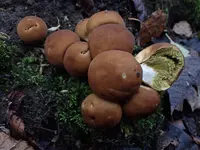
Stacked Log Habitat

Create a shaded log pile with pieces in close contact but not tightly packed, which helps maintain constant moisture and allows the mycelium to bridge between logs over time.

Slow Hydration Soaks

If logs dry out, rehydrate them by soaking for 2–4 hours in non-chlorinated water, then allowing them to drain fully before returning them to a cool, shaded position.

Spore Capture Technique

When mature puffballs appear, tap them gently over fresh, damp rotting wood so spores fall directly onto a suitable substrate and increase the chance of establishing new colonies.

Seasonal Moisture Shield

In hot or windy periods, place a breathable cover such as shade cloth or loose burlap over log piles to reduce evaporation while still allowing air movement, which supports more stable conditions for growing Pear-shaped Puffball.

Common Pests and Diseases

Parasitic fungi

This disease involves other fungi colonizing the puffball fruiting bodies, causing discoloration, malformed growth, or premature decay. Symptoms include patches of different-colored mold, sunken areas, or rapid collapse of the puffball surface.

Solution

Remove and discard affected fruiting bodies promptly to reduce spread, and avoid disturbing contaminated material so spores are not spread further. Improve site hygiene by clearing heavy, decaying debris around the colony and avoid overhead watering that keeps fruit bodies wet for long periods.

Mycoparasitic molds

These fungi specifically attack and feed on the puffball tissue, often appearing as dense, felt-like or powdery growth over the surface. This disease can stop spore development and turn the puffball patch into misshapen, off-color clumps.

Solution

Carefully remove and bag visibly overgrown or distorted puffballs and any heavily colonized debris, then dispose of them in the trash rather than composting. Maintain good air movement around the fruiting area and avoid compaction of the substrate so the host mycelium stays vigorous and better able to resist colonization.

Fungus gnats

These insects lay eggs in the moist substrate and inside soft puffball tissue, where larvae tunnel and feed, leading to water-soaked spots, internal cavities, and early collapse. This pest often appears in shaded, very damp areas with high organic matter.

Solution

Reduce excess moisture by allowing the substrate surface to dry slightly between waterings if cultivated, and avoid standing water in trays or surrounding soil. Use fine mesh or physical barriers to limit adult access, remove and discard heavily infested puffballs, and apply targeted biological controls such as Bacillus thuringiensis israelensis (BTI) to the substrate if managing a deliberate grow Apioperdon pyriforme setup.

Slugs and snails

These pests rasp soft outer tissue, leaving irregular gouges, slime trails, and exposed inner flesh that decays quickly. This pest pressure is strongest in cool, wet conditions and in dense ground litter.

Solution

Hand-pick slugs and snails around fruiting patches at dusk or after rain, and reduce shelter sites by thinning heavy leaf litter and boards or stones near the colony. Use physical barriers such as copper tape, rough mineral rings, or shallow beer traps placed away from the main patch to draw pests away from developing puffballs.

Interesting Facts

Unique pear-shaped form

This puffball forms dense clusters of small, pear-shaped fruiting bodies on decaying wood, a growth habit that clearly distinguishes it from many soil-growing puffball species.

Wood-decaying specialist

It is a saprotrophic fungus that specializes in breaking down dead hardwood and conifer logs, helping recycle complex wood compounds like lignin back into forest nutrient cycles.

Early spore dispersal opening

As it matures, a well-defined pore forms at the top of each fruit body through which brown spores are released when raindrops or animal contact compress the puffball.

Botan icon

Did you know?

Molecular research over the last two decades showed that this species is distinct enough from traditional puffballs in the genus Lycoperdon that it was reclassified into its own genus, Apioperdon, reflecting a clearer understanding of its evolutionary relationships.

FAQs about Pear-shaped Puffball

This fungus is edible only when young, firm, and uniformly white inside. Discard any specimens that are yellowing, browning, soft, or showing an outline of gills. Always confirm identification with a reliable local expert before eating.

Grow Healthy Plants with Botan Care

Keep your plants happy and healthy with plant identification, disease detection, and easy care guidance.

Botan plant care app — identify plants on mobile

Explore More Plants