Sharp-scaly Pholiota Care (Pholiota squarrosoides)

Sharp-scaly Pholiota

About Sharp-scaly Pholiota

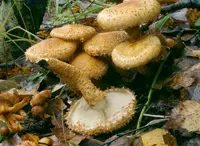
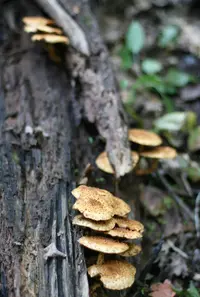
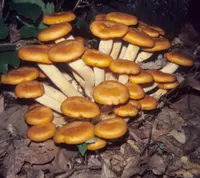
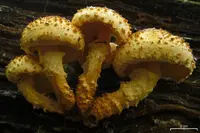
Sharp-scaly Pholiota (Pholiota squarrosoides) is a wood-rotting mushroom, not a leafy houseplant. It forms clustered, yellow-brown caps covered with coarse, pointed scales and typically appears on dead or decaying hardwood, especially in moist forests. The stems are similarly scaly, giving the whole fruiting body a rough, textured look.

This fungus helps break down fallen logs and stumps, playing a role in nutrient recycling in temperate North American and European woodlands. It is not commonly cultivated at home, so how to care for Sharp-scaly Pholiota is usually of interest mainly to specialist growers or mycology enthusiasts rather than general plant owners.

Main Plant Requirements

Care Difficulty

Moderate Care

Light Preference

Partial Shade

Water Requirements

Keep Soil Moist

Temperature Preference

Cool Climate

Hardiness Zone

Unknown

Soil Texture

Loamy, Organic-rich

Soil pH

Acidic (5.5–6.5)

Soil Drainage

Moist but well-drained

Fertilization

Minimal (feed rarely)

Get Personalized Care Plan

Scan your plant to receive care tips personalized for your specific plant

Available on iOS and Android

How to Care for the Sharp-scaly Pholiota

This wood-decaying mushroom prefers low to moderate light rather than direct sun exposure.

  • Provide bright shade or dappled woodland light, such as under deciduous trees, with 1–3 hours of gentle morning sun at most.
  • Avoid strong midday or afternoon sun, which can dry substrate and inhibit fruiting of Sharp-scaly Pholiota; use leaf litter or logs to create filtered light.
  • In summer, prioritize more shade and moisture retention; in spring and fall, slightly more open canopy is acceptable if the substrate does not dry out.

This fungus relies on consistently moist, not saturated, wood and surrounding litter.

  • Maintain the substrate so it stays evenly damp; surface wood and litter should feel moist to the touch but not glossy or puddled.
  • If artificially maintaining a bed, water when the top 1–2 cm of litter or wood feels just starting to dry, reducing watering in cool, wet seasons and increasing in hot, dry spells.
  • Watch for soggy, sour-smelling wood as a sign of overwatering and cracked, hard, or very light pieces as signs that Pholiota squarrosoides is drying out.

This species fruits best in cool to mild conditions typical of temperate forests.

  • Aim for an active growth range of about 50–70°F (10–21°C), with many fruitings triggered by cool, moist weather in spring or fall.
  • It tolerates short dips near 32°F (0°C) in dormant mycelium but fruiting bodies are damaged by hard frost, so expect flushes between frosts rather than through winter cold.
  • Sustained heat above 80°F (27°C), especially with low humidity, can slow growth and dry logs; provide shade and moisture during hot spells to buffer temperature swings.

This wood-decaying mushroom prefers consistently moist air but usually manages in typical outdoor humidity if the substrate stays damp.

  • Aim for 60–90% ambient humidity around fruiting logs or beds to support full cap development.
  • Dry, windy air can cause cracked caps, thin stems, and aborted pins, especially during warm weather.
  • Increase local humidity by lightly misting surrounding surfaces, using soaker hoses on a timer, or placing perforated plastic sheeting above the fruiting area for short periods.

Pholiota squarrosoides grows on decaying wood, so it does not use soil in the usual sense but still benefits from a carefully prepared substrate zone.

  • Provide a loose, fibrous matrix of hardwood chips, sawdust, and partially decayed logs that mimics a coarse, organic-rich soil structure.
  • Ensure excess water drains away from the log or chip bed; persistent pooling leads to anaerobic conditions and contaminant fungi.
  • Keep the surrounding ground slightly acidic to neutral (about pH 5.5–7.0) using leaf litter or forest duff rather than lime or ash.
  • Improve aeration by mixing chip sizes, avoiding compaction, and keeping heavy clay or plastic barriers away from the wood-contact area.

This species is suitable for container-style cultivation using buckets or tubs filled with colonized wood-based substrate rather than traditional potting soil.

  • Use deep, food-grade plastic buckets or tubs with side and bottom holes so moisture can drain while still holding a humid microclimate around the substrate.
  • Raise containers slightly off the ground on bricks or slats so runoff escapes quickly and does not stagnate under the base.
  • Position containers in a shaded, sheltered spot where wind cannot rapidly dry exposed substrate surfaces or tip over taller fruiting clusters.

This wood-decaying fungus draws most nutrients from its substrate and rarely benefits from added fertilizer in typical outdoor settings.

Pholiota squarrosoides does not require pruning in the usual horticultural sense, since it is a saprobic mushroom rather than a garden shrub or houseplant.

Cultivation of this fungus focuses on preparing fresh woody substrate rather than classic repotting or transplanting.

  • Refresh or replace colonized logs or wood chips once fruiting declines and the substrate becomes heavily decomposed.
  • Best timing is late winter to early spring, before peak fruiting, so the mycelium establishes in new wood as temperatures rise.
  • Move colonized pieces gently onto new hardwood chips or partially buried logs to limit tearing of the mycelium network.
  • Maintain even moisture around the new substrate using light watering or mulch to reduce stress during establishment.

Reproduction of this species is mainly managed through spore dispersal or transferring colonized substrate rather than standard plant propagation methods.

  • Introduce spores to fresh hardwood by placing mature caps gill-side down on moist wood or by using spore slurries in shaded, humid spots.
  • Alternatively, transfer small chunks of fully colonized wood into fresh, drilled hardwood logs to encourage new mycelial growth.
  • Best establishment occurs in cool, moist weather of spring or fall, with sustained surface moisture but no standing water.
  • Keep the colonization area shaded and protected from disturbance so the fungal network can spread through the new substrate.

This temperate woodland fungus is naturally cold hardy and usually needs no special winter care when growing outdoors in suitable climates.

  • In very exposed sites, a light mulch of leaves or wood chips helps moderate freeze–thaw around colonized logs or beds.
  • Avoid moving or disturbing frozen substrate to prevent mechanical damage to the mycelium.
  • Container-based culture, if attempted, should stay in an unheated but frost-free, shaded area with substrate just slightly moist.

Care Tips

Select proper logs

Use freshly cut, disease-free hardwood logs like oak or maple, 10–20 cm in diameter, and inoculate them within 2–4 weeks of cutting for best colonization.

Optimize drilling pattern

Drill 8–10 mm holes in an offset diamond pattern about 10–15 cm apart along the log, so the mycelium can spread evenly and reduce the risk of uncolonized zones.

Seal inoculation points

After inserting spawn, seal each hole with food-grade cheese wax or beeswax to prevent drying, contamination, and insect entry during colonization.

Manage shade and moisture

Stack inoculated logs off the ground in deep shade, then cover with a breathable material like 60–70% shade cloth or loose straw to buffer against rapid drying and heavy rain impact.

Use controlled soaking

Once logs are well colonized, soak them in clean, non-chlorinated water for 12–24 hours to trigger fruiting, then stand them upright for good air flow and easier harvest when caring for Sharp-scaly Pholiota.

Common Pests and Diseases

Fungus gnat larvae

This pest lives in very wet, decaying wood and soil around cultivated clusters and can damage young mycelium. Symptoms include slowed regrowth on the inoculated log or substrate and visible small white larvae in the surface layer.

Solution

Reduce excess moisture around the fruiting site, improve drainage, and cover substrate or drilled log holes with breathable fabric or fine mesh to limit egg‑laying. Remove heavily infested surface material and, if needed, use biological control with Bacillus thuringiensis israelensis (Bti) according to label directions on outdoor mushroom beds.

Wood-boring beetle larvae

These insects tunnel through hardwood logs or stumps used for cultivation, competing with the fungus for wood resources and disrupting fruiting. Symptoms include powdery frass, small round exit holes in the log, and declining mushroom production over time.

Solution

Use only sound, freshly cut hardwood for inoculation and avoid logs with existing beetle holes. For infested logs, physically remove and destroy heavily damaged pieces and keep remaining logs off bare soil and in a drier, well‑ventilated stack to reduce further invasion while caring for Sharp-scaly Pholiota outdoors.

Competing saprobic fungi

This disease issue occurs when other wood‑decaying fungi colonize the same log or substrate, outcompeting the intended mycelium. Symptoms include different colored or differently textured mushroom clusters or crusts emerging near or instead of the expected fruiting bodies.

Solution

Start with clean, freshly cut, uncolonized wood and inoculate promptly with strong spawn. If competing fungi appear, cut away colonized sections where practical, discard heavily invaded logs, and adjust stacking and shade so the intended fungus gets stable moisture without long periods of waterlogging.

Bacterial blotch

This disease develops in conditions with constant surface wetness and poor air movement, causing water‑soaked, greasy, or yellow‑brown spots on caps. Symptoms include sticky patches and localized softening that make clusters unappealing and prone to rapid decay.

Solution

Improve air circulation around fruiting clusters and avoid prolonged overhead wetting; water the surrounding area or log base instead of the caps. Remove and discard affected fruiting bodies and keep the surface just moist, not dripping, especially during warm weather.

Interesting Facts

Sharp, fibrous scales

The cap and upper stem are densely covered with pointed, fibrous scales that remain dry and bristly, unlike the gelatinous scales of the closely related Pholiota squarrosa, making field separation of the two species more reliable.

Preference for hardwoods

This species fruits mainly on dead or dying hardwoods such as maple and beech, where it acts as a wood-decay fungus helping to recycle lignin and cellulose into simpler organic matter.

Potential for confusion

Although sometimes reported as edible in older literature, it is easily confused with other toxic Pholiota and Galerina species, so most modern field guides advise against consumption and treat caring for Sharp-scaly Pholiota primarily as an identification exercise rather than a foraging target.

FAQs about Sharp-scaly Pholiota

Identification within the Pholiota group is difficult, and some related species are mildly toxic or cause gastrointestinal upset. This mushroom is generally regarded as inedible and should not be collected for food unless confirmed by an expert mycologist.

Grow Healthy Plants with Botan Care

Keep your plants happy and healthy with plant identification, disease detection, and easy care guidance.

Botan plant care app — identify plants on mobile

Explore More Plants