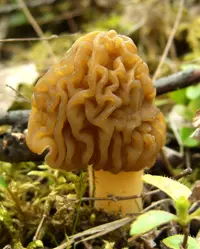
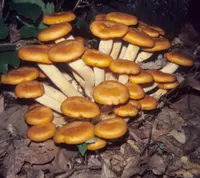
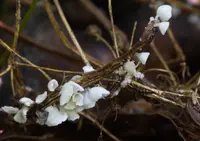
shaggy scalycap Care (Pholiota squarrosa)

Also known as: shaggy pholiota
shaggy scalycap

About shaggy scalycap

Shaggy scalycap, Pholiota squarrosa, is a wood-decaying mushroom that forms dense clusters at the base of living or dead trees. It is not a houseplant but sometimes interests foragers and nature-focused gardeners.

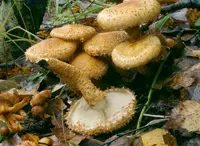
The caps are yellow-brown with coarse, upright scales, giving them a rough, shaggy look, while the stems are similarly scaly. It occurs in temperate regions of North America and Europe, usually in moist woodlands, parks, and older landscapes with mature trees.

This fungus prefers cool, humid conditions, shade to dappled light, and nutrient-rich, decaying wood. To care for shaggy scalycap in a managed setting, conditions must closely mimic its natural, consistently moist woodland habitat.

Main Plant Requirements

Care Difficulty

Moderate Care

Light Preference

Partial Shade

Water Requirements

Keep Soil Moist

Temperature Preference

Cool Climate

Hardiness Zone

Unknown

Soil Texture

Organic-rich, Loamy

Soil pH

Acidic (5.5–6.5)

Soil Drainage

Moist but well-drained

Fertilization

Minimal (feed rarely)

Get Personalized Care Plan

Scan your plant to receive care tips personalized for your specific plant

Available on iOS and Android

How to Care for the shaggy scalycap

Pholiota squarrosa prefers woodland-style light that mimics its natural habitat at tree bases.

  • Provide bright, indirect light or light dappled shade, with 2–4 hours of gentle morning sun and shaded or filtered light for the rest of the day.
  • Allow partial shade, especially under deciduous trees where it receives more light in spring and autumn and deeper shade in summer.
  • Avoid intense afternoon sun, which can dry the substrate and stress the mycelium; too little light can reduce fruiting and lead to fewer, weaker caps.

Watering for this fungus focuses on maintaining an evenly moist, not saturated, substrate around host tree bases.

  • Aim for consistently moist soil to a depth of 5–8 cm, letting only the top 1–2 cm start to dry before re-moistening, especially during active fruiting.
  • Ensure the site drains freely; standing water or a sour smell indicates overwatering and can suffocate mycelium, while cracked, pulling-away soil signals underwatering.
  • In cooler months, reduce watering frequency but prevent complete drying; observe Pholiota squarrosa pins and caps for shriveling as a sign of insufficient moisture.

This species performs best in cool to mild outdoor conditions typical of temperate woodlands.

  • Support active growth and fruiting at about 50–68°F (10–20°C), which matches many autumn conditions in shaded garden or woodland areas.
  • Tolerate brief drops near 28–32°F (-2–0°C), but repeated hard frosts below this can damage fruiting bodies, though underlying mycelium may persist in protected soil.
  • Limit exposure to hot spells above 77–82°F (25–28°C); in heat, increase shade and moisture to prevent substrate drying and reduced fruiting through summer.

This wood-rotting fungus has low humidity demands and usually thrives in natural outdoor moisture levels.

  • Target ambient humidity around 40–70% when attempting controlled cultivation, similar to shaded woodland air.
  • It tolerates brief drier spells but prolonged very dry air can slow fruiting and cause caps to crack and dry at the edges.
  • If needed, raise humidity by misting nearby surfaces or using a humid microclimate like a shaded, sheltered outdoor corner rather than direct spraying on caps.

Pholiota squarrosa naturally fruits on decaying wood, so it relies on a wood-based, moisture-retentive yet aerated substrate rather than mineral soil.

  • Use a mix of hardwood chips, sawdust, and well-rotted wood chunks to mimic decaying stumps and provide structure and nutrition.
  • Ensure the substrate drains freely yet holds moisture; it should feel damp and springy, never waterlogged or muddy.
  • Keep pH roughly neutral to slightly acidic (pH 5.5–7.0), avoiding heavily limed or strongly alkaline materials that inhibit fungal growth.
  • Improve aeration by avoiding compaction, mixing in coarse chips, and drilling small holes in outdoor bed borders to allow gas exchange.

This species can be grown in containers when mimicking a colonized log or stump, but it is more specialized than typical potted plants.

  • Choose a deep, rigid tub or bucket filled with wood-based substrate so the mycelium can establish a thick, insulated colonization zone.
  • Drill side and bottom holes to let excess water drain while allowing air exchange close to where the fungus develops.
  • Keep the container shaded and sheltered from strong wind so the substrate stays evenly moist and does not overheat or dry at the edges.

Pholiota squarrosa, a wood-decaying fungus rather than a true garden plant, generally needs no added fertilizer when growing on suitable woody substrate.

Pholiota squarrosa does not require pruning because the fruiting bodies are temporary structures of a fungus, not persistent plant shoots or branches.

This species is usually left in natural woodland or landscape settings, so management focuses on limiting host stress rather than moving shaggy scalycap itself.

  • Transplant or move the host tree or stump only when essential, as disruption can alter fungal growth patterns and fruiting.
  • Schedule any tree or stump relocation during dormant seasons to limit stress and soil disturbance.
  • Retain as much original surrounding soil and woody material as possible so fungal mycelium remains intact.
  • Water the host tree or stump area after major disturbance to settle soil and reduce root stress.

Pholiota squarrosa propagation is usually not attempted in home settings because it is a parasite and saprobe on living or dead wood, not a conventional ornamental plant.

This fungus is naturally cold hardy in temperate climates and does not need targeted winter care in gardens or woodlands.

Care Tips

Use hardwood hosts

Establish the fungus on well-decayed hardwood stumps or large logs from non-resinous trees, since the species is primarily a wood-inhabiting parasite and performs poorly on fresh or very soft substrates.

Manage stump moisture

Partially bury inoculated stumps or logs so about 1/3 remains above ground, which stabilizes moisture around the colonization zone while still allowing adequate gas exchange.

Encourage mycelium spread

When cutting or grinding nearby infected stumps, leave a small network of buried woody roots in place, as these act as bridges for the mycelium to expand through the soil and fruit over several seasons.

Seasonal fruiting checks

Check inoculated stumps during cool, moist periods in late summer to autumn after significant rain events, since fruiting bodies often appear in flushes shortly after a weather shift.

Limit competition fungi

Remove visibly colonized brackets or large clusters of other wood-decay fungi from the same stump early on, reducing competition for resources and improving the chances of growing shaggy scalycap successfully on that host.

Common Pests and Diseases

Mycophagous springtails

These insects feed on fungal mycelium and young fruiting bodies, sometimes grazing caps and stems of shaggy scalycap clusters. Symptoms include small surface pits, irregular nibbling, and reduced development of pins in very dense, moist substrates.

Solution

Reduce excess moisture by improving drainage and avoiding waterlogged wood or substrate, then increase airflow around fruiting sites to keep surfaces just slightly moist, not saturated. If populations are heavy, physically disturb or scoop out the most affected surface layer and replace it with fresh, clean substrate, and use fine mesh or tight lids on containers to reduce reinfestation.

Fungus gnat larvae

This pest lives in very moist substrates and can consume fine fungal mycelium, slowing colonization and reducing fruiting. Symptoms include sluggish growth of the mycelial mat, collapse of small pins, and presence of tiny black adult gnats flying near the substrate surface.

Solution

Allow the top layer of the substrate to dry very slightly between mistings and increase ventilation to discourage larvae that prefer stagnant, saturated conditions. Use yellow sticky traps to reduce adult numbers and, in contained cultivation, top-dress with a thin layer of clean coarse sand or vermiculite to create a physical barrier that larvae find difficult to cross.

Competing saprophytic fungi

This disease issue arises when other wood-decaying fungi colonize the same log or stump, outcompeting Pholiota squarrosa and distorting, suppressing, or replacing its fruiting bodies. Symptoms include appearance of different-colored or differently shaped mushrooms on the same substrate and poor or irregular shaggy scalycap clusters.

Solution

Start with freshly cut, clean hardwood logs or stumps whenever possible and inoculate promptly to give P. squarrosa a head start. If strong competitors appear, remove their fruiting bodies completely, reduce overall moisture slightly to favor the established colony, and if necessary reinoculate with fresh spawn into new, uncontaminated wood to maintain a reliable crop.

Parasitic molds

These disease organisms grow over developing mushroom caps and stems, appearing as patches of white, gray, or green fuzz that can stop normal development of clusters. Symptoms include deformed caps, slimy or matted surfaces, and a musty or sharp odor that differs from the normal mushroom smell.

Solution

Lower humidity slightly and increase fresh-air exchange without causing the substrate to dry out, as stagnant, very humid air favors mold growth. Remove heavily affected fruiting bodies and the surrounding surface layer, clean tools and growing containers carefully, and restart from clean spawn on fresh wood if mold repeatedly overtakes new flushes.

Slugs and snails

These pests feed on soft mushroom tissue, leaving large irregular holes, shredded caps, and slime trails on and around clusters. Symptoms include overnight damage to otherwise healthy fruiting bodies, often starting at the cap margins and lower stems close to the substrate.

Solution

Hand-pick slugs and snails in the evening and early morning and remove nearby hiding places such as boards, dense weeds, or debris around the log or stump. Where allowed, create simple barriers such as copper tape around beds or elevate cultivation containers, and harvest clusters promptly once mature to limit the time they are exposed to grazing pressure.

Interesting Facts

Strong onion-like odor

The fruiting bodies produce a distinct onion or garlic-like smell, which can help separate this species from many other similar-looking brownish mushrooms on decaying wood.

Aggressive root parasite

This fungus can act as a parasitic pathogen on living trees, especially species such as maple, ash, and beech, contributing to root and butt rot and sometimes predisposing trees to windthrow.

Name reflects appearance

The specific epithet squarrosa refers to the conspicuously erect, pointed scales on the cap and stem, which give the mushrooms their characteristically rough, shaggy look even when young.

Botan icon

Did you know?

This species often fruits in dense, overlapping clusters at the base of the same host tree year after year, because its long-lived underground mycelium persists in the wood and root system even when no mushrooms are visible above ground.

FAQs about shaggy scalycap

This mushroom is generally regarded as inedible and potentially harmful. It may cause gastrointestinal upset and has been linked to alcohol-related poisoning reactions. It is safest to avoid consumption and not treat it as a culinary species.

Grow Healthy Plants with Botan Care

Keep your plants happy and healthy with plant identification, disease detection, and easy care guidance.

Botan plant care app — identify plants on mobile

Explore More Plants