


Host tree selection
Establish this ectomycorrhizal fungus near suitable host trees such as oak, chestnut, or beech on well-drained, calcareous soil, and avoid planting under conifers or in acidic, peat-based sites where it rarely fruits.

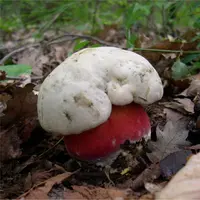
Devil's bolete, Rubroboletus satanas, is a large ectomycorrhizal fungus, not a leafy plant, that forms thick, fleshy fruiting bodies. It is recognized by its pale, often whitish cap, red to orange pores, and stout, usually red-flushed stem.
This species occurs mainly in warm, calcareous woodlands in parts of Europe, often under oaks and other broadleaf trees. It is considered difficult to cultivate because it depends on a close root partnership with specific host trees.
In nature it favors well-drained, lime-rich soils and moderate moisture. For most home growers, practical how to care for Devil's bolete methods are limited, as it is best observed in its natural habitat rather than grown indoors or in typical gardens.

Care Difficulty
Hard Care

Light Preference
Partial Shade

Water Requirements
Regular Water

Temperature Preference
Warm Climate

Hardiness Zone
Unknown

Soil Texture
Loamy, Silty, Organic-rich

Soil pH
Acidic (5.5–6.5), Slightly acidic (6.5–7.0)

Soil Drainage
Moist but well-drained

Fertilization
Minimal (feed rarely)
Scan your plant to receive care tips personalized for your specific plant
Available on iOS and Android
This ectomycorrhizal fungus prefers bright, indirect woodland light rather than open, direct sun exposure.
Rubroboletus satanas depends on stable, evenly moist but not saturated soil around its host tree roots.
This fungus thrives in mild, temperate conditions and is sensitive to both hard frost and extreme heat.
Humidity management is not relevant for Rubroboletus satanas, which grows as a wild ectomycorrhizal fungus rather than a cultivated houseplant.
Soil conditions for Rubroboletus satanas focus on supporting its tree-root association rather than typical potting mixes.
This species is not suitable for container growing, as it requires a long-term ectomycorrhizal relationship with living tree roots in open ground.
This ectomycorrhizal fungus relies mainly on its tree partners and usually does not need direct fertilization.
Rubroboletus satanas is not pruned like a garden plant, since the visible mushroom is only the fruiting body of an underground fungus.
This species is almost never grown in containers; management focuses on where host trees are established rather than on moving the fungus itself.
Reproducing Rubroboletus satanas is complex and rarely attempted in home settings, because it depends on specific mycorrhizal partnerships with broadleaf trees.
In suitable climates this fungus overwinters in soil as mycelium and typically needs no dedicated winter care.

Plant Health Check
Not sure what's wrong with your plant? Check your plant's health inside the app.
When its pale, often red-flushed flesh is cut or damaged, it usually turns blue within minutes due to oxidation of pigment molecules, a reaction that helps distinguish it from some similar red-pored boletes.
This species is considered poisonous and can cause severe gastrointestinal symptoms if eaten, yet documented cases of fatal poisoning are lacking in modern medical literature despite its dramatic common name.
It occurs mainly in warm, calcareous woodlands in central and southern Europe, where it forms ectomycorrhizal partnerships with oaks, beeches, and other broadleaved trees on lime-rich soils.

Molecular studies have shown that this fungus, once placed in the large and variable genus Boletus, is distinct enough in its genetic makeup and morphological traits to justify its current placement in the separate genus Rubroboletus, which groups several robust, often toxic, red-pored boletes.
This species is considered poisonous and is not edible, even when cooked. It can cause severe gastrointestinal symptoms, including nausea, vomiting, and diarrhea. It must never be collected for food or added to mixed mushroom dishes.
Keep your plants happy and healthy with plant identification, disease detection, and easy care guidance.

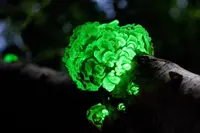
Luminescent Panellus
Panellus stipticus
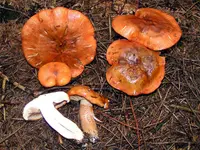
golden orange tricholoma
Tricholoma aurantium
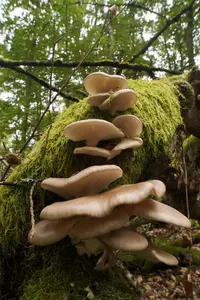
summer oyster mushroom
Pleurotus pulmonarius
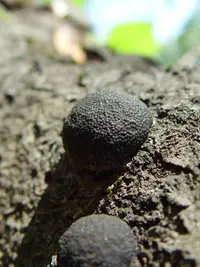
Cramp Balls
Annulohypoxylon thouarsianum
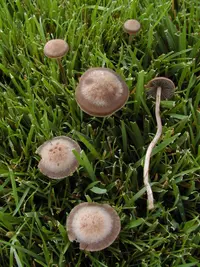
Mower's Mushroom
Panaeolus foenisecii
blue meanies
Panaeolus cyanescens
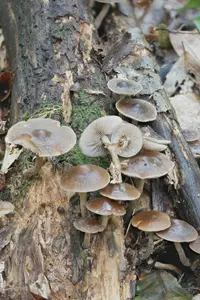
Agrocybe firma
Agrocybe firma
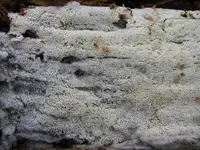
Anomoporia kamtschatica
Anomoporia kamtschatica