Ascot Hat Care (Hortiboletus bubalinus)

Ascot Hat

About Ascot Hat

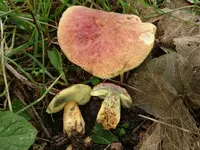
Ascot Hat, Hortiboletus bubalinus, is a small bolete fungus rather than a leafy plant. It forms stout stems topped with smooth, buff to pinkish-brown caps that resemble a neat hat. The pores underneath the cap are typically yellow and can slowly bruise when handled.

This species is usually found on soil in temperate woodlands, often near broadleaf trees such as oak or beech, where it lives in a mycorrhizal partnership that helps both fungus and tree access nutrients. It is not commonly cultivated, so anyone wanting to care for Ascot Hat usually focuses on maintaining suitable woodland-like conditions with undisturbed soil, leaf litter, and consistent moisture.

Main Plant Requirements

Care Difficulty

Moderate Care

Light Preference

Partial Shade

Water Requirements

Keep Soil Moist

Temperature Preference

Cool Climate

Hardiness Zone

Unknown

Soil Texture

Loamy, Silty, Organic-rich

Soil pH

Acidic (5.5–6.5), Slightly acidic (6.5–7.0)

Soil Drainage

Moist but well-drained

Fertilization

Minimal (feed rarely)

Get Personalized Care Plan

Scan your plant to receive care tips personalized for your specific plant

Available on iOS and Android

How to Care for the Ascot Hat

This bolete prefers woodland-style light similar to its natural forest-edge habitat.

  • Provide dappled or filtered light under deciduous trees, with roughly 2–5 hours of gentle morning sun and shade by early afternoon for stable fruiting.
  • Allow partial shade; Ascot Hat often fruits at the edge of paths where it receives broken light rather than direct midday sun.
  • Avoid harsh, full afternoon sun in open lawns, which can dry the upper soil and leaf litter; summer shade and some winter sun through bare branches suit it well.

Moist but not waterlogged soil is critical for stable mycelium and fruiting.

  • Maintain evenly moist mineral soil and leaf litter; allow the top 2–3 cm to begin drying between rains or irrigations rather than staying saturated.
  • Use deep, infrequent soaking when natural rainfall is low, then wait until the surface looks dry and loose instead of dark and sticky before watering again.
  • Watch for overwatering signs such as persistent puddling, sour smell, or slimy litter; cracked soil and shriveled caps indicate the Hortiboletus bubalinus network is under drought stress.

This species favors mild to warm conditions typical of late spring to early autumn forests.

  • Support growth and fruiting in a range of 60–77°F (16–25°C), which keeps soil biology active and the mycelium stable.
  • Expect reduced fruiting below about 50°F (10°C); the underground network may persist down to near-freezing if soil does not stay frozen solid for long.
  • Protect habitat from extremes above 86°F (30°C) by maintaining shade and mulch, since prolonged heat and dry soil can halt fruiting and damage fine fungal threads.

This species grows outdoors and does not require active household humidity control.

This ectomycorrhizal mushroom needs loose, aerated, organic-rich ground to fruit reliably.

  • Use a deep, loamy, leaf-litter–rich soil that mimics mixed woodland floor, with 30–50% well-rotted leaf mold or compost.
  • Ensure free drainage by avoiding compaction; incorporate coarse sand or fine grit where native soil is heavy or clay-based.
  • Maintain soil pH near neutral to slightly acidic (pH 5.5–7.0), as strongly alkaline conditions suppress Hortiboletus bubalinus development.
  • Keep the upper layer lightly mulched with leaf litter or wood chips to maintain pore spaces and support fungal mycelium aeration.

This species is generally unsuitable for container growing, as it depends on extensive soil-root-fungus interactions in the ground.

This mycorrhizal fungus relies mainly on its tree host for nutrients, so direct fertilization is usually unnecessary when growing Ascot Hat near healthy trees.

Hortiboletus bubalinus is a wild, soil-dwelling fungus and does not require structured pruning like a garden shrub or tree.

This bolete is best managed by encouraging suitable habitat rather than by classic repotting or transplanting.

  • Transplant young host trees with intact root systems and associated soil instead of moving the fungus directly.
  • Choose early spring or early fall for tree moves, when temperatures are mild and soil moisture is stable.
  • Limit root disturbance by handling the root ball gently and keeping original soil around fine roots.
  • Water thoroughly after transplanting and maintain even soil moisture to reduce stress on tree roots and fungal partners.

This ectomycorrhizal fungus is not typically propagated in home settings because it depends on complex partnerships with tree roots.

This species is generally cold hardy in temperate climates and needs no special winter care in the ground.

Care Tips

Host tree selection

Establish this mycorrhizal fungus near compatible broadleaf hosts such as oaks or beeches, and avoid heavy disturbance of the root zone so the underground association can form and persist.

Leaf litter management

Maintain a continuous, thin layer of mixed hardwood leaf litter over the rooting area to supply organic matter, but gently rake aside thick, matted layers in autumn so fruiting bodies can emerge more easily.

Soil compaction control

Prevent frequent trampling, vehicle traffic, or heavy equipment use over the colonized area, since soil compaction reduces aeration and can sharply reduce fruiting.

Targeted moisture zones

If irrigation is needed, use a low-pressure sprinkler or soaker hose around the drip line of the host tree rather than at the trunk base to keep the active feeder-root and mycelium zone evenly moist without waterlogging.

Minimal disturbance harvesting

When collecting fruiting bodies, cut them at the base with a clean knife instead of pulling them out, and avoid raking or digging so the underlying mycelium remains intact for long-term stability when growing Ascot Hat.

Common Pests and Diseases

Mycophagous springtails

These insects feed on mushroom tissue and gill surfaces, creating small pits and tunnels that can deform or collapse caps. Symptoms include pitted stipes, scarred pores, and rapid loss of firmness in fruiting bodies.

Solution

Remove heavily damaged fruiting bodies and nearby decaying organic matter to reduce habitat, and keep the immediate fruiting zone slightly drier while maintaining overall soil moisture. In cultivation setups, improve ventilation, use fine mesh over vents to limit entry, and if needed use targeted biological controls such as entomopathogenic nematodes in the surrounding substrate, following label rates carefully.

Sciarid fungus gnats

These insects are attracted to moist, organic substrates and their larvae feed on developing mycelium and young fruiting bodies. Symptoms include stunted or aborted mushrooms, softening at the base of the stipe, and visible small black flies around the substrate.

Solution

Allow the upper layer of the substrate or soil to dry slightly between waterings while avoiding complete drying of the mycelium zone. Use yellow sticky traps to monitor and reduce adult populations, improve drainage in planting or collection areas, and in controlled environments consider applying Bacillus thuringiensis israelensis (Bti) products to the substrate according to directions.

Bacterial blotch

This disease causes greasy, yellow-brown spots and streaks on caps and stipes, often starting where free water remains on the surface. Symptoms include slimy patches, rapid softening, and an unpleasant odor as lesions expand.

Solution

Reduce overhead watering and avoid letting free water stand on fruiting bodies by using gentle, directed watering at soil level. Improve airflow around the mushrooms, harvest affected fruiting bodies promptly, and in cultivation spaces disinfect tools and containers with a mild bleach solution to limit bacterial spread.

Competing mold contamination

This disease involves fast-growing molds that colonize the same substrate, outcompeting Hortiboletus mycelium and deforming or suppressing fruiting bodies. Symptoms include patches of green, gray, or white fluffy growth on or near mushrooms and poor or uneven fruiting.

Solution

Physically remove and discard heavily contaminated substrate and affected mushrooms to prevent further spread. In managed beds or containers, improve hygiene by using clean tools, pasteurized or well-aged substrate, and better airflow, and avoid overwatering to keep the surface just moist rather than constantly wet.

Interesting Facts

Subtle pore bruising

This bolete has pale yellow pores that may slowly shift toward brownish or greyish tones when handled, but it typically lacks the strong blue bruising seen in many related red-footed boletes, which helps separate it from similar species in the field.

Warm-toned cap surface

The cap usually shows warm buff, pinkish, or fawn tones and often develops slightly darker, patchy areas with age or in dry weather, giving it a somewhat mottled appearance rather than a uniform color.

Garden and park associate

This species is frequently recorded in urban and suburban settings, such as lawns, parks, and roadside plantings, commonly forming ectomycorrhizal partnerships with ornamental or planted broadleaf trees like oaks and beeches.

FAQs about Ascot Hat

This bolete is generally regarded as inedible or of unknown edibility and should not be collected for food. Identification of small brown boletes is difficult, and misidentification can lead to serious poisoning from similar species.

Grow Healthy Plants with Botan Care

Keep your plants happy and healthy with plant identification, disease detection, and easy care guidance.

Botan plant care app — identify plants on mobile

Explore More Plants