summer oyster mushroom Care (Pleurotus pulmonarius)

Also known as: pale oyster
summer oyster mushroom

About summer oyster mushroom

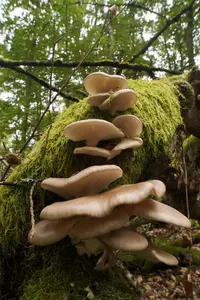
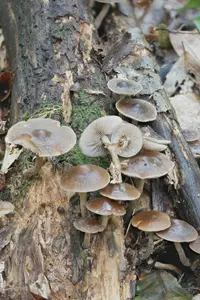
The summer oyster mushroom, Pleurotus pulmonarius, is a fast-growing saprotrophic fungus that breaks down dead wood rather than living in soil like typical houseplants. It forms layered clusters of soft, fan-shaped caps with short or almost absent stems, usually in pale cream to light gray tones.

In nature it occurs on hardwood logs and stumps in warm seasons, especially in temperate forests across North America, Europe, and parts of Asia. It is considered relatively easy to cultivate because it colonizes substrates quickly and tolerates a range of indoor and outdoor conditions.

Those who want to learn how to care for summer oyster mushroom should know it prefers fresh air exchange, consistent moisture, and indirect light rather than direct sun.

Main Plant Requirements

Care Difficulty

Moderate Care

Light Preference

Partial Shade

Water Requirements

Keep Soil Moist

Temperature Preference

Warm Climate

Hardiness Zone

Unknown

Soil Texture

Organic-rich, Peaty, Loamy

Soil pH

Acidic (5.5–6.5), Slightly acidic (6.5–7.0)

Soil Drainage

Moist but well-drained

Fertilization

Minimal (feed rarely)

Get Personalized Care Plan

Scan your plant to receive care tips personalized for your specific plant

Available on iOS and Android

How to Care for the summer oyster mushroom

Pleurotus pulmonarius needs bright, indirect light that mimics dappled woodland conditions for reliable fruiting.

  • Provide 6–8 hours of bright, filtered light each day; light shade or dappled sun under trees suits summer oyster mushroom beds well.
  • Allow gentle morning sun but protect from strong midday and afternoon sun, which can dry substrates and scorch exposed clusters.
  • In summer, increase shade (30–50%) during heat waves; in darker seasons, ensure at least open shade so pins do not elongate and weaken.

Moist but not waterlogged conditions are essential for healthy Pleurotus pulmonarius mycelium and fruiting.

  • Aim for consistently damp substrate; surface should feel moist but not soggy, with no standing water around logs or beds.
  • Use touch as a guide: if the top 2–3 cm feel just barely moist or lighter in color, water gently until evenly damp throughout.
  • Reduce watering during cool, wet weather and increase during hot, dry spells; yellowing, limp caps suggest drought stress, while sour odor and slimy patches indicate overwatering.

Stable, mild temperatures support strong mycelial growth and good flushes of Pleurotus pulmonarius.

  • Target 65–75°F (18–24°C) for vegetative growth and 60–70°F (16–21°C) for fruiting to balance speed and mushroom quality.
  • Tolerates down to about 40°F (4°C) without permanent damage, but growth nearly stops and hard frost can injure exposed fruiting bodies.
  • In hot spells above 80–85°F (27–29°C), growth weakens and mushrooms dry quickly, so increase shade, airflow, and moisture around the fruiting area.

This fungus needs very high humidity to form healthy, full caps.

  • Aim for 85–95% humidity around fruiting blocks, especially during pin formation and expansion.
  • Tissue drying, cracked caps, and aborted pins signal air that is too dry for summer oyster mushroom.
  • Use a humidifier, frequent fine misting, or a humidity tent while ensuring constant fresh air exchange.

Pleurotus pulmonarius does not grow in soil but on moist, pasteurized lignocellulosic substrates.

  • Use chopped straw, hardwood sawdust, or a sawdust–straw mix with 10–20% wheat bran or similar supplement for nutrition.
  • Ensure the substrate is well-drained but evenly moist; it should feel like a wrung-out sponge, never soggy or dripping.
  • Maintain a near-neutral pH around 6.5–7.5 using agricultural lime or gypsum when preparing sawdust-based blocks.
  • Avoid garden soil, peat-heavy mixes, or compacted media, which lack structure, aeration, and cleanliness needed for vigorous mycelial colonization.

This species is well suited to container growing in bags, buckets, or tubs designed for mushroom cultivation.

  • Drill side holes for fruiting rather than only using the top opening so clusters emerge where humidity is highest and stems stay shorter.
  • Choose opaque or dark containers to limit light to the substrate surface, which helps direct fruiting to the intended cut or drilled areas.
  • Pack the substrate firmly but not compressed solid, leaving 2–3 cm headspace so gas exchange and surface microclimate remain stable during colonization.

Pleurotus pulmonarius grown on logs or straw-based substrates needs nutrient-rich material rather than traditional plant fertilizer.

  • Use well-pasteurized straw, hardwood sawdust, or supplemented pellets as the primary nutrient source instead of balanced NPK products.
  • If using supplementation, add 5–10% wheat bran or soybean hulls to the substrate mix before sterilization or pasteurization.
  • Avoid additional liquid fertilizer; high salt and nutrient levels can inhibit mycelium growth and increase contamination risk.
  • Discard and replace exhausted substrate blocks rather than trying to rejuvenate them with fertilizer.

Pleurotus pulmonarius does not require true pruning, but timely harvest and hygiene trimming support healthy flushes.

  • Harvest clusters when caps are fully formed but still slightly curled, cutting at the base with a clean, sharp knife.
  • Remove any dead, water-soaked, or moldy mushrooms immediately to reduce spore load and disease spread.
  • Trim overly crowded clusters by cutting away small inner caps so remaining mushrooms reach better size and shape.
  • Avoid tearing mushrooms from the block or log, which can damage the mycelium surface and reduce future yields.

Summer oyster mushroom blocks or bags are not repotted in the usual sense but can be moved or re-sited to optimize fruiting.

  • Shift colonized bags or blocks when pinning slows and surfaces dry quickly, indicating a location with poor humidity or airflow.
  • Move setups in spring or early summer to shaded, humid spots; indoor systems can be relocated any time with stable 60–75°F conditions.
  • Handle blocks gently, keeping the plastic sleeve intact when possible to limit mycelium stress and cracking.
  • After relocating, mist surrounding air and maintain indirect light to help the mycelium resume normal fruiting.

New Pleurotus pulmonarius cultures are commonly produced from grain spawn, tissue culture, or spore work rather than home seed-like methods.

  • Use sterile grain spawn from a reputable supplier as the primary propagation material for inoculating straw or sawdust substrates.
  • For advanced growers, take inner tissue from a fresh, healthy cap under sterile conditions and transfer to nutrient agar to create a mother culture.
  • Once fully colonized on grain, mix spawn evenly at 5–10% of substrate volume to achieve fast, uniform colonization.
  • Maintain 70–75°F, high humidity, and clean handling during colonization to support strong mycelial growth and reduce contamination.

Outdoor Pleurotus pulmonarius on logs or beds may slow or pause production in winter and benefits from basic protection in cold climates.

  • In regions below about 25°F, place fruiting logs in a sheltered, shaded area such as an unheated garage or against a north wall.
  • Apply a 5–8 cm mulch layer of leaves or straw around log bases or beds to buffer rapid freeze–thaw cycles.
  • For indoor blocks, keep temperatures above 55°F and maintain moderate humidity to preserve mycelium until warmer conditions return.

Care Tips

Rotate Fruiting Bags

Turn or shuffle fruiting blocks 90° every flush so new mushrooms develop on different sides, which reduces dry spots and encourages more even yields when growing summer oyster mushroom.

Stagger Harvest Timing

Harvest larger caps first and leave smaller ones for 12–24 hours, which opens space for air movement and light while allowing the remaining mushrooms to size up without crowding.

Use Clean Humidity Tents

If ambient humidity is low, place perforated clear plastic bags or a plastic tote loosely over the blocks, but disinfect the cover and provide daily air exchange to prevent bacterial film and off-odors.

Trim Exhausted Surfaces

After 2–3 flushes, cut away soft, heavily spent outer layers of the block with a clean knife to expose fresher substrate and reduce mold-prone material before attempting another flush.

Monitor Spore Build-Up

Place light-colored paper or trays under fruiting shelves to track spore fall, and if residue becomes heavy, improve ventilation and clean surfaces regularly to protect both block health and indoor air quality.

Everything About summer oyster mushroom

Common Pests and Diseases

Green mold (Trichoderma)

This disease shows as fast-growing green patches on the substrate or on the surface where mushrooms should form, often outcompeting the mushroom mycelium. Symptoms include stalled growth, poor yields, and a sharp, earthy odor from the contaminated block or bag.

Solution

Remove and discard heavily contaminated blocks or bags far from the grow area, as Trichoderma spreads by airborne spores. For future cycles, improve hygiene (clean tools and surfaces, use clean water), pasteurize or properly sterilize substrate, reduce excess moisture, and increase fresh air exchange to keep the surface from staying soggy.

Cobweb mold

This disease appears as very fine, grey to whitish web-like growth that spreads extremely fast over casing or substrate and can cover young mushroom primordia. Symptoms include a soft, cottony layer that can quickly collapse pins and cause a sour or musty smell.

Solution

Immediately isolate or remove affected blocks and lightly mist the area with a 3% hydrogen peroxide solution to slow spread, avoiding direct heavy wetting of healthy pins. Reduce humidity slightly, increase fresh air exchange, and avoid overhead misting that keeps the surface overly wet, as drier, well-ventilated conditions make it harder for cobweb mold to establish.

Fungus gnats

These insects are small, dark flies that hover around substrate and lay eggs inside, where larvae feed on mycelium and young mushroom tissue. This pest can cause weak, deformed fruiting bodies and can also introduce secondary infections.

Solution

Use yellow sticky traps to monitor and reduce adult populations and keep the fruiting area clean and free of spilled substrate or standing water. Cover fresh substrate with breathable filters, allow the top of blocks to dry slightly between mistings, and if infestations persist, apply a biological control such as Bacillus thuringiensis israelensis (Bti) to the substrate surface according to label directions.

Sciarid fly larvae

This pest lives mainly as pale larvae inside the substrate, tunneling through mycelium and sometimes into forming mushrooms. Symptoms include hollow stems, small bite marks, and frass (fine debris) within the substrate or at the base of clusters.

Solution

Discard severely infested blocks, as larvae are difficult to eliminate once inside. For prevention, tightly screen all air inlets, use clean substrate and containers, keep doors closed and floors dry, and consider using biological nematodes or Bti at the substrate stage in commercial or intensive setups focused on Pleurotus pulmonarius care.

Bacterial blotch

This disease causes sticky, greasy-looking yellow to brown spots on mushroom caps, especially under very wet conditions and poor air movement. Symptoms include soft, water-soaked areas that can spread, making caps unmarketable and prone to decay.

Solution

Remove and discard badly affected mushrooms and reduce surface wetness by avoiding direct misting onto caps. Improve air circulation and provide short, frequent fresh-air exchanges, keeping humidity in a moderate range so caps dry off between misting cycles while substrate remains moist.

Interesting Facts

Warm-season oyster

This species fruits naturally in late spring to summer and tolerates higher temperatures than Pleurotus ostreatus, which is why growers often use it as the main oyster for warm-weather production.

Insect-trapping mycelium

Its mycelium can produce microscopic, sticky droplets that help trap nematodes (tiny worms), allowing the fungus to access additional nitrogen from these organisms.

Efficient wood decomposer

It is a white-rot fungus that breaks down both lignin and cellulose in hardwoods, playing a key role in nutrient cycling and forest wood decay dynamics.

Botan icon

Did you know?

This species has been tested in bioremediation research because its enzymes can break down certain industrial dyes and environmental pollutants, showing potential to help clean contaminated substrates under controlled conditions.

FAQs about summer oyster mushroom

Under good conditions on pasteurized straw or sawdust, mycelium colonizes the substrate in about 7–14 days. First flushes of mushrooms often appear 3–4 weeks after inoculation, with later flushes following at shorter intervals.

Grow Healthy Plants with Botan Care

Keep your plants happy and healthy with plant identification, disease detection, and easy care guidance.

Botan plant care app — identify plants on mobile

Explore More Plants