Select clean substrate
Use only freshly cut, disease-free hardwood logs or well-pasteurized sawdust, since contaminated or decayed wood greatly reduces colonization success and increases competing fungi.

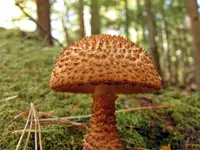
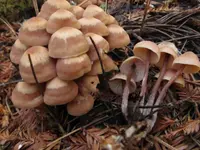
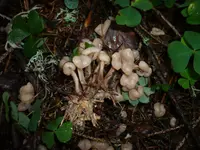
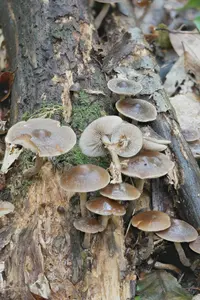
Decorated pholiota, Leucopholiota decorosa, is a wood-inhabiting mushroom rather than a leafy houseplant. It forms dense clusters of firm, pale to golden caps covered with distinct, ornamented scales, giving it a decorated look. The stems are usually sturdy and often arise from buried or decaying hardwood.
This species occurs mainly in temperate forests of North America and parts of East Asia, where it grows on dead or dying broadleaf trees and stumps. It is not commonly cultivated, so information on how to care for Decorated Pholiota at home is limited and experimental. Successful growth generally depends on providing cool, moist, shaded conditions and a suitable hardwood-based substrate.

Care Difficulty
Hard Care

Light Preference
Partial Shade

Water Requirements
Keep Soil Moist

Temperature Preference
Cool Climate

Hardiness Zone
Unknown

Soil Texture
Loamy, Organic-rich

Soil pH
Acidic (5.5–6.5)

Soil Drainage
Moist but well-drained

Fertilization
Minimal (feed rarely)
Scan your plant to receive care tips personalized for your specific plant
Available on iOS and Android
This woodland fungus prefers soft, dappled light similar to conditions on a shaded forest floor.
This species needs consistently moist, but not waterlogged, substrate to support healthy mycelial growth and fruiting.
This fungus performs best in cool to mild conditions typical of temperate woodlands.
This wood-decaying fungus prefers consistently moist, cool air but usually manages in typical outdoor humidity where its substrate stays damp.
This fungus does not grow in conventional potting soil and instead needs a lignin-rich wood substrate that mimics decaying forest hardwood.
This species is only moderately suitable for container growing because it relies on substantial, stable wood substrates rather than standard pot culture.
This wood-decaying fungus usually obtains enough nutrients from its substrate, so fertilizing Decorated Pholiota is rarely needed in garden or culture settings.
Pruning is generally not relevant for Leucopholiota decorosa, as individual fruiting bodies are short-lived and naturally replaced by new ones from the underlying mycelium.
Transplanting focuses on moving colonized wood or substrate rather than individual fruiting bodies, which are temporary structures.
Propagation of Leucopholiota decorosa relies on managing mycelium and spores rather than treating it like a typical garden plant.
This fungus is generally cold hardy in its natural range and needs little targeted winter care when growing outdoors on suitable wood.

Plant Health Check
Not sure what's wrong with your plant? Check your plant's health inside the app.
This species was long placed in the genus Pholiota but molecular studies showed it is distinct enough to stand in its own small genus, Leucopholiota, which currently contains only this single species.
The fruiting bodies have pale to yellowish caps densely covered with whitish warts or scales that give a frosted, decorated look, which inspired both its common name, decorated pholiota, and the epithet decorosa.
It grows on decaying hardwood logs and stumps in temperate forests, especially oak-rich woods in eastern North America and parts of East Asia, where it contributes to breaking down lignin-rich wood and recycling nutrients into the soil.
This species is generally treated as inedible due to its tough texture and limited study of potential toxins. It should not be collected for food, especially by beginners, since identification errors with similar-looking mushrooms can be dangerous.
Keep your plants happy and healthy with plant identification, disease detection, and easy care guidance.