Giant Funnel Care (Leucopaxillus giganteus)

Giant Funnel

About Giant Funnel

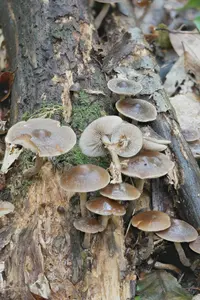
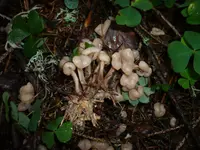
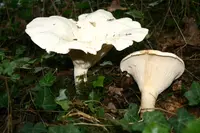
Giant funnel, Leucopaxillus giganteus, is a large, saprobic fungus rather than a leafy plant, forming broad, funnel-shaped caps on the ground. It often appears in arcs or loose rings in grasslands, pastures, and open woodland edges.

This species is native to temperate regions, especially across Europe and North America, where it fruits in late summer to autumn. It is generally robust and tolerant, but consistent soil moisture, good organic matter, and mild temperatures support more reliable fruiting.

Because it depends on suitable habitat rather than pot culture, it is not a typical houseplant, and attempts to care for Giant Funnel focus on maintaining healthy, undisturbed soil and grass areas.

Main Plant Requirements

Care Difficulty

Moderate Care

Light Preference

Partial Shade

Water Requirements

Keep Soil Moist

Temperature Preference

Cool Climate

Hardiness Zone

Unknown

Soil Texture

Loamy, Silty, Organic-rich

Soil pH

Slightly acidic (6.5–7.0), Neutral (7.0)

Soil Drainage

Moist but well-drained

Fertilization

Minimal (feed rarely)

Get Personalized Care Plan

Scan your plant to receive care tips personalized for your specific plant

Available on iOS and Android

How to Care for the Giant Funnel

This fungus prefers bright, open sites with gentle, not scorching, sun exposure.

  • Provide 3–6 hours of direct morning sun with light dappled or filtered light later in the day, especially in open grassland or meadow edges.
  • Allow partial shade, particularly afternoon shade, in hotter regions to reduce drying of the substrate and prevent stress to Giant Funnel colonies.
  • In summer, avoid prolonged, intense afternoon sun that bakes the soil; in cooler seasons more open exposure helps fruiting, as long as the ground does not dry out.

Leucopaxillus giganteus needs consistently moist but not saturated ground to fruit well.

  • Aim for evenly moist soil to a depth of 5–8 cm; the surface can dry slightly between rains or irrigations but should not become dusty or cracked.
  • Use irrigation only where rainfall is low, applying slow, deep watering so excess drains away; avoid standing water, which encourages rot and competing anaerobic microbes.
  • Watch for slow or absent fruiting and very hard soil as signs of underwatering, and for sour smell, algae, or puddling as signs the site is too wet.

This species fruits best in cool to mild conditions rather than intense heat.

  • Optimal fruiting occurs around 50–65°F (10–18°C), often in late summer to autumn, when days are mild and nights are cool.
  • Mycelium in the soil can tolerate down to about 25°F (−4°C), but repeated hard freezes below this may reduce productivity in the following season.
  • Sustained heat above 80°F (27°C) dries the substrate and suppresses fruiting, so partial shade and soil moisture conservation help maintain suitable microclimate for Leucopaxillus giganteus.

Humidity is not a major factor for Leucopaxillus giganteus in outdoor cultivation.

Leucopaxillus giganteus develops best in loose, organic-rich ground that stays evenly moist yet drains freely.

  • Use a deep, loamy substrate with high leaf litter or compost content to mimic forest or meadow leaf mold conditions.
  • Ensure rapid drainage by avoiding compacted clay; incorporate coarse sand or small gravel to keep pore spaces open.
  • Aim for slightly acidic to neutral pH, around 6.0–7.0, which supports balanced fungal growth and nutrient availability.
  • Avoid waterlogged, heavily fertilized, or chemically treated ground, as these conditions suppress mycelium development and fruiting.

This species is generally unsuitable for container growing because its mycelium naturally spreads over wide soil areas.

This fungus is usually self-sufficient in natural or wood-chip rich beds and needs no routine fertilization.

Leucopaxillus giganteus does not require pruning in the horticultural sense, only basic sanitation after fruiting.

  • Remove collapsed or rotten fruiting bodies with a clean knife or gloved hands once they age or discolor.
  • Gather and dispose of diseased mushrooms to limit spread of fungal competitors and bacterial rot.
  • Avoid disturbing the underlying mycelium network in the soil or substrate while cleaning spent caps.

This species is typically grown in outdoor beds rather than containers, so management focuses on careful site establishment instead of frequent transplanting.

  • Choose a permanent, well-drained outdoor bed with rich organic matter before introducing Leucopaxillus giganteus spawn.
  • Avoid moving the colony once the mycelium has spread, since disturbance can set back growth or reduce fruiting.
  • If relocation is necessary, transfer blocks of colonized substrate intact and replant at the same depth.
  • Water gently after setting the new bed to settle substrate and reduce mycelial stress.

Propagation of this mushroom is specialized and is usually handled by experienced growers using spawn rather than casual division.

Established outdoor colonies are generally cold hardy and need minimal winter care in typical temperate climates.

  • Maintain a 3–5 cm layer of leaf litter or wood chips over the bed to buffer temperature swings.
  • Avoid waterlogging in winter by ensuring good drainage and avoiding compacted soils.
  • In very exposed sites, a slightly thicker mulch can help stabilize the mycelium near the surface.

Care Tips

Spore Bed Renewal

After each fruiting flush, gently rake and top-dress the colony area with a thin (0.5–1 in) layer of fresh, partially decomposed leaf litter or clean woodchip compost to maintain a rich substrate for ongoing spore colonization.

Patch Mapping

Mark and map the active fungal ring with small, unobtrusive stakes or flags so foot traffic, mowing, and digging do not disturb the expanding mycelium at the outer edge of the patch.

Grass Management

If the fungus is growing in turf, keep the grass slightly longer (7–10 cm) and avoid heavy nitrogen lawn feeds directly over the ring to reduce competition from vigorous grass growth.

Sanitary Harvesting

Use a clean, sharp knife to slice fruiting bodies at the base rather than pulling them up, and remove any decaying caps promptly to limit bacterial growth and nuisance insect buildup in the bed.

Moisture Buffering

Apply a light, breathable mulch of shredded leaves or fine wood chips around, but not tightly against, emerging caps to buffer short dry spells and support more stable conditions for growing Giant Funnel.

Common Pests and Diseases

Mycophagous springtails

These insects feed on fungal tissue and can graze gill surfaces and margins of the caps, especially on moist, organically rich sites. Symptoms include small pits, roughened gills, and surface scarring on young fruiting bodies.

Solution

Limit overly wet, compacted areas by improving drainage in the fruiting zone and avoid heavy overwatering or constant saturation of the substrate. Where damage is severe, reduce surface organic debris thickness, encourage airflow, and use physical barriers such as fine mesh over cultivation beds to reduce access of springtails to developing basidiocarps.

Slug and snail grazing

These pests rasp the soft cap and gill tissue, leaving irregular holes, slime trails, and partially eaten fruiting bodies. Damage is often most visible after wet nights when the mushrooms are actively expanding.

Solution

Hand-pick slugs and snails at dusk or after rain, and use low, rough barriers or copper tape around defined cultivation beds to discourage entry. Keep the immediate area around fruiting sites free of dense groundcover and thick mulch so hiding spots are reduced, and use iron phosphate bait products if local regulations and site use make them appropriate.

Fungal parasitism (mold overgrowth)

This disease appears as fast-growing cottony or powdery molds that colonize caps, stems, or the substrate, often following prolonged wet, stagnant conditions. Symptoms include discolored, softened, or deformed fruiting bodies and premature collapse.

Solution

Improve air movement and avoid continuous surface saturation by allowing the top layer of the substrate to dry slightly between waterings. Promptly remove and discard heavily overgrown or misshapen mushrooms, thin crowded clusters, and keep leaf litter and other organic debris around developing specimens from forming dense, permanently wet mats.

Bacterial blotch

This disease causes greasy-looking, water-soaked spots on caps that can turn yellow-brown and slimy under prolonged high humidity. Symptoms include localized softening of the tissue and reduced visual quality of the fruiting bodies.

Solution

Lower surface moisture by watering earlier in the day so the substrate and surrounding vegetation can dry somewhat before nightfall, and avoid overhead splashing directly onto caps. Remove and dispose of severely affected mushrooms, and maintain good air exchange around the colony to keep humidity high but not stagnant during active growing Giant Funnel conditions.

Interesting Facts

Impressive fairy rings

This species often forms very large fairy rings in grasslands and pastures, sometimes many meters across, as the underground fungal network expands outward over multiple years.

Long spore survival

Its spores are known for remaining viable in soil for extended periods, which helps the species reappear in the same sites even after years with few visible fruiting bodies.

Strong mealy odor

Mature fruiting bodies typically develop a pronounced mealy or farinaceous smell, a diagnostic feature that helps distinguish it from similar white, funnel-shaped mushrooms.

Botan icon

Did you know?

The caps of this fungus are among the largest found in temperate grasslands, with individual fruiting bodies sometimes exceeding the size of a human hand and forming dense troops that can visually dominate late-summer and autumn pastures.

FAQs about Giant Funnel

This mushroom is considered edible when young and correctly identified, but quality is often described as mediocre. Misidentification with toxic white fungi is a serious risk, so only experienced foragers should collect and eat it.

Grow Healthy Plants with Botan Care

Keep your plants happy and healthy with plant identification, disease detection, and easy care guidance.

Botan plant care app — identify plants on mobile

Explore More Plants