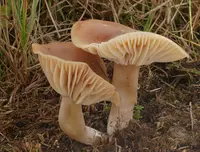
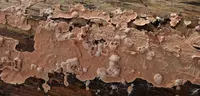
cinnamon jellybaby Care (Cudonia confusa)

cinnamon jellybaby

About cinnamon jellybaby

Cudonia confusa, commonly called cinnamon jellybaby, is a small, jelly-like fungus rather than a typical leafy plant. It forms clusters of tiny club-shaped fruiting bodies with warm brown to cinnamon tones, often on soil or decaying plant material.

This species is usually found in cool, moist forests in temperate regions, especially among mosses or leaf litter. It is not commonly cultivated, and its need for specific woodland fungi partnerships makes it challenging to grow at home. Those who attempt to care for cinnamon jellybaby should aim to mimic a shaded, consistently moist forest floor with plenty of organic matter.

Main Plant Requirements

Care Difficulty

Hard Care

Light Preference

Partial Shade

Water Requirements

Keep Soil Moist

Temperature Preference

Cool Climate

Hardiness Zone

Unknown

Soil Texture

Loamy, Silty, Organic-rich

Soil pH

Strongly acidic (4.5–5.5), Acidic (5.5–6.5)

Soil Drainage

Moist but well-drained

Fertilization

Minimal (feed rarely)

Get Personalized Care Plan

Scan your plant to receive care tips personalized for your specific plant

Available on iOS and Android

How to Care for the cinnamon jellybaby

This woodland fungus grows best in cool, shaded to lightly dappled forest conditions rather than direct sun.

  • Provide bright shade or dappled light under trees, with 1–3 hours of weak morning sun at most for cinnamon jellybaby fruiting bodies.
  • Avoid strong midday or afternoon sun, which can dry the substrate and desiccate the small clubs, reducing their lifespan and abundance.
  • Maintain leaf litter or low vegetation that filters light through the season, as sudden canopy loss greatly increases light stress and drying.

This species depends on consistently moist, cool soil rather than direct watering of the fruiting bodies.

  • Aim for evenly moist, humus-rich soil, allowing only the top 1–2 cm to dry slightly before re-moistening if conditions are artificially managed.
  • Ensure excellent drainage with plenty of leaf litter; standing water or waterlogged soil leads to decay and loss of Cudonia confusa colonies.
  • Watch for shriveling or rapid collapse of clubs as a sign of drying, and for slimy, foul-smelling substrate as a sign of excess moisture.

This temperate woodland fungus prefers cool to mild conditions and declines in heat or hard frost.

  • Optimal fruiting occurs around 50–65°F (10–18°C), often in late summer to autumn when soil is cool and moist under forest cover.
  • The mycelium in soil can survive brief drops near 25°F (−4°C), but fruiting bodies are easily damaged by hard frost below 28°F (−2°C).
  • Prolonged heat above 77–82°F (25–28°C) with dry air suppresses fruiting; shaded, moist microclimates buffer these extremes through the season.

This fungus requires very high, steady humidity to fruit well in cultivation.

  • Aim for near-saturated air at 90–100% humidity around the substrate, similar to a closed terrarium or propagation chamber.
  • Dry air causes shriveled, pale, or halted cinnamon jellybaby fruiting bodies, and caps may collapse quickly.
  • Increase humidity using a closed, ventilated box, frequent fine misting of the surroundings, and open water trays near but not touching the culture.

Cudonia confusa grows best in a consistently moist, loose, organic substrate rather than standard potting soil.

  • Use a fine-textured mix of leaf litter, well-rotted wood fragments, and a small portion of acidic peat or coir to mimic forest floor duff.
  • Ensure the substrate drains freely yet stays evenly damp by adding 10–20% perlite or fine sand to prevent waterlogging.
  • Aim for a slightly acidic pH around 5.0–6.0, avoiding lime or alkaline amendments that shift the chemistry toward neutral or basic.
  • Avoid compacted, clay-heavy, or highly fertilized mixes, which reduce aeration, hold excess water, and disrupt the natural fungal community.

This species is poorly suited to conventional container growing and is usually unreliable in pots.

Cudonia confusa is a woodland fungus that relies on decaying organic matter and generally does not benefit from added fertilizer in garden settings.

Pruning is not applicable to Cudonia confusa, as it is a small fruiting fungus that naturally appears and disappears without structural growth to manage.

This species is not suited to conventional repotting, since Cudonia confusa fruits from fungal mycelium in soil or leaf litter rather than from a root ball.

  • Avoid disturbing sites where fruiting occurs, since digging or moving soil can disrupt the underlying mycelium network.
  • If relocation is attempted, move a generous block of native soil and leaf litter intact rather than bare fungal material.
  • Transplant only during cool, moist periods to reduce desiccation of the substrate and stress on the mycelium.
  • After moving the substrate, keep the new site evenly moist and shaded to maintain similar microhabitat conditions.

Propagation of Cudonia confusa is specialized and unreliable for home growers, as it depends on spore dispersal and suitable woodland microhabitats.

This fungus is naturally cold hardy in its native range and requires no active winter care in gardens or woodland settings.

Care Tips

Substrate renewal cycles

Refresh or completely replace the woody, mossy substrate every 1–2 seasons to avoid buildup of competing molds and to keep the microhabitat suitable for growing cinnamon jellybaby.

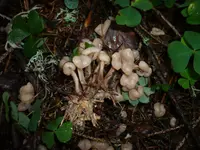
Controlled moisture gradients

Set up a tray or bed with slightly wetter and slightly drier zones so the mycelium can occupy its preferred band of moisture rather than forcing uniform wetness across the whole area.

Leaf litter layering

Top the culture area with a thin, loose layer of partially decomposed leaf litter to mimic its natural forest-floor environment and provide a slow, steady nutrient trickle without heavy fertilization.

Low-disturbance management

Mark the colonized zone and avoid frequent raking, tamping, or walking on it, since physical disturbance can damage the mycelium and reduce fruiting over time.

Staggered inoculation spots

Introduce inoculated material in several small patches instead of one large clump so that if one spot fails due to contamination or drying, other colonies can still establish and fruit.

Common Pests and Diseases

Slime molds

This disease appears as slimy or gelatinous masses on or around the fruiting bodies, often following very wet conditions on decaying wood or litter. Symptoms include partial covering, distortion, or rapid collapse of the mushrooms.

Solution

Remove and discard affected fruiting bodies and surrounding debris to reduce spore and plasmodium spread, then thin surrounding organic litter to improve surface airflow and drainage. Avoid overhead watering in cultivated or display settings and maintain a looser, better-aerated mulch layer where possible.

Fungus gnat larvae

These insects develop in very moist, organic substrates and their larvae can graze on young fungal tissue, causing thinning, pitting, or collapse of small fruiting bodies. Symptoms include soft, damaged stalks and caps, often with small tunnels or larval presence in the substrate.

Solution

Reduce constant surface moisture by allowing the top layer of the substrate to dry slightly between waterings and improve ventilation. In contained or display beds, use yellow sticky traps for adults and, if needed, drench the substrate with a biological control such as Bacillus thuringiensis israelensis (Bti) according to label directions.

Mite infestation

This pest includes tiny soil or litter-dwelling mites that feed on fungal tissue, leading to scarring, rough patches, or collapse of delicate fruiting structures. Symptoms include patchy surface damage and, on close inspection, very small moving dots on or around the mushrooms.

Solution

Carefully remove heavily infested fruiting bodies and surrounding litter, then reduce excessive moisture and compaction in the substrate. In controlled environments, introduce predatory mites suited to fungal systems or apply a targeted, low-impact miticide labeled for use in mushroom or fungal production settings, following all safety instructions.

Bacterial soft rot

This disease causes localized water-soaked spots that quickly turn mushy and may smell unpleasant, often starting at points of injury or prolonged wetness. Symptoms include rapid collapse and liquefaction of the fruiting bodies under persistently humid, stagnant conditions.

Solution

Promptly remove and dispose of any affected material and avoid handling or bruising healthy fruiting bodies. Improve airflow around the growing site, reduce prolonged surface wetness, and limit overhead watering or splashing to discourage bacterial spread.

Interesting Facts

Unusual jellybaby look

Cudonia confusa produces tiny club-shaped fruiting bodies with a swollen, pale cinnamon-brown head and a slender stem, giving it a distinct jellybaby-like appearance among forest floor fungi.

Specialist on conifer litter

This species typically fruits among moss and decomposing needles in coniferous forests, especially under spruce, indicating a strong association with acidic, needle-rich litter rather than broadleaf leaf litter.

Late-season fruiting pattern

In much of its range, Cudonia confusa appears mainly in late summer to autumn, aligning its reproductive phase with moist, cool conditions and peak availability of decaying conifer litter.

FAQs about cinnamon jellybaby

This fungus is not considered edible and is usually classified as inedible or of no culinary value. It is small, fragile, and can be difficult to identify reliably, so it should not be collected for food.

Grow Healthy Plants with Botan Care

Keep your plants happy and healthy with plant identification, disease detection, and easy care guidance.

Botan plant care app — identify plants on mobile

Explore More Plants