


Single-Flush Harvest
Cut all mushrooms in a cluster cleanly at the base as soon as caps expand and before they begin to liquefy, which reduces spore load and helps keep the substrate surface clean for any follow-up flush.

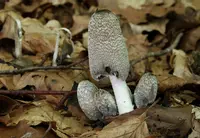
Hare's foot inkcap (Coprinopsis lagopus) is a delicate saprobic fungus, not a true houseplant. It feeds on decaying organic matter rather than living soil nutrients. The fragile fruiting bodies are small, shaggy when young, then quickly expand, turn gray-black, and dissolve into an inky mass within hours. It occurs naturally in temperate regions, often on wood chips, compost, or very rich potting mixes, especially in damp, shaded spots. Because it appears and disappears so fast and relies on specific decomposition conditions, it is difficult to control or reliably cultivate at home. Most guides that explain how to care for hare's foot inkcap focus on understanding its life cycle rather than treating it as a long-term ornamental plant.

Care Difficulty
Hard Care

Light Preference
Partial Shade

Water Requirements
Keep Soil Moist

Temperature Preference
Cool Climate

Hardiness Zone
Unknown

Soil Texture
Loamy, Silty, Organic-rich

Soil pH
Acidic (5.5–6.5), Slightly acidic (6.5–7.0)

Soil Drainage
Moist but well-drained

Fertilization
Minimal (feed rarely)
Scan your plant to receive care tips personalized for your specific plant
Available on iOS and Android
This delicate saprobic mushroom prefers cool, shaded conditions with very limited direct sun.
This fungus needs consistently moist, not waterlogged, substrate to fruit well.
This species thrives in cool to mild conditions and degrades quickly in heat or hard frost.
This short-lived fungus fruits best in consistently moist, high-humidity conditions around its substrate.
This saprophytic fungus prefers a loose, organic-rich substrate rather than typical garden soil.
This fungus can be grown in shallow containers if moisture and aeration are carefully managed.
Coprinopsis lagopus typically completes its life cycle on decaying organic matter and does not benefit from added fertilizer in normal conditions.
Pruning Coprinopsis lagopus is not part of normal care, as fruiting bodies are short-lived and decompose quickly on their own.
This fungus is not managed by repotting; focus instead on renewing its substrate when growth declines.
Propagation of Coprinopsis lagopus is done through spores or transfer of colonized substrate rather than conventional plant methods.
Outdoor colonies of this fungus generally require no special winter care, as the mycelium is adapted to natural seasonal cycles.

Plant Health Check
Not sure what's wrong with your plant? Check your plant's health inside the app.
Coprinopsis lagopus undergoes autodigestion, where the cap and gills liquefy into a black, inky fluid shortly after spore release, a process called deliquescence that rapidly disperses spores and then removes the fertile tissue.
A single fruiting body of this species may go from a small pin to fully expanded and then completely liquefied within about 24 hours under suitable conditions, making it one of the more transient macrofungal structures encountered in gardens and compost.
This fungus specializes in colonizing nutrient-rich, well-rotted plant material such as compost piles, wood chip beds, and heavily mulched soils, where its fine mycelium quickly exploits short-lived flushes of organic matter.

Coprinopsis lagopus was historically grouped with other inky caps in the broad genus Coprinus, but DNA-based studies showed that these mushrooms are not all close relatives, leading to a major reclassification in which this species was moved into the genus Coprinopsis as part of a large revision of inkcap taxonomy.
This fungus develops very quickly. Once moisture, temperature, and decaying organic material are suitable, pins can appear overnight and reach full size within 1–2 days, then dissolve into black ink-like liquid shortly after.
Keep your plants happy and healthy with plant identification, disease detection, and easy care guidance.

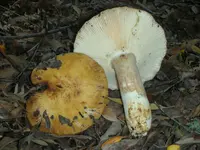
Almond-scented Russula
Russula fragrantissima
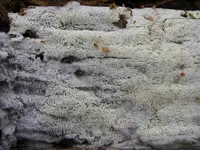
Anomoporia kamtschatica
Anomoporia kamtschatica
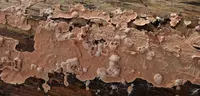
Corticium erikssonii
Corticium erikssonii
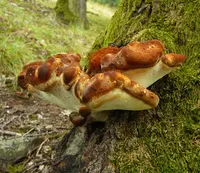
Oak polypore
Buglossoporus quercinus
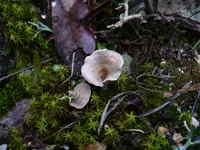
Arrhenia spathulata
Arrhenia spathulata
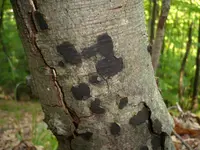
Beech Tarcrust
Biscogniauxia nummularia
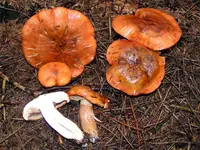
golden orange tricholoma
Tricholoma aurantium
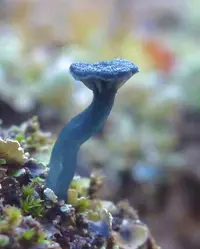
Verdigris Navel
Arrhenia chlorocyanea