Monitor host health
Regularly assess the vigor of the host tree or stump, since stress or decline in the substrate strongly affects fruiting reliability and overall development when growing Anomoporia kamtschatica.

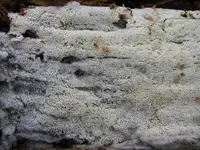
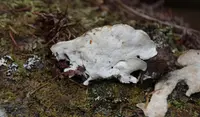
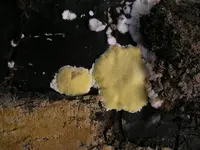
Anomoporia kamtschatica is a wood-decaying fungus rather than a leafy houseplant. It forms thin, crust-like fruiting bodies on dead or weakened conifer wood, often blending with the bark surface. The texture is usually smooth to slightly uneven, with pale to yellowish tones depending on age and conditions.
This species is naturally found in cool, forested regions, especially in northern and montane climates where conifers dominate. It plays an ecological role in breaking down wood, so it is not typically cultivated indoors or in gardens.
Because it depends on specific host trees and natural decay processes, it is difficult to manage intentionally, and gardeners rarely need to care for Anomoporia kamtschatica directly.

Care Difficulty
Moderate Care

Light Preference
Partial Shade

Water Requirements
Moderate Water

Temperature Preference
Warm Climate

Hardiness Zone
Unknown

Soil Texture
Loamy

Soil pH
Slightly acidic (6.5–7.0)

Soil Drainage
Well-drained

Fertilization
Minimal (feed rarely)
Scan your plant to receive care tips personalized for your specific plant
Available on iOS and Android
This wood-decaying fungus prefers cool, low to moderate light conditions similar to a shaded forest floor.
Moist but not waterlogged conditions are essential for stable fruiting and wood decay.
This species is adapted to cool, temperate conditions and handles cold better than heat.
Humidity plays a minor role for Anomoporia kamtschatica, which copes well with typical indoor air.
Soil preparation focuses on stable structure and high aeration suited to a wood-decaying fungus like Anomoporia kamtschatica.
This species is only moderately suitable for container growing, mainly in controlled or experimental setups rather than ornamental use.
This wood-decaying fungus grows on nutrient-rich host wood and does not need additional fertilizer in cultivation.
As a bracket-forming wood fungus, Anomoporia kamtschatica does not require horticultural pruning.
This species is a wood-inhabiting fungus, managed mainly by relocating or replacing its colonized substrate rather than true repotting.
Propagation focuses on encouraging the fungus to colonize fresh, suitable wood rather than using conventional plant techniques.
This temperate, wood-dwelling fungus is naturally cold hardy and generally requires minimal winter care.

Plant Health Check
Not sure what's wrong with your plant? Check your plant's health inside the app.
This species forms thin, resupinate fruiting bodies that lie flat on the underside or surface of dead conifer wood, making it easy to overlook during field surveys.
It is known mainly from boreal and hemiboreal forests in the Russian Far East and parts of northeastern Asia, where it colonizes fallen conifer trunks in cool, moist habitats.
The species has a complex taxonomic history within the Polyporales, and modern authors recognize it based on microscopic features such as its hyphal structure and spore morphology rather than macroscopic traits alone.
This wood-decaying fungus expands slowly within its host, often taking several years to form noticeable, crust-like fruiting bodies. Growth rate depends strongly on host wood quality, moisture levels, and temperature stability in the surrounding environment.
Keep your plants happy and healthy with plant identification, disease detection, and easy care guidance.