Bridal veil stinkhorn Care (Phallus indusiatus)

Also known as: long net stinkhorn
Bridal veil stinkhorn

About Bridal veil stinkhorn

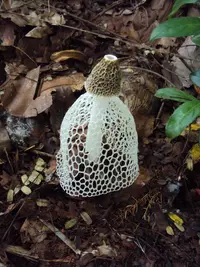
Bridal veil stinkhorn, Phallus indusiatus, is a distinctive fungus known for its tall white stalk and lacy skirt-like veil that hangs almost to the ground. It is not a leafy plant but a mushroom-forming fungus.

This species occurs naturally in tropical and subtropical forests, especially in Asia, Africa, and the Americas, where it grows on rich, decaying organic matter after warm rains. It produces a strong odor that attracts insects, which helps spread its spores.

Cultivation is possible but not simple, as it needs consistently warm, humid conditions and nutrient-rich, well-drained organic substrates. Anyone wanting to learn how to care for Bridal veil stinkhorn should understand that it behaves very differently from typical houseplants or garden perennials.

Main Plant Requirements

Care Difficulty

Hard Care

Light Preference

Shade

Water Requirements

Keep Soil Moist

Temperature Preference

Tropical / Frost Sensitive

Hardiness Zone

Unknown

Soil Texture

Loamy, Silty, Organic-rich

Soil pH

Acidic (5.5–6.5), Slightly acidic (6.5–7.0)

Soil Drainage

Moist but well-drained

Fertilization

Minimal (feed rarely)

Get Personalized Care Plan

Scan your plant to receive care tips personalized for your specific plant

Available on iOS and Android

How to Care for the Bridal veil stinkhorn

This fungus prefers bright, indirect forest-like light with protection from intense sun.

  • Provide 2–4 hours of soft morning sun with dappled or filtered light for the rest of the day, similar to light under a tree canopy.
  • Tolerates partial to full shade, but fruiting of Bridal veil stinkhorn is often better where there is speckled light rather than deep, continuous shade.
  • Avoid strong midday and afternoon sun, which can dry the substrate quickly and scorch exposed tissue, especially in warm, dry seasons.

This species needs consistently moist, well-aerated substrate rather than strict watering schedules.

  • Maintain evenly moist, humus-rich soil; surface can feel slightly damp but not soggy, and standing water around the site should drain within a few hours.
  • Increase watering or irrigation during hot, dry weather so the top 3–5 cm of soil never fully dry, since the fungus relies on constant moisture for fruiting.
  • Reduce added water in cool, rainy periods to prevent waterlogging, which encourages anaerobic conditions and foul, lingering smells beyond the normal Phallus indusiatus odor.

This tropical fungus thrives in warm, stable temperatures with no exposure to frost.

  • Optimal growth and fruiting occur around 70–86°F (21–30°C), especially when paired with high humidity and consistently moist organic soil.
  • Growth slows markedly below 60°F (16°C), and tissue is usually damaged or fails to appear if exposed to near-freezing conditions around 32°F (0°C).
  • Tolerates short heat spikes up to about 95°F (35°C) if moisture is high, but prolonged hot, dry conditions can desiccate the substrate and prevent fruiting.

This fungus needs consistently high humidity to form its fruiting bodies reliably.

  • Aim for 80–95% humidity, as fruiting usually fails if air dries below about 70%.
  • Dry air causes aborted or deformed fruiting structures and slower emergence of Bridal veil stinkhorn nets.
  • Increase humidity by misting the substrate surface, using a humidity tent or plastic dome, and limiting air drafts.

Phallus indusiatus fruits best in loose, organic-rich, consistently moist substrate rather than typical garden soil.

  • Use a deep layer of decaying wood chips, leaf litter, or composted bark over composted manure to mimic forest-floor conditions.
  • Ensure the substrate drains freely yet stays evenly moist; avoid compacted clay or waterlogged ground that excludes air.
  • A slightly acidic to neutral pH around 6.0–7.0 is suitable and usually occurs naturally in decomposing wood-based mixes.
  • Improve aeration by mixing coarse bark, chunky compost, and some straw or shredded leaves instead of fine peat-heavy blends.

This species can be grown in containers if the pot is set up to maintain deep, moist, and aerated substrate for the mycelium.

  • Choose a tall, sturdy container that allows at least 25–30 cm of substrate depth to support full fruiting body development.
  • Use a pot with large drainage holes but place it on a catch tray so the lower substrate stays evenly moist without standing water.
  • Opt for thick plastic or glazed ceramic pots to reduce rapid side-wall drying that can disrupt mycelial growth near the surface.

Phallus indusiatus grows from decaying organic matter and usually needs little targeted fertilization in garden or woodland beds.

  • If soil is poor, mix in well-rotted compost or leaf mold once a year to enrich the substrate.
  • For container experiments with Bridal veil stinkhorn, use a very dilute balanced NPK liquid feed (about 1/4 strength) only during active fruiting cycles.
  • Avoid high-salt synthetic fertilizers, which can harm fungal mycelium and beneficial microbes.
  • Do not feed during cool dormant periods; instead, maintain moist, organic-rich mulch to support long-term mycelium health.

This fungus does not require structural pruning, but timely removal of fruiting bodies can guide spread and hygiene around Phallus indusiatus.

  • Remove spent, decaying fruiting bodies with disposable gloves or tongs as soon as they collapse to limit odor and spore spread near paths.
  • Cut or pinch at the base, avoiding disturbance of the soil surface where the mycelium and eggs (young fruiting bodies) reside.
  • Use a small knife or scissors disinfected with alcohol if handling in research or display beds.
  • Target only damaged or unwanted fruiting bodies; pruning does not improve vigor but manages appearance and distribution.

This stinkhorn is rarely grown in containers; care focuses on establishing and maintaining a stable outdoor substrate for Phallus indusiatus.

  • Transplant only when the current site is disturbed, contaminated, or no longer stays evenly moist with abundant woody or leafy debris.
  • Best timing is in mild, moist seasons (spring or early fall) to reduce stress on the mycelium network.
  • Move chunks of colonized substrate, not bare tissue; lift gently with a trowel, keeping soil, leaf litter, and any visible eggs intact.
  • Reinstall the colony in a shaded, wind-sheltered spot, water thoroughly, then avoid frequent disturbance while the mycelium re-establishes.

Propagation of Phallus indusiatus is specialized and usually done by moving colonized substrate or using spores in controlled conditions rather than casual home methods.

  • For practical garden use, transfer pieces of well-colonized wood chips or leaf litter from an existing patch to a similar, moist, shaded site.
  • Ensure the new site has deep organic matter, good drainage, and consistent moisture without waterlogging.
  • In research settings, spores are germinated on sterile, nutrient media, then introduced to a suitable substrate once mycelium has developed.
  • Maintain stable temperatures typical of warm, humid forests and minimize disturbance so the mycelium can spread through the new substrate.

This tropical fungus is not frost hardy and needs warm, frost-free conditions to persist long term.

  • In regions with mild winters above about 50°F, a thick layer of leaf litter or composted mulch helps buffer short cool spells.
  • In colder climates, treat outdoor colonies as temporary or maintain the species in controlled warm environments such as greenhouses.
  • Container culture, where attempted, should be moved indoors to a heated, humid space before night temperatures drop below 55°F.

Care Tips

Use sterile substrate

Prepare the substrate with properly pasteurized hardwood sawdust or well-composted wood chips to suppress competing fungi and bacteria, which increases the chance that your inoculated mycelium will colonize successfully.

Control fruiting moisture

Once mycelium is established, keep the casing layer just moist and briefly increase surface misting before expected warm, humid spells to trigger more reliable fruiting without waterlogging the bed.

Shaded bed placement

Site outdoor beds under stable, dappled shade such as beneath shrubs or shade cloth, which reduces substrate temperature swings and slows drying that can abort fruiting bodies.

Monitor substrate aging

Renew or top up the woody substrate every 12–18 months, since older, exhausted material supports fewer fruiting bodies and provides more opportunity for competitive fungi to dominate.

Use breathable covers

In slug-prone or contaminated areas, place a fine, breathable mesh over the bed during peak fruiting periods to protect emerging veiled caps while still allowing airflow and spore release when growing Bridal veil stinkhorn.

Common Pests and Diseases

Fungus gnat larvae

This pest targets the moist, organic substrates used to cultivate the mushroom, where larvae feed on fungal mycelium and young fruiting bodies. Symptoms include slow or uneven mushroom development and visible small, dark gnats hovering around trays or beds.

Solution

Reduce excess surface moisture, improve drainage, and allow the top layer of substrate to dry slightly between misting while keeping internal moisture adequate for the fungus. Use yellow sticky traps to capture adults, apply a biological control such as Bacillus thuringiensis israelensis (Bti) to the substrate, and cover colonizing beds with fine mesh to limit adult access.

Mite infestation

These insects, especially saprophytic and mycophagous mites, thrive in warm, humid mushroom houses and feed on mycelium and developing fruiting bodies. Symptoms include deformed or stunted mushrooms, pitted tissue, and fine moving specks on substrate or veils.

Solution

Lower humidity slightly, improve ventilation, and remove heavily infested substrate or fruiting bodies to reduce populations. Introduce predatory mites suited to mushroom production or use approved miticidal dusts or sprays on surrounding structures, avoiding direct contact with the growing culture whenever possible.

Green mold (Trichoderma)

This disease appears as fast-spreading white mycelium that soon turns bright green on the substrate surface, outcompeting the mushroom mycelium. Symptoms include patchy colonization, poor or absent fruiting, and a distinct earthy or musty odor in contaminated areas.

Solution

Discard heavily contaminated blocks or trays to prevent spread and clean growing rooms thoroughly with disinfectant before the next cycle. For mild cases, cut out affected sections with clean tools, reduce excess moisture, increase fresh air exchange, and ensure substrate is properly pasteurized and handled with strict hygiene during spawning.

Bacterial blotch

This disease, commonly caused by Pseudomonas species, affects fruiting bodies in wet, stagnant air conditions. Symptoms include small, greasy-looking yellow to brown spots on the cap and veil that may coalesce and soften the tissue.

Solution

Reduce free water on fruiting bodies by adjusting misting schedules, improving air circulation, and avoiding overhead watering that soaks the mushrooms. Remove and discard affected mushrooms, sanitize tools and surfaces, and use clean, low-bacteria water sources for humidification as part of careful Phallus indusiatus care instructions.

Black pin mold

This disease produces tiny black pin-like structures on casing layers or exposed substrate and can suppress mushroom formation by competing for nutrients. Symptoms include scattered black dots, reduced pin set, and irregular or delayed emergence of fruiting bodies.

Solution

Increase air exchange, avoid over-wetting the substrate surface, and promptly remove heavily affected sections. Between crops, thoroughly clean and disinfect all trays, racks, and room surfaces, and use well-pasteurized or sterilized substrate materials to reduce initial contamination levels.

Interesting Facts

Unique lacy indusium

This species produces a conspicuous white, skirt-like net called an indusium that hangs from the cap and can reach almost to the ground, a feature rare among stinkhorn fungi and especially well developed in this species.

Fly‑mediated spore dispersal

Its olive-brown, foul-smelling slime (gleba) attracts flies and other carrion-feeding insects, which consume the spores and transport them on their bodies to new locations, making insect behavior central to its reproduction.

Culinary delicacy status

In parts of China and Southeast Asia, the dried fruiting bodies are cultivated and used as an edible mushroom known as bamboo fungus or bamboo pith, prized for their texture in soups and stir-fries rather than for strong flavor.

Botan icon

Did you know?

The first formal scientific description of this fungus was made in 1798 by the mycologist Étienne Pierre Ventenat, but its striking veiled form had already led to considerable attention and illustration in early natural history works focused on unusual fungi.

FAQs about Bridal veil stinkhorn

This fungus spreads locally through spores and buried mycelium but is not usually aggressive in managed gardens. It appears where organic matter is plentiful, then disappears quickly. Regularly turning and thinning mulch can limit new fruiting bodies.

Grow Healthy Plants with Botan Care

Keep your plants happy and healthy with plant identification, disease detection, and easy care guidance.

Botan plant care app — identify plants on mobile

Explore More Plants