Host tree selection
Establish this ectomycorrhizal fungus with compatible host trees such as beech, oak, or spruce, and avoid planting it in isolated lawns without suitable woody partners, since it depends on tree roots for carbon and nutrients.

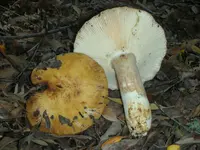
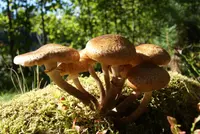
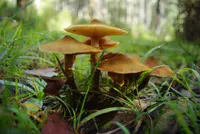
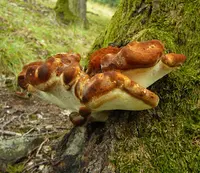
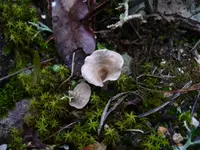
Almond-scented Russula (Russula fragrantissima) is a woodland mushroom, not a typical houseplant. It forms sturdy, medium-sized caps with pale to reddish-brown tones and white, brittle gills. The flesh often has a distinctive almond-like smell, especially in fresh specimens.
This species usually appears on the forest floor in mixed or coniferous woods, growing from soil rich in leaf litter. It forms mycorrhizal associations, meaning it lives in close partnership with tree roots and cannot be maintained long term in standard pots. Because of this dependency, it is considered difficult to cultivate, and attempts to care for Almond-scented Russula at home are rarely successful.
In nature it prefers moist, well-drained forest soil with moderate shade and stable, cool to mild conditions.

Care Difficulty
Hard Care

Light Preference
Partial Shade

Water Requirements
Regular Water

Temperature Preference
Cool Climate

Hardiness Zone
Unknown

Soil Texture
Loamy, Sandy, Organic-rich

Soil pH
Strongly acidic (4.5–5.5), Acidic (5.5–6.5)

Soil Drainage
Moist but well-drained

Fertilization
Minimal (feed rarely)
Scan your plant to receive care tips personalized for your specific plant
Available on iOS and Android
This ectomycorrhizal fungus prefers dappled woodland light rather than direct, open sun.
This woodland fungus depends on consistently moist, but not saturated, soil and leaf litter.
This species fruits best in mild to cool conditions typical of temperate woodlands.
Humidity is not a significant factor for Russula fragrantissima, which grows as a wild ectomycorrhizal mushroom rather than a cultivated houseplant.
This species grows naturally in undisturbed forest soil in association with tree roots and is not realistically managed via prepared soil mixes.
This fungus is not suitable for container growing, since it depends on living tree roots and complex forest soil interactions that cannot be replicated in pots.
This woodland mycorrhizal fungus does not need routine fertilization and often fruits best in unfertilized, natural soil.
As a wild ectomycorrhizal mushroom, Russula fragrantissima is not managed through pruning in home or garden settings.
This species is not suited to typical container culture, so transplanting focuses on preserving its tree-root partnership in situ.
Propagation of this mycorrhizal fungus is complex and not reliably controlled in gardens or indoor setups.
In its natural range this fungus is fully cold hardy and does not require targeted winter care.

Plant Health Check
Not sure what's wrong with your plant? Check your plant's health inside the app.
Mature fruitbodies of this species emit a clear bitter-almond or marzipan-like odor, which is due to specific aromatic compounds that are unusual among most brittlegill mushrooms.
This fungus forms ectomycorrhizal associations with broadleaf trees, especially European beech (Fagus sylvatica), and is mainly recorded in temperate beech-dominated woodlands.
Its crowded, whitish to cream gills are very brittle, a hallmark of the genus Russula, and help distinguish it from other almond-scented fungi that may look similar in the field.
This mushroom is generally considered inedible or at least of poor culinary value. Identification in the Russula genus is difficult, and some relatives are toxic. Avoid consumption unless confirmed by an expert mycologist using multiple identification features.
Keep your plants happy and healthy with plant identification, disease detection, and easy care guidance.