Host wood selection
Use freshly cut, disease-free hardwood logs or stumps from known host species such as eucalypt or oak, as clean substrate wood greatly reduces contamination and supports consistent fruiting.

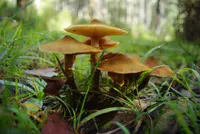
Australian honey fungus (Armillaria luteobubalina) is a wood-decaying mushroom-forming fungus, not a typical houseplant. It grows in clusters of honey-colored caps on infected wood and forms extensive underground rhizomorphs, sometimes called bootlaces. This species occurs naturally in Australia, especially in eucalypt forests and urban landscapes with susceptible trees.
It is an aggressive root pathogen of many woody plants, which makes it important in arboriculture and landscape management. Due to its role as a serious tree disease, it is not recommended to grow or care for Australian honey fungus in gardens except under controlled research conditions. In nature it prefers moist, cool, shaded conditions and attacks stressed or weakened hosts.

Care Difficulty
Hard Care

Light Preference
Partial Shade

Water Requirements
Regular Water

Temperature Preference
Warm Climate

Hardiness Zone
Unknown

Soil Texture
Loamy, Organic-rich

Soil pH
Acidic (5.5–6.5), Slightly acidic (6.5–7.0)

Soil Drainage
Moist but well-drained

Fertilization
Minimal (feed rarely)
Scan your plant to receive care tips personalized for your specific plant
Available on iOS and Android
This wood-decay fungus prefers stable, subdued light similar to a shaded forest floor.
This fungus needs consistently moist but not waterlogged conditions around its woody host roots.
This species thrives in mild, temperate conditions with moderate seasonal variation.
This wood-decaying fungus needs consistently moist, humid conditions to fruit well.
This fungus colonizes woody material and thrives in moist, aerated, organic-rich substrates rather than standard potting soil.
This species is generally unsuitable for long-term container growing because it is a vigorous root pathogen and wood-decayer.
Armillaria luteobubalina is not cultivated as an ornamental or crop fungus, so fertilizing is generally unnecessary and not recommended.
Pruning is not a standard practice for Armillaria luteobubalina because it is a wood-decay fungus, not a managed landscape plant.
Armillaria luteobubalina is seldom grown in containers; management focuses on limiting spread in soil and woody hosts rather than classic transplanting.
Deliberate propagation of Armillaria luteobubalina is rarely appropriate because this fungus is a serious wood-decay pathogen.
Australian honey fungus is generally cold tolerant in its suitable climate range and requires no intentional winter care in gardens or containers.

Plant Health Check
Not sure what's wrong with your plant? Check your plant's health inside the app.
This species is a primary cause of root rot and death in many native Australian eucalypt forests and plantations, often killing trees in groups rather than individually.
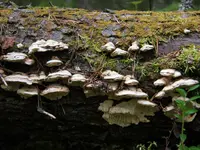
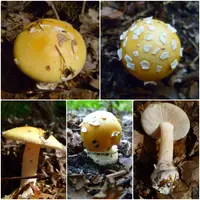
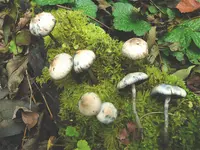
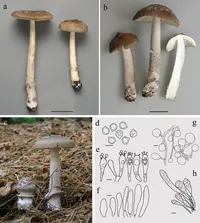
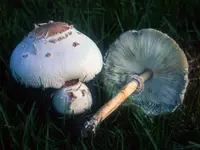
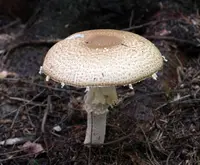
Mature fruiting bodies typically form dense clusters with yellow to honey-brown caps and a persistent ring on the stem, features that help distinguish it from other Australian Armillaria species when combined with microscopic characters and host data.
It spreads mainly through rhizomorphs, cord-like bundles of fungal threads that grow through soil and infected wood, allowing the fungus to move from tree to tree over several meters underground.

This fungus can persist for many years as a long-lived, clonal colony in woody roots and stumps at a site, with the same genetic individual repeatedly infecting new hosts as fresh trees are planted or natural regeneration occurs.
This species spreads very aggressively through roots and rhizomorphs, often killing woody plants. It can move across a site over time, so it is unsuitable for mixed plantings where trees and shrubs are meant to be preserved.
Keep your plants happy and healthy with plant identification, disease detection, and easy care guidance.