Retain Host Moss
When collecting, keep the original moss or liverwort mat attached and place it on your new substrate, as this living cushion helps maintain the microhabitat the fungus needs to continue fruiting.

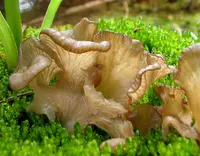
Arrhenia lobata is a small, thin-fleshed fungus rather than a typical leafy houseplant. It forms delicate, often lobed or irregular caps with a grayish to brownish surface, usually growing on mossy or sandy soils.
This species occurs mainly in temperate regions, often in nutrient-poor, open habitats such as heathlands and mossy grasslands. It is not commonly cultivated, and its specialized ecological needs make it difficult to grow deliberately.
Because it relies on specific mosses and soil conditions, most plant owners encounter it only in the wild rather than trying to care for Arrhenia lobata at home.

Care Difficulty
Moderate Care

Light Preference
Partial Shade

Water Requirements
Moderate Water

Temperature Preference
Warm Climate

Hardiness Zone
Unknown

Soil Texture
Loamy

Soil pH
Slightly acidic (6.5–7.0)

Soil Drainage
Well-drained

Fertilization
Minimal (feed rarely)
Scan your plant to receive care tips personalized for your specific plant
Available on iOS and Android
This small, saprophytic fungus prefers cool, shaded woodland conditions rather than strong direct sun.
Moist but not waterlogged conditions are essential for consistent fruiting and mycelium health.
Cool to mild temperatures support reliable development of fruiting bodies and mycelial activity.
This fungus prefers consistently moist air typical of damp woodland rather than dry indoor conditions.
Arrhenia lobata develops best on moist, organic-rich, well-aerated substrates rather than dense mineral soil.
This species is generally unsuitable for conventional container growing, as it relies on complex woodland substrate relationships.
This saprophytic fungus is adapted to nutrient-poor substrates and usually does not need additional feeding in garden or natural settings.
Arrhenia lobata does not require structured pruning and management focuses on habitat cleanliness rather than shaping the fungus itself.
This species is not typically grown in containers; care focuses on relocating colonized substrate rather than traditional repotting.
Propagation of this fungus is specialized and usually left to experienced mycologists or natural dispersal rather than home cultivation.
In its natural range this fungus is cold hardy and normally requires no special winter care beyond stable habitat conditions.

Plant Health Check
Not sure what's wrong with your plant? Check your plant's health inside the app.
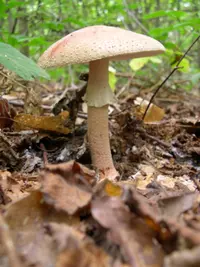
Arrhenia lobata typically grows closely associated with mosses and lichens on soil or decaying plant material, often forming small, inconspicuous basidiomata that blend into bryophyte carpets.
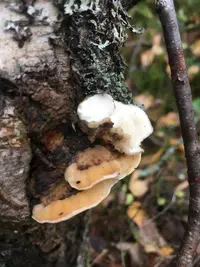
Its fruiting bodies have thin, irregularly lobed caps that can appear ear‑ or shell‑shaped, with a smooth to slightly veined surface that matches surrounding moss and litter in color.
The hymenium, the spore‑producing surface, is usually pale and features shallow, irregular gills or vein‑like ridges rather than well‑formed, thick gills seen in many other agaricoid fungi.
This is a small, saprotrophic mushroom with limited study. It is not considered an edible species and should not be collected for food. Treat it as inedible and avoid tasting or experimenting with consumption.
Keep your plants happy and healthy with plant identification, disease detection, and easy care guidance.