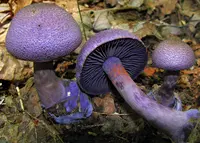
clustered bonnet Care (Mycena inclinata)

clustered bonnet

About clustered bonnet

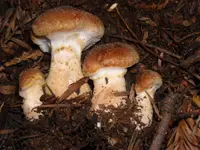
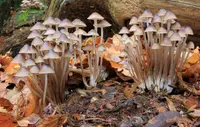
Clustered bonnet, Mycena inclinata, is a small saprophytic mushroom that feeds on decaying wood rather than living soil-rooted tissue. It typically forms dense clusters of slender stems topped with small, bell-shaped caps in shades of pale brown to tan.

This species is most often found on rotting hardwood stumps and logs in temperate forests, especially in autumn. It is not a typical houseplant and is considered challenging to maintain in controlled environments, so most people do not attempt to care for clustered bonnet.

In nature, it prefers cool, humid, shaded conditions and consistently moist, decomposing wood as its substrate, rather than standard potting mixes or garden soil.

Main Plant Requirements

Care Difficulty

Hard Care

Light Preference

Shade

Water Requirements

Keep Soil Moist

Temperature Preference

Cool Climate

Hardiness Zone

Unknown

Soil Texture

Loamy, Peaty, Organic-rich

Soil pH

Acidic (5.5–6.5)

Soil Drainage

Moist but well-drained

Fertilization

Minimal (feed rarely)

Get Personalized Care Plan

Scan your plant to receive care tips personalized for your specific plant

Available on iOS and Android

How to Care for the clustered bonnet

This woodland fungus thrives in low, filtered light rather than direct sun.

  • Provide full to partial shade under trees or shrubs, mimicking forest canopy with dappled light for most of the day.
  • Allow brief early morning sun only; avoid strong midday and afternoon sun, which can dry the substrate and damage delicate clustered bonnet fruiting bodies.
  • Choose sites with 0–2 hours of weak direct sun and 6–10 hours of bright shade, especially during spring and fall fruiting periods.

This saprophytic fungus depends on consistently moist, not waterlogged, organic material.

  • Maintain evenly moist leaf litter or decaying wood; if the top 1–2 cm feel dry and crumbly, recent moisture has likely been too low for reliable fruiting.
  • Ensure excellent drainage so water does not pool; sour smell, slimy substrate, or mold mats indicate waterlogging around Mycena inclinata mycelium.
  • Increase natural moisture in dry periods with gentle misting or nearby watering, and reduce added moisture during cool, wet seasons to prevent anaerobic conditions.

This species fruits best in cool to mild conditions typical of temperate woodlands.

  • Aim for 50–68°F (10–20°C) for active fruiting, with strongest clusters often appearing in the cooler part of this range.
  • Expect mycelium survival down to around 32°F (0°C), though hard frost can damage exposed fruiting bodies at or just below freezing.
  • Limit exposure above 77°F (25°C); extended heat or dry, hot winds quickly dry the substrate, so peak fruiting usually occurs in cooler, moist seasons.

This wood-inhabiting fungus needs consistently very high humidity to fruit well.

  • Aim for 80–95% humidity around fruiting substrates, mimicking damp forest log conditions.
  • Dry air causes caps to crack, edges to curl, and pins to stall before maturing on clustered bonnet.
  • Increase humidity with a closed, ventilated chamber, damp perlite, and frequent fine misting that avoids soaking developing mushrooms.

This species grows on decaying wood rather than true soil, so the focus is on a suitable lignin-rich substrate.

  • Use well-aerated, moisture-retentive mixes based on hardwood chips, sawdust, or rotted logs, avoiding dense garden soil.
  • Ensure free drainage from any tray or container so the substrate stays moist but never waterlogged, which encourages anaerobic bacteria.
  • Keep substrate slightly acidic to neutral, around pH 5.5–7.0, which supports decomposition and mycelial growth of Mycena inclinata.
  • Improve structure by mixing different chip sizes and a small portion of leaf litter to increase air pockets and prevent compaction over time.

This fungus can be grown in containers if they mimic decaying wood in a humid, stable environment.

  • Choose a shallow, wide tub or tray that allows horizontal spread of colonized wood pieces and stable surface fruiting.
  • Drill small side ventilation holes above substrate level to balance fresh air with humidity without drying the surface too fast.
  • Use opaque or dark containers to reduce light on the substrate itself while allowing indirect light above for normal cap development.

Mycena inclinata typically grows on decaying wood and does not need direct fertilization in a garden or container setting.

Mycena inclinata does not benefit from structural pruning, but simple hygiene helps manage its brief fruiting phase.

  • Remove spent or collapsing fruiting bodies with clean fingers or tweezers to reduce mold development.
  • Discard visibly diseased clusters in sealed trash to limit spread of fungal pathogens in sensitive areas.
  • Avoid cutting into the woody substrate, since this can damage the underlying mycelium network.

This species is usually left on its natural woody substrate, so transplanting focuses on moving colonized wood rather than individual mushrooms.

  • Transplant only when a log is fully colonized and fruiting well but needs relocation for access or safety.
  • Move wood in cool, moist weather to reduce mycelium stress and drying during transfer.
  • Lift and carry the entire log or stump gently, keeping bark intact to protect the internal mycelium.
  • Reposition in a shaded, humid area on soil or leaf litter, then water lightly to settle contact with the ground.

Propagation of Mycena inclinata is specialized and rarely attempted by casual growers, as it depends on spreading mycelium in suitable wood.

In temperate climates, this clustered bonnet fungus is naturally cold hardy and needs no special winter care.

Care Tips

Use Decaying Hardwood

Place well-rotted oak or beech logs or thick branches on top of the substrate to provide the lignin-rich wood this fungus favors and to encourage recurring fruiting clusters along the same material.

Maintain Log Moisture

Wrap colonized logs or wood pieces in breathable horticultural fleece during dry periods to reduce surface drying while still allowing air exchange, then remove it once primordia (tiny mushroom pins) appear.

Encourage Gentle Airflow

Set up a low-speed fan to move air gently across the fruiting area, which reduces bacterial film on caps and stems while preventing the overly dry, turbulent conditions that damage delicate clusters.

Stage Fruiting Zones

Position multiple small wood sections at slightly different heights and distances from the main moisture source so that not all clusters develop at once, giving a longer viewing and harvesting window.

Careful Cluster Handling

When harvesting, cut entire clusters at the base with a clean blade rather than pulling, which protects the underlying mycelial network and improves long-term stability when caring for clustered bonnet on the same wood source.

Common Pests and Diseases

fungivorous springtails

These insects feed on fungal tissue, including developing fruiting bodies, and can scar or collapse young caps in very dense cultures or terraria. This pest is most common in consistently wet substrates rich in decaying wood and leaf litter.

Solution

Reduce persistent surface moisture by improving drainage and ventilation, and let the top layer of substrate approach dryness between mistings in indoor culture. Manually remove heavily infested substrate patches, use fine mesh barriers to limit access from surrounding soil, and, if needed, apply a targeted biological control product containing predatory mites or entomopathogenic fungi that are labeled for springtail management in mushroom or terrarium setups.

sciarid fungus gnats

These insects lay eggs in moist, organic substrates, and the larvae feed on fungal mycelium and primordia, which can deform or abort clustered fruiting bodies. Symptoms include thinning clusters, stunted caps, and visible tiny black adult gnats around the culture.

Solution

Allow the substrate surface to dry slightly between misting, increase airflow, and avoid standing water to make conditions less favorable for larvae. Use yellow sticky traps to capture adults, cover vents with fine mesh, and, in contained cultivation, apply biological controls such as Bacillus thuringiensis israelensis (BTI) or beneficial nematodes according to label directions to reduce larval populations while maintaining safe Mycena inclinata care conditions.

parasitic Hypomyces

This disease is caused by parasitic fungi such as Hypomyces species that colonize mushrooms, leading to distorted, thickened, or discolored caps that fail to mature normally. Symptoms include abnormal surface textures and loss of the typical delicate bonnet structure.

Solution

Promptly remove and discard any distorted or overgrown fruiting bodies and the immediately surrounding substrate to limit spore spread. Reduce overcrowding of wood or substrate pieces, maintain good air exchange, and avoid reusing contaminated material when establishing new cultures or display logs.

bacterial blotch

This disease develops under saturated, stagnant conditions and causes slimy, water-soaked spots on caps and stems that can quickly lead to collapse of the cluster. Symptoms include localized yellowing, softness, and a sour or unpleasant odor around affected fruiting bodies.

Solution

Improve ventilation and avoid overhead watering that leaves standing droplets on caps; instead, moisten the substrate directly and more lightly. Remove affected mushrooms as soon as symptoms appear, discard any obviously contaminated substrate, and disinfect tools and containers before reusing them in clustered bonnet indoor care setups.

Interesting Facts

Cascading clustered caps

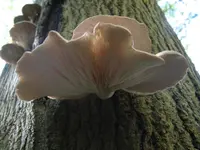
This fungus forms dense, overlapping clusters of small, tawny to yellowish-brown caps on decaying hardwood stumps, creating tiered layers that can cover large areas of wood.

Oak stump specialist

It is strongly associated with rotting oak, especially old stumps and buried roots in temperate woodlands, where its mycelium helps break down tough lignin-rich tissues in the heartwood.

Distinctive stem coloration

The slender stems often show a pale upper portion with a distinctly darker, sometimes reddish-brown base, a feature mycologists use along with its clustered growth and habitat to separate it from similar Mycena species.

Botan icon

Did you know?

Mycena inclinata bioluminesces weakly in some collections, with the mycelium and sometimes the fruiting bodies emitting a very faint greenish light, although this glow is usually too dim for the human eye to notice without very dark conditions and sensitive instruments.

FAQs about clustered bonnet

This species is generally considered inedible due to its small size, fragile texture, and uncertain chemistry. Identification errors with similar-looking toxic mushrooms are common, so for safety it should not be collected for food or tasting.

Grow Healthy Plants with Botan Care

Keep your plants happy and healthy with plant identification, disease detection, and easy care guidance.

Botan plant care app — identify plants on mobile

Explore More Plants