Substrate rotation
Regularly rotate or gently crumble the decaying wood or bark substrate every 2–3 weeks to improve aeration and help new fruiting bodies emerge from fresh surfaces rather than only from one spot.

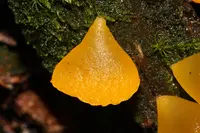
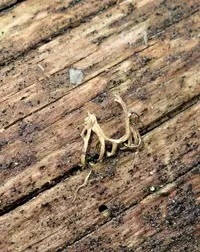
The alpine jelly cone, Guepiniopsis alpina, is a small, orange to yellow cup-like fungus that grows on dead conifer wood in cool, mountainous forests. It has a gelatinous, rubbery texture and often appears in scattered groups on decaying branches or logs.
This species is typically found in temperate alpine and subalpine regions, especially where conifers such as spruce and fir are present. It relies on consistently cool, moist conditions, so it is not easy to maintain in typical home environments.
Those attempting to care for alpine jelly cone should know it is adapted to shaded forest habitats with damp, decomposing wood rather than regular garden soil or indoor pots.

Care Difficulty
Hard Care

Light Preference
Shade

Water Requirements
Keep Soil Moist

Temperature Preference
Cool Climate

Hardiness Zone
3–7

Soil Texture
Loamy, Silty, Organic-rich

Soil pH
Acidic (5.5–6.5)

Soil Drainage
Moist but well-drained

Fertilization
Minimal (feed rarely)
Scan your plant to receive care tips personalized for your specific plant
Available on iOS and Android
This fungus develops best in cool, moist, shaded forest or conifer woodland light conditions.
This wood-inhabiting fungus relies on consistently moist, not waterlogged, conditions on its substrate.
This species favors cool to mild temperatures typical of montane and boreal forests.
This wood-inhabiting fungus tolerates a wide humidity range but fruits best in consistently moist air.
Guepiniopsis alpina develops on decaying conifer wood rather than mineral soil, so the substrate must mimic rotting logs.
This species can be grown in containers only as a niche cultivation on wood-based substrate rather than typical potting setups.
This wood-decay fungus usually grows on nutrient-rich conifer wood and does not need supplemental feeding in gardens or culture.
Guepiniopsis alpina does not require structured pruning, but limited cleanup can support hygiene in cultivated or observation areas.
This species is not grown in conventional pots; management focuses on relocating or replacing colonized wood rather than classic repotting.
Propagation of this alpine jelly cone fungus is specialized and rarely attempted outside research or advanced mycology contexts.
This high-elevation, cold-adapted species is naturally frost tolerant and normally needs no dedicated winter care in outdoor settings.

Plant Health Check
Not sure what's wrong with your plant? Check your plant's health inside the app.
This jelly fungus is typically found in cool, high-mountain conifer forests, often at subalpine elevations, where it fruits on dead or decaying conifer wood, especially fir and spruce.
Its fruiting bodies form bright orange to yellow, shallow cup- or cone-shaped structures with a gelatinous texture, making it easy to distinguish from flatter, brain-like jelly fungi.
In many regions it fruits in cool, moist conditions outside the warmest part of summer, reflecting adaptation to a cold, montane climate and short growing season.
This fungus is considered inedible. It has a gelatinous texture with little flavor and no culinary value. Field identification errors with similar species are possible, so it is safest not to eat it.
Keep your plants happy and healthy with plant identification, disease detection, and easy care guidance.