Substrate renewal
Refresh the lichen or moss substrate regularly by removing visibly decomposed or moldy patches and replacing them with clean, uncontaminated material collected from an unpolluted area to maintain suitable conditions for fruiting.

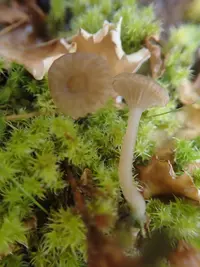
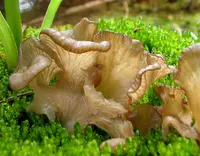
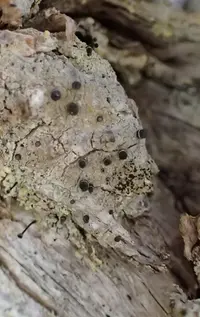
Arrhenia peltigerina is a small, lichen-associated fungus rather than a typical leafy houseplant. It forms thin, irregular, gray to brown fruiting bodies that blend into lichen-covered surfaces. Growth is usually low and spreading, closely attached to its lichen host.
This species occurs mainly in cool, moist habitats, especially in boreal and temperate regions where suitable lichens are present. It is not commonly cultivated and is best observed in nature rather than actively managed.
Because it depends on specific lichen partners and stable moisture, it is challenging to grow in controlled settings. Most plant owners will not need to care for Arrhenia peltigerina directly, but can support it indirectly by protecting its natural habitat.

Care Difficulty
Hard Care

Light Preference
Shade

Water Requirements
Keep Soil Moist

Temperature Preference
Cool Climate

Hardiness Zone
Unknown

Soil Texture
Organic-rich, Peaty, Loamy

Soil pH
Acidic (5.5–6.5)

Soil Drainage
Moist but well-drained

Fertilization
Minimal (feed rarely)
Scan your plant to receive care tips personalized for your specific plant
Available on iOS and Android
This lichen-associated fungus prefers cool, subdued light similar to a shaded forest floor.
Moisture management focuses on keeping the lichen substrate evenly damp without prolonged saturation.
This species favors cool to mild conditions, similar to those found in moist, shaded woodland habitats.
This fungus associates with lichens and does not have specific indoor humidity requirements for cultivation.
Arrhenia peltigerina grows on or with lichen thalli, so it is not managed in conventional potting soil.
This species is not realistically suited to standard container culture.
This lichen-associated fungus is not suited to conventional fertilizing and is usually maintained without added nutrients.
Pruning Arrhenia peltigerina is generally unnecessary, as the fungus fruits briefly and then decomposes naturally.
In cultivation, this species is rarely grown in pots and is better managed by careful transplanting of its lichen host.
Practical propagation of this fungus is complex because it depends on a living lichen host, so home propagation is rarely attempted.
This fungus is naturally cold hardy in temperate climates and usually needs no special winter care.

Plant Health Check
Not sure what's wrong with your plant? Check your plant's health inside the app.
This fungus grows almost exclusively among thalli of the lichen Peltigera, and its fruitbodies often appear to emerge directly from the lichen surface, making it difficult to see as a separate organism in the field.
The fruitbody is small and irregular, with a thin, often contorted cap and a weakly defined stem, which is typical for the genus but especially pronounced in this species, giving it a low, appressed form against its lichen host.
It is considered a lichenicolous fungus, meaning it lives in close association with lichens rather than soil or wood, a relatively uncommon lifestyle among basidiomycete mushrooms.

Molecular studies have shown that this species was previously misinterpreted and placed in a different genus, and its current placement in Arrhenia reflects a modern understanding of its evolutionary relationship to other lichen-associated fungi.
This is a small, specialized fungus associated with lichens and is not used as food. It is not considered an edible mushroom and should be treated as inedible due to limited safety information.
Keep your plants happy and healthy with plant identification, disease detection, and easy care guidance.