Use Fresh Logs
Inoculate recently cut, healthy hardwood logs (ideally within 2–4 weeks of felling) to give the fungus a competitive advantage over wild fungi and wood-decay organisms.

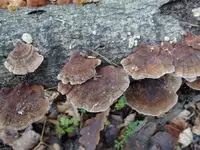
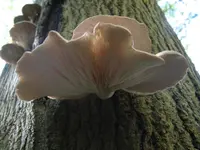
Ochre bracket, Trametes ochracea, is a wood-decaying bracket fungus rather than a traditional leafy plant. It forms thin, semicircular shelves on dead or dying hardwood, often layered in overlapping tiers.
The upper surface shows ochre, cream, and brown zones with a velvety texture, while the underside is covered in tiny pores. It commonly appears in temperate forests, parks, and older gardens where fallen branches are left to decompose.
This species plays an important role in breaking down lignin and cellulose, helping recycle nutrients in the ecosystem. It is not grown like a houseplant; to care for Ochre Bracket in a garden or naturalistic setting, focus on providing undisturbed, decaying wood in shaded, humid conditions.

Care Difficulty
Moderate Care

Light Preference
Partial Shade

Water Requirements
Keep Soil Moist

Temperature Preference
Cool Climate

Hardiness Zone
Unknown

Soil Texture
Loamy, Organic-rich

Soil pH
Acidic (5.5–6.5)

Soil Drainage
Moist but well-drained

Fertilization
Minimal (feed rarely)
Scan your plant to receive care tips personalized for your specific plant
Available on iOS and Android
This wood-decay fungus favors shaded woodland conditions with limited direct sun exposure.
This fungus relies on consistent ambient moisture in its woody substrate rather than direct watering.
This species is adapted to temperate woodland climates with cool to mild conditions.
This bracket fungus develops on dead wood and does not require controlled air humidity in cultivation.
This wood-decaying fungus is not grown in soil but on lignin-rich woody material.
This species is not naturally suited to container growing, though it can be maintained on wood pieces placed in trays or boxes for observation.
This wood-decay fungus naturally extracts nutrients from dead hardwood and does not need supplemental fertilizer, even when cultivated for study or display.
Pruning is generally not required for Trametes ochracea because fruiting bodies are short-lived and renew themselves on the substrate.
Cultivation focuses on renewing the woody substrate rather than repotting, since this bracket fungus lives on logs rather than in soil.
Propagation of this bracket fungus is specialized and usually handled by mycologists rather than home growers.
This temperate wood-decay fungus is naturally cold hardy and usually requires no special winter care.

Plant Health Check
Not sure what's wrong with your plant? Check your plant's health inside the app.
The fruiting bodies often show sharply defined concentric zones in ochre, cream, and brown tones, which are used as a key field character to separate this species from similar turkey tail–like bracket fungi.
This species most often colonizes dead hardwood, especially beech and oak, where it causes a white rot by selectively breaking down lignin and leaving the wood pale and fibrous.
The caps are very thin and flexible when fresh but become tough and leathery as they age, allowing them to persist on logs over multiple seasons even after spore production has finished.

Molecular studies have shown that specimens once grouped under a broad Trametes versicolor complex include distinct lineages, and Trametes ochracea is now recognized as a separate species with its own genetic identity despite its very similar appearance to the classic turkey tail fungus.
This bracket fungus is not considered edible. The flesh is tough, corky, and lacks culinary value. It is used mainly for ecological study, wood decay research, and sometimes for decorative or craft purposes, not for food.
Keep your plants happy and healthy with plant identification, disease detection, and easy care guidance.