northern honey fungus Care (Armillaria borealis)

northern honey fungus

About northern honey fungus

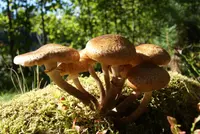
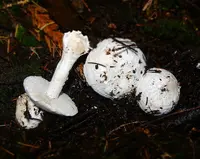
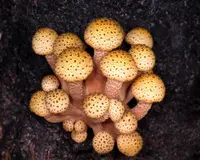
Northern honey fungus, Armillaria borealis, is a wood-decaying fungus rather than a typical houseplant. It forms clusters of honey-colored mushrooms with pale to darker brown caps and a central stem. Below ground, it spreads through dark, cord-like rhizomorphs that colonize living and dead wood.

This species occurs mainly in cool, northern forests, especially in coniferous and mixed woodlands across Europe and parts of Asia. It is best known as a tree pathogen that can slowly weaken or kill stressed trees, which makes it problematic in gardens and orchards.

Those wishing to learn how to care for northern honey fungus mainly manage it as a forest or landscape organism, not as a decorative plant. It favors moist, cool conditions and woody substrates rather than standard potting soil.


Main Plant Requirements

Care Difficulty

Hard Care

Light Preference

Partial Shade

Water Requirements

Regular Water

Temperature Preference

Cold Hardy

Hardiness Zone

2–6

Soil Texture

Loamy, Silty, Organic-rich

Soil pH

Acidic (5.5–6.5), Slightly acidic (6.5–7.0)

Soil Drainage

Moist but well-drained

Fertilization

Minimal (feed rarely)

Get Personalized Care Plan

Scan your plant to receive care tips personalized for your specific plant

Available on iOS and Android

How to Care for the northern honey fungus

This wood-decaying fungus prefers cool forest conditions with limited direct sun exposure.

  • Provide bright shade or dappled woodland light, with at most 1–2 hours of weak morning sun and no harsh afternoon sun to avoid drying the substrate.
  • Allow partial shade to deep shade under trees, shrubs, or woody debris; northern honey fungus often fruits where overhead canopy filters most direct light.
  • In summer, protect fruiting areas from hot, reflective sun, while in spring and autumn slightly more open light can encourage sporocarp formation without overheating the mycelium.

This species relies on steady substrate moisture rather than direct surface watering.

  • Maintain consistently moist, not waterlogged, woody or root-rich soil; aim for the top 2–4 cm to feel slightly moist but not puddled after rain or irrigation.
  • Use well-drained, humus-rich ground that holds moisture yet allows excess water to percolate away, since standing water promotes anaerobic conditions and rot of host roots.
  • In dry spells, irrigate host trees or surrounding soil deeply when the upper 3–5 cm feel dry; pale, shrinking, or brittle mycelial fans under bark suggest prolonged drought stress for Armillaria borealis.

This fungus is adapted to cool to temperate climates with marked seasonal change.

  • Support active growth in temperatures around 50–68°F (10–20°C), typical of many northern forests during spring and autumn, when mycelium and fruiting bodies develop best.
  • Expect survival down to roughly 14–23°F (-10 to -5°C) in soil or woody substrates, though prolonged frozen conditions slow activity until thaw.
  • Limit exposure to extended heat above 77–86°F (25–30°C), which can dry substrates and weaken mycelium; shaded, mulched forest floors buffer temperature extremes across seasons.

Humidity plays little role in the health or spread of Armillaria borealis compared with host stress and soil moisture.

Armillaria borealis develops most aggressively in specific soil conditions around host tree roots rather than in a cultivated substrate.

  • Prefers moist, aerated, organic-rich forest soils with abundant woody material rather than compacted or heavily disturbed ground.
  • Tolerates a broad pH range of roughly 5.0–7.5, but spreads more in slightly acidic, humus-rich conditions around susceptible trees.
  • High drainage is not essential; the fungus often thrives where water lingers briefly, especially in poorly managed, overwatered, or poorly structured tree root zones.
  • To limit establishment near valued trees, improve soil aeration and drainage with coarse bark, composted mulch, and reduced surface compaction.

This species is not suitable for container growing for ornamental or edible purposes, as it is primarily a root pathogen of trees and shrubs in soil-based environments.

Armillaria borealis grows on woody hosts and typically does not benefit from direct fertilization in gardens or containers.

Pruning for Armillaria borealis focuses on managing infected host plants rather than shaping the fungus itself.

  • Carry out pruning during dry weather to limit spread of spores and contaminated sap.
  • Remove dead, dying, or obviously infected branches and stumps from host trees first.
  • Cut back to healthy wood with clean, sharp saws or loppers, disinfecting tools between cuts.
  • Dispose of removed material off-site to reduce local inoculum and future infection pressure.

Transplanting concerns relate to moving infected host material rather than relocating Armillaria borealis as a cultivated fungus.

  • Avoid moving soil, stumps, or wood that show honey fungus signs, such as white mycelial fans or black rhizomorphs.
  • If a host must be transplanted, do it in cool, dormant seasons to reduce root stress and disease expression.
  • Inspect roots carefully and discard plants with extensive rot instead of replanting them in new sites.
  • After removing infected plants, leave soil fallow or replant with tolerant species to reduce future problems.

Propagation of Armillaria borealis is not recommended for home or ornamental use due to its role as a destructive tree pathogen.

Northern climates naturally support this fungus, and no special winter care is required for Armillaria borealis in outdoor settings.

Care Tips

Deadwood inoculation strategy

Stack freshly cut, disease-free hardwood logs or stumps in a shaded, moist corner of the garden and introduce spawn only into this contained woodpile to localize the fungus and reduce its spread to live trees when growing northern honey fungus.

Physical spread barriers

Before introducing the fungus outdoors, install deep-rooted barriers such as heavy-duty root barriers or thick pond liner sunk 45–60 cm into the soil around the inoculated area to limit rhizomorphs (black fungal cords) from moving into nearby tree and shrub roots.

Regular rhizomorph checks

Inspect the soil surface and just below the mulch line twice a year for black, bootlace-like rhizomorphs, and promptly remove and bag any cords extending beyond the intended inoculated zone to slow unintended colonization.

Tool sanitation protocol

Disinfect saws, chisels, and drills with 70% isopropyl alcohol or a 10% bleach solution after working on colonized wood to avoid accidentally transferring the pathogen to healthy trees or other sites.

Containment via containers

For highly controlled experiments, inoculate sections of hardwood logs placed in large, heavy-duty tubs or raised beds lined with impermeable plastic so the mycelium and rhizomorphs remain physically confined, which is useful when caring for northern honey fungus in small gardens or research settings.

Common Pests and Diseases

Parasitic nematodes

This pest lives in the soil and feeds on fungal mycelium, gradually weakening the colony and reducing mushroom production. Symptoms include patchy, stunted growth of the fungus and rapid collapse of young clusters.

Solution

Rotate growing sites, remove and destroy heavily infested substrate, and avoid reusing contaminated soil or woody material. For outdoor cultivation, maintain good organic matter and avoid overcompaction; in controlled setups, use heat-treated or pasteurized substrate and strict hygiene when handling tools and containers.

Fungal mites

These insects are tiny arachnids that feed on mycelium and developing fruiting bodies, often causing deformed caps, pitted surfaces, and reduced yields. This pest thrives in constantly damp, unventilated environments rich in organic debris.

Solution

Improve ventilation around the substrate, avoid excess surface moisture, and remove heavily damaged clusters promptly. In contained or semi-controlled setups, use fine mesh barriers, clean tools regularly, and, where allowed, introduce predatory mites that feed on fungal mites while sparing the crop.

Truffle beetles

These insects, often small dark beetles, feed on underground mycelial mats and decaying wood, creating galleries that disrupt nutrient flow. This pest can reduce the density and longevity of Armillaria borealis colonies on buried roots or logs.

Solution

Remove and destroy heavily infested wood or stumps, and limit piles of damp, decaying wood near intentional growing sites. Where practical, lift and replace highly damaged substrate and encourage predators such as ground-dwelling beetles by avoiding broad-spectrum soil insecticides near the fungus habitat.

Competing saprophytic fungi

This disease pressure comes from other wood-decaying fungi that colonize the same substrate, outcompeting Armillaria borealis for space and nutrients. Symptoms include mixed or unusual fruiting bodies and a gradual decline in honey fungus production on a log or stump.

Solution

Start cultivation on fresh, uncolonized hardwood or conifer stumps, and remove wood already bearing other bracket or cup fungi. When possible, use clean tools, limit unnecessary wounding of colonized wood, and, in managed sites, thin or discard sections where competing fungi are firmly established.

Bacterial blotch

This disease is caused by opportunistic bacteria on mushroom surfaces under very wet, stagnant conditions, leading to slimy, discolored, or water-soaked spots on caps and stems. Symptoms include unpleasant odor and rapid softening of the fruiting bodies.

Solution

Reduce overhead watering, maintain moderate humidity with good air movement, and harvest mushrooms promptly as they reach maturity. Discard affected clusters, avoid splashing water from contaminated to healthy areas, and keep tools and collection containers clean and dry to limit bacterial spread.

Interesting Facts

Boreal forest specialist

This species occurs mainly in cold, northern coniferous forests and is especially associated with spruce and pine in boreal and subarctic regions across Eurasia and parts of North America.

Microscopic clamp connections

Its hyphae typically form clamp connections, small bridge-like structures that help maintain the correct number of nuclei per cell during growth, which is a key microscopic feature used to distinguish it from related Armillaria species.

Genetically distinct lineage

Molecular studies using DNA sequencing have shown that this fungus forms a separate genetic lineage within the Armillaria mellea complex, supporting its recognition as a distinct species rather than a local variant.

Botan icon

Did you know?

Armillaria borealis can form long, black rhizomorphs, often called shoestrings, that spread through soil and woody debris, allowing a single genetic individual to occupy large areas underground while remaining largely hidden from view.

FAQs about northern honey fungus

This species spreads very aggressively via underground rhizomorphs that can travel several meters through soil and roots. It often colonizes and kills woody plants, so it is considered a serious forest and garden pathogen, not a decorative planting option.

Grow Healthy Plants with Botan Care

Keep your plants happy and healthy with plant identification, disease detection, and easy care guidance.

Botan plant care app — identify plants on mobile

Explore More Plants